


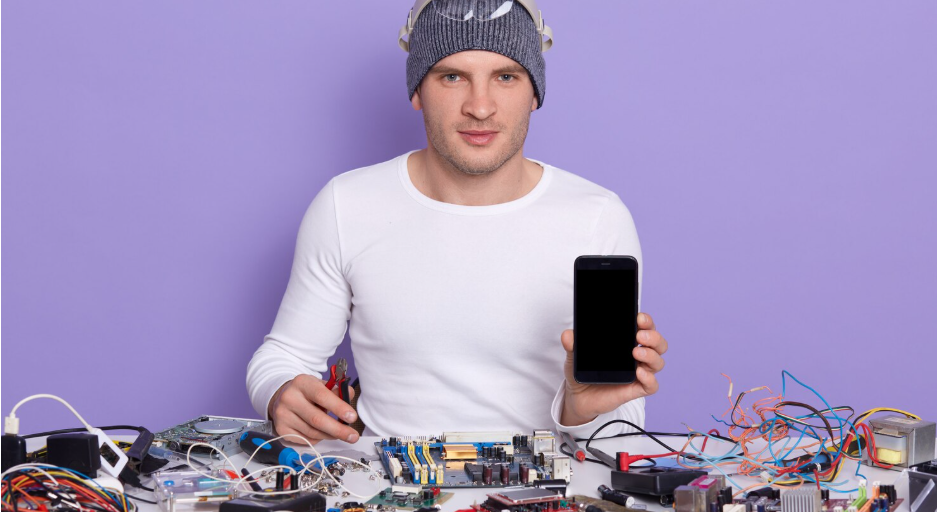
A technician carefully prys open a smartphone with a swollen battery on a packed repair bench in a small electronics store, pushing the screen outward like a slow breath. Vendors shout out prices as motorcycles idle outside. The air inside is filled with the smell of warm plastic and solder. These kinds of scenes are becoming more frequent, implying something small but important: the days of purchasing a gadget and then forgetting about it are coming to an end.
Electronics had a sense of permanence for decades. For years, there was a television in the living room. A stereo system hummed as it grew old, gathering dust. Modern gadgets feel different—faster, sleeker, but strangely brittle. Software updates silently demand more processing power, batteries deteriorate more quickly, and heat builds up inside thin casings. The natural rhythm of ownership may have been shortened by what we refer to as progress.
| Category | Details |
|---|---|
| Industry Scope | Consumer electronics, industrial systems, medical equipment, smart devices |
| Key Drivers | Heat stress, voltage fluctuations, dust buildup, software aging |
| Maintenance Benefits | Improved performance, longer lifespan, safety, energy efficiency |
| Environmental Impact | Reduced e-waste and resource extraction through repair & upkeep |
| Risk Factors | Power surges, moisture exposure, poor cooling, weak solder joints |
| Economic Insight | Maintenance costs far less than replacement and reduces downtime |
| Professional Role | Diagnostics, circuit repair, safety compliance, component restoration |
| Sustainability Impact | Lower emissions and reduced toxic waste from discarded electronics |
| Reference | https://www.iea.org/reports/global-e-waste-monitor |
Electronics nowadays are always under stress. Numerous background processes are managed by smartphones. As processors strive for performance, laptops get hotter. Smart home systems never stop listening, connecting, and updating. Heat, one of circuitry’s silent enemies, is produced by that constant activity, weakening solder joints and hastening component fatigue. Consumers are just starting to realize this, but engineers know it well.
Electricity itself seems to have lost some of its tolerance. Voltage variations strain power supplies and deteriorate internal capacitors, particularly in cities that are expanding quickly. Heat is trapped where it shouldn’t be when dust, which is hardly noticeable in the afternoon light, gets on heat sinks and gets through ventilation grills. Water leaks into the charging ports. On its own, each factor appears insignificant. When combined, they subtly reduce a device’s lifespan.
Previously confined to industrial machinery and factory floors, maintenance is now permeating daily life. Specialists were in charge of replacing thermal paste, cleaning vents, calibrating batteries, and updating firmware. These days, they can be found in local repair kiosks and online tutorials. It’s difficult to ignore how ownership is evolving into stewardship as you watch this change take place.
Electronics were never taken for granted by industries. Preventive maintenance is standard practice in manufacturing facilities, hospitals, and power plants to ensure safety and avoid expensive downtime. Circuits are examined, cooling systems are cleared, and sensors are calibrated. The reasoning is straightforward: minor adjustments avert major malfunctions. It’s possible that consumer electronics, which are becoming more sophisticated and necessary, are going through the same maintenance cycle.
This change is being reinforced by environmental pressures. Rare earth metals and energy-intensive procedures are used in the production of electronics. Premature device failures add to the mountains of e-waste that contain cadmium, lead, and mercury. Maintaining a longer lifespan lowers the need to extract resources and dispose of toxic waste. Once a moral argument, sustainability is now being seen as a practical one.
Additionally, the economics are changing. Even though fixing a charging port or changing a battery frequently costs less than buying a new device, many customers still opt for replacement for convenience. As prices rise and supply chains continue to be unpredictable, that habit might be shifting. Investors appear to think there is potential for growth in the repair economy, which includes diagnostic tools, service centers, and suppliers of parts.
The story has become more complex due to software. Although updates enhance performance and security, they can also put stress on aging hardware. After several updates, a phone that felt fast two years ago starts to lag. Whether this is due to deliberate design decisions or the inevitable influence of changing software ecosystems is still unknown. In any case, digital housekeeping is now just as much a part of maintenance as physical care.
In this environment, professionals are still crucial. In order to stop additional damage and restore safe operation, skilled technicians use diagnostic tools to find flaws that are invisible to the untrained eye. They frequently handle high-voltage components and delicate microchips in their work, which can be dangerous if done incorrectly. Device repair experts are now trusted, unlike mechanics and electricians in the past.
A subtle cultural change is also taking place. Possessing electronics was a sign of modernity and convenience. Keeping them up implies patience and even responsibility. A slower rhythm is introduced into a fast-paced digital world by performing tasks like cleaning a laptop fan or changing a worn-out battery. Instead of throwing it away, it encourages users to comprehend what they depend on.
In the future, owning electronics might look more like care than disposal. Innovation rarely stops, so devices will continue to become outdated. However, the notion that technology should run continuously without human intervention is eroding. It gives way to a more subdued realization: machines need to be maintained with care, just like the systems they support.
The change is evident in living rooms, factories, and repair shops. Instead of being thrown away, screens are changed. The cooling vents are free of debris. The software has been updated. Millions of tiny actions could completely change how we interact with the tools we use on a daily basis.

Follow Live Media News on Google News
Get Live Media News headlines in your feed — and add Live Media News as a preferred source in Google Search.
Stay updated
Follow Live Media News in Google News for faster access to breaking coverage, reporting, and analysis.
- Search any trending topic on Google (for example: Greece news).
- On the results page, find the Top stories section.
- Tap Preferred sources and select Live Media News.