


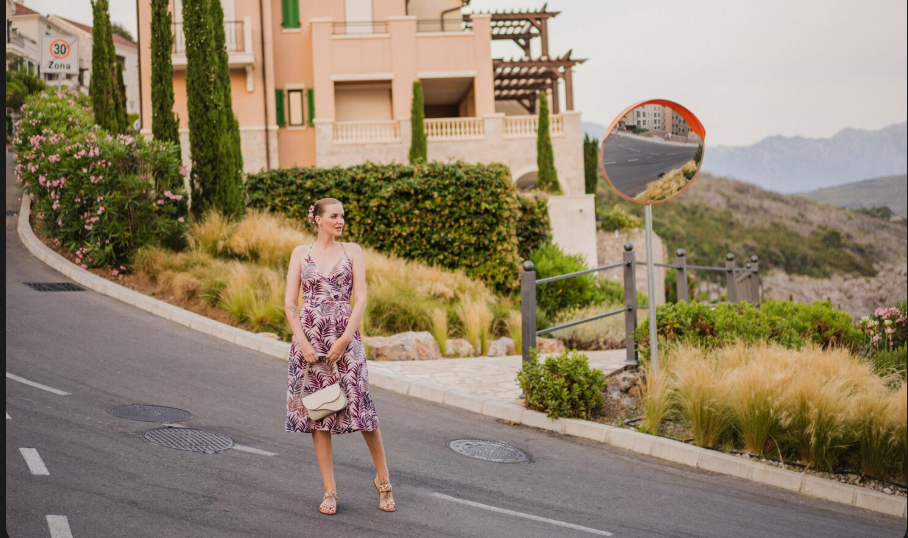
On a Tuesday night, as you stroll down Fokionos Negri, you notice the change before anyone can explain it. Three summers ago, the cafés were quieter. It seems like the scaffolding never comes down. A man is standing outside a partially renovated building on Kypselis Street, talking into his phone in English while holding a clipboard. An older woman is observing him from her balcony with an expression that falls somewhere between quiet resentment and curiosity. Since 1978, she has resided there. She claims that her rent has doubled. Her neighbors have moved out.
Kypseli wasn’t meant to be like this. It was the kind of neighborhood that Athenians talked about in the past tense for decades; it was once glamorous in the 1960s, then forgotten, then quietly absorbing waves of migrants from Bangladesh, Albania, and Nigeria. After the financial crisis, the old apartment buildings, with their cramped elevators and marble lobbies that hadn’t been polished in forty years, were left in an odd state. Prices decreased. Then they collapsed once more. After that, years passed with nothing happening. Then, in 2022 or so, something changed.
| Detail | Information |
|---|---|
| Neighborhood in focus | Kypseli, central Athens |
| Approximate price growth (2022–2025) | Around 60% in three years |
| Average price per m² (2022) | Roughly €1,450 |
| Average price per m² (2025) | Roughly €2,300–2,400 |
| National average yield range | 7% to 11% gross annually |
| Golden Visa minimum (most regions) | €400,000 |
| Golden Visa minimum (Attica, Thessaloniki, Mykonos, Santorini) | €800,000 |
| Renovation-route minimum | €250,000 |
| Vacant residential units in Athens | Roughly 25% of total stock |
| Primary buyer profiles | Greek diaspora, EU investors, U.S. and Israeli buyers |
| Common property type traded | 1930s–1960s apartments, 50–90 m² |
| Average renovation cost | €700–€1,200 per m² |
In just three years, Kypseli property values have increased by about 60%. It’s not a forecast, nor is it a typo. It’s what local brokers will almost reluctantly tell you over coffee because even they find it hard to believe. A 65-square-meter apartment that sold for about €95,000 in 2022 is now listed for €155,000, sometimes more if it has a park-facing balcony. The neighborhood itself seems to have fallen behind the market.
Although both are a part of it, the underlying cause is more difficult to identify than the typical narrative about Golden Visas and foreign capital. A certain type of investor was driven by Attica’s €800,000 threshold to smaller, less expensive, and more difficult-to-find areas of the city, such as areas where €400,000 still buys something intriguing or where the renovation-track €250,000 minimum opens up older buildings that would never have been saved otherwise. With its low prices and intact bones, Kypseli became one of those pockets practically overnight.

The neighborhood’s transformation might be long-lasting. It might not be, too. The same factors that had raised prices in Koukaki and Pangrati a few years prior eventually caused the local population to decline, replaced long-term tenants with short-term rentals, and left behind a sort of hollowness—beautiful streets with fewer actual residents. Kypseli’s size and density seem to make investors think it’s unique. Locals don’t know for sure.
Beneath all of this is a deeper tension that has nothing to do with square meters or yields. Rents in areas like Kypseli have increased more quickly than wages, despite the fact that about 25% of all residential properties in Athens remain vacant as a result of the protracted economic downturn. The real Greek housing story at the moment is this paradox: vacant buildings on one street, bidding wars on another. No one in government appears especially eager to make them, and the numbers don’t add up.
It’s difficult to ignore how quickly a location can change while observing this from a café on Fokionos Negri. There’s still the woman on the balcony. The man with the clipboard is, too. They live in two entirely different versions of the same neighborhood, perhaps twenty meters apart.

Follow Live Media News on Google News
Get Live Media News headlines in your feed — and add Live Media News as a preferred source in Google Search.
Stay updated
Follow Live Media News in Google News for faster access to breaking coverage, reporting, and analysis.
- Search any trending topic on Google (for example: Greece news).
- On the results page, find the Top stories section.
- Tap Preferred sources and select Live Media News.