


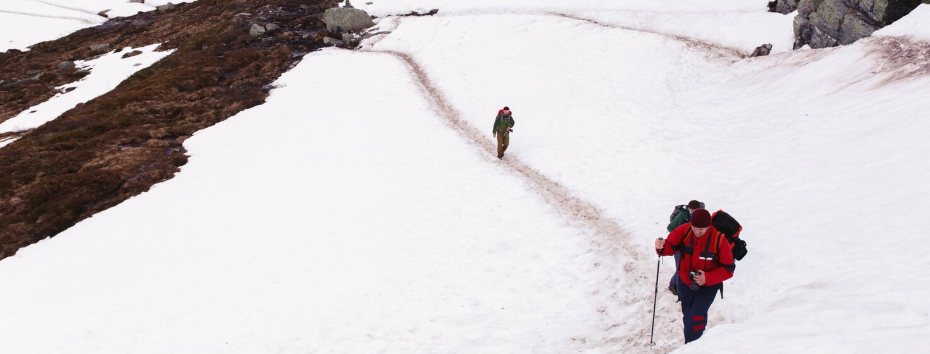
The mountain doesn’t “collapse” in the neat manner that people think it will. It tears. First, a whomp, low and distant, like the sound of a door closing in a different room. The slope then accelerates into something that appears nearly liquid, the snow acting like a freight of white concrete, and it begins to move, tearing itself apart into blocks and powder. The unsettling question that keeps coming up after Castle Peak, after the Alps, after another winter headline, is this sense of force: why do backcountry skiing deaths continue to rise when survival equipment has never been better?
The details are grim in their normalcy at Castle Peak, close to Donner Summit. Despite the parking lots’ claims to the contrary, it’s a well-liked area that’s simple to get to from the interstate and that locals talk about like a secret. After a guided group left, officials were left to describe bodies that couldn’t be recovered immediately due to unsafe conditions—risk on top of risk, even for the rescuers. It’s difficult to overlook the contemporary twist as well: survivors are using satellite-based emergency messaging, technology is performing its intended function, and the avalanche itself carried out its traditional function.
| Item | Bio / Important Information |
|---|---|
| Primary locations in focus | Castle Peak area near Donner Summit / Lake Tahoe, California; the European Alps (France, Italy, Switzerland, Austria) (capradio.org) |
| What happened at Castle Peak | A guided backcountry group near Castle Peak was caught in an avalanche; nine people died and survivors used emergency signaling to reach rescuers (capradio.org) |
| Europe’s deadly season context | EAWS tracks avalanche fatalities each season starting Oct. 1; the 2025/26 season tally has been unusually high (EAWS) |
| Avalanche danger scale | Europe uses a five-level danger scale (1 low to 5 very high) (EAWS) |
| Reference website (authentic) | European Avalanche Warning Services (EAWS) fatalities tracker (EAWS) |
The Alps have been staging their own ruthless show across the Atlantic. The busiest ski mountains on the continent have seen an exceptionally high number of fatalities this season, according to the European Avalanche Warning Services. That alone ought to frighten anyone who believes that only “careless tourists” or “novices without gear” are at risk. The Alps are a well-managed playground with trains, refuges, and clean villages—not a myth of a wilderness. Nevertheless, the snow continues to find its angle.
There are more people out there, which is a brutally straightforward part of the explanation. Videos of bottomless turns and the quiet boast of “earning it” have attracted ambitious intermediate ski mountaineers, as well as hardcore ski mountaineers with worn skins and scarred shovels. Ski touring has turned into a sort of status exercise—quietly competitive, socially performative, and frequently filmed—and resorts feel crowded. Lift lines also feel insulting. The backcountry is perceived as a mainstream alternative with a corresponding gear ecosystem, rather than a niche.
The equipment is also far superior. Compared to a generation ago, beacons are quicker and easier to use, airbags are more widely used, forecasts are easier to obtain, and rescue systems are frequently better organized. However, gear has a risky side effect: it alters the perception of risk. A talisman, or something that transforms fear into something controllable, can be a beacon beneath the jacket. It’s human nature; it’s not stupidity. Avalanches don’t negotiate with readiness, which is the issue. They don’t give a damn if your pack has a shiny pull-handle or if you bought the newest transceiver. Snow moves according to physics and is unconcerned.
Even those who have paid to study the snow appear to be uneasy about the way it is acting. In order to create that ugly structure where the surface appears inviting while the foundation waits like a trapdoor, weak layers may form early, persist, and then be buried under new storms. Forecasters in Europe have relied on the well-known terminology of high danger ratings (level 4 and, in rare spikes, level 5) and persistent weak layers. Holidays, sunk costs, and the sense that the trip must “pay off” still compete with those levels, which are there for a reason.
The psychology of sunk costs isn’t theoretical. Avalanche decision-making researchers have noted that limited vacation time and travel expenses can encourage people to take risks they wouldn’t otherwise. Another subtle pressure may be added by guided trips: clients outsourcing judgment, guides bearing the burden of expectations, and everyone attempting to reconcile their “professional” side with the messy reality that a mountain day is never completely knowable. Additionally, a small choice—one slope, one traverse, or one shortcut back to the huts—can make all the difference in unstable conditions.
This is clouded by climate change, but not in a tidy, straightforward manner. Because local snowpacks are complex and weather patterns are unpredictable, even cautious researchers are hesitant to assert that warming is “caused” by a single avalanche. It appears more obvious that the snow is becoming less consistent and more erratic: rain-snow lines are moving, storms come in strange bursts, heavy precipitation quickly loads slopes, and wetter, denser avalanches are contributing more to the issue in some places. Variability increases the risk. It confuses intuition and penalizes those who continue to use the reasoning from last week.
Why, then, are more people dying? Because the snowpack, especially in some winters, creates puzzles that even seasoned travelers don’t always solve in time, because the backcountry has subtly become a mass activity, and because better tools can create softer fear. Whether technology will continue to catch up to that reality or if it will primarily help us survive the mistakes we continue to insist on making is still up in the air. The most depressing idea is also the most common: many tragedies originate from days that seemed almost perfect—until the mountain decided it wasn’t—rather than from a spectacular error.

Follow Live Media News on Google News
Get Live Media News headlines in your feed — and add Live Media News as a preferred source in Google Search.
Stay updated
Follow Live Media News in Google News for faster access to breaking coverage, reporting, and analysis.
- Search any trending topic on Google (for example: Greece news).
- On the results page, find the Top stories section.
- Tap Preferred sources and select Live Media News.