


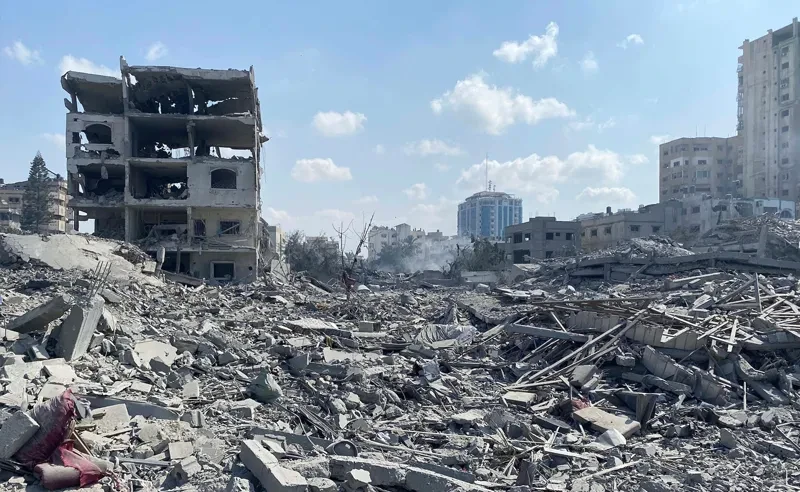
The escalating tensions surrounding Iran have prompted analysts and observers to draw parallels with past American military engagements, particularly Vietnam and Iraq, as concerns mount over the potential economic and geopolitical consequences of a conflict with Iran. According to recent commentary, the crisis reveals dangerous patterns in how decisions about war are being made and communicated by major powers. The comparison to Vietnam centers not only on military strategy but also on the profound economic impact a prolonged engagement could have on the global system.
Meanwhile, the manner in which military action is being discussed has raised alarm among political observers. According to analysts, public statements treating potential bombings and military operations with apparent flippancy represent a departure from traditional diplomatic norms. When leaders of superpowers speak casually about the use of force, the implications extend beyond diplomacy into fundamental questions of governance and international stability.
Economic Parallels to Historical Conflicts
The Vietnam War serves as a particularly relevant historical reference point for understanding the potential costs of a conflict with Iran. That war imposed enormous fiscal burdens on the United States, contributing to the crisis of the Bretton Woods system and the eventual decoupling of the dollar from gold in 1971. Experts suggest that a similar pattern of gradual escalation without clear political exit strategies could emerge in any prolonged engagement with a nation of approximately 94 million people.
Additionally, the economic dimensions of the current crisis extend far beyond direct military expenditures. A prolonged crisis in the Persian Gulf could trigger significant disruptions to global energy markets, given that the Strait of Hormuz represents one of the world’s most critical chokepoints for oil and natural gas transport. Such disruptions would likely result in rising energy prices, increased inflation, and serious shockwaves throughout the global economy.
Europe’s Vulnerability in Iran Crisis
Europe faces particular exposure to potential fallout from a conflict with Iran due to its heavy dependence on imported energy. Following the disruption of energy relationships with Russia, European economies have become even more vulnerable to international energy market fluctuations. According to analysts, this vulnerability means that instability in the Persian Gulf would have immediate and severe consequences for European economic stability.
However, the damage would not remain confined to Europe alone. The deep interconnection between European and American economies through trade, investment, and financial markets means that a deep economic crisis in Europe would quickly affect the United States. Similarly, Israel could find itself trapped in a state of prolonged military tension rather than achieving enhanced security through conflict.
Shifting Global Economic Balance
In contrast to the direct parties involved, some major powers may derive comparative advantages from prolonged instability in the region. Observers note that uncertainty and disruption in traditional energy supply routes could accelerate shifts in the global economic order. Countries with strong resource reserves and advanced technology sectors stand to benefit, while more dependent economies face mounting pressure.
Furthermore, the crisis affects not only energy trade but also international financial architecture. Major upheavals in energy markets typically spill over into capital markets, driving increased currency volatility and prompting reassessment of investment strategies worldwide. According to financial analysts, such an environment favors economies with strategic resources while disadvantaging those reliant on complex international supply chains.
Questions of Strategic Motivation
The strategic rationale behind aggressive posturing toward Iran has become a subject of intense debate. Some observers question whether bellicose statements from Iranian leadership or regional proxy threats constitute sufficient justification for actions that could result in hundreds of thousands of casualties and enormous collateral damage. Darker interpretations appearing in public discourse suggest that domestic political pressures may be influencing decision-making in ways that complicate the geopolitical picture.
In this context, European governments have generally responded with restraint and diplomatic caution. Several nations, including Greece, are reportedly pursuing responsible approaches that include securing adequate energy reserves, maintaining defense readiness, and engaging in pragmatic diplomatic management. These measured responses reflect institutional recognition of the exceptional instability characterizing the current environment.
The fundamental question remains whether involved parties can sustain the economic and political costs of a prolonged crisis. While immediate developments continue to unfold, the international community awaits clearer signals regarding diplomatic paths forward and the possibility of de-escalation.

Follow Live Media News on Google News
Get Live Media News headlines in your feed — and add Live Media News as a preferred source in Google Search.
Stay updated
Follow Live Media News in Google News for faster access to breaking coverage, reporting, and analysis.
- Search any trending topic on Google (for example: Greece news).
- On the results page, find the Top stories section.
- Tap Preferred sources and select Live Media News.