


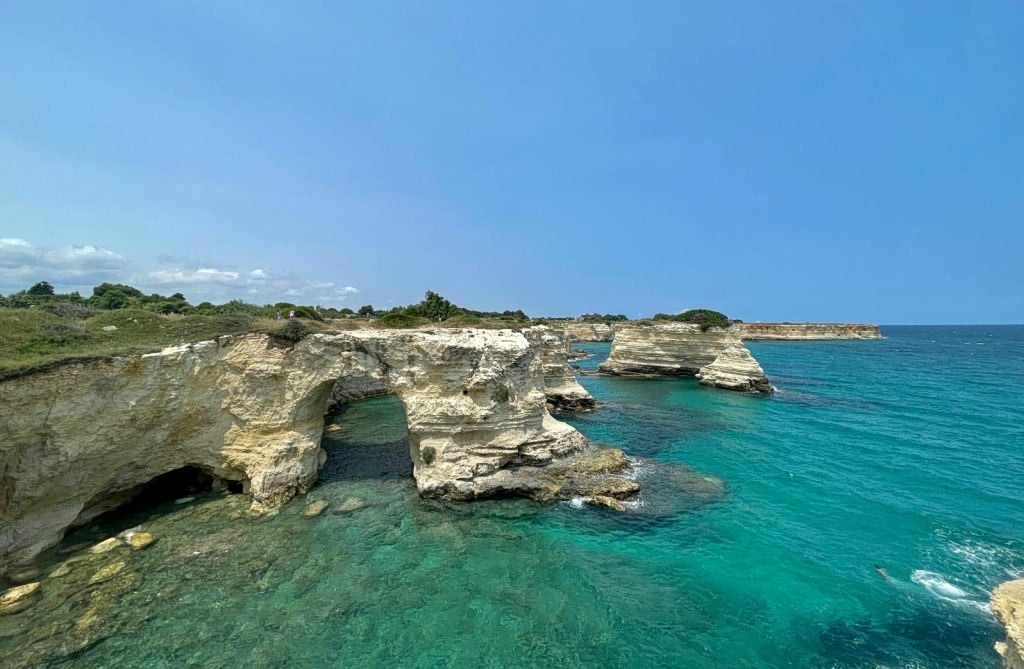
Italy’s iconic “Lovers’ Arch” collapsed on Valentine’s Day after days of severe storms battered the Adriatic coastline, local authorities confirmed. The natural rock formation, located in Sant’Andrea di Melendugno in the Salento region, had long served as a cherished landmark for couples and a popular destination for marriage proposals along Italy’s southeastern coast.
Mayor Maurizio Cisternino of Melendugno described the loss as “a devastating blow” to the community, while deputy mayor for tourism Francesco Stella compared the collapse to “a funeral.” Local officials reported that strong winds, torrential rain, and turbulent seas gradually eroded the rock structure until it finally gave way on the symbolic date.
Extreme Weather Events Contributing to Coastal Erosion
Experts indicate that the collapse of the Lovers’ Arch is linked to an increase in extreme weather patterns affecting the Mediterranean region. According to Christian Mulder, a professor of ecology and climate emergency at the University of Catania, record-high sea temperatures in 2025 are fueling more intense storms across the area.
These severe weather systems, known as “medicanes”—Mediterranean cyclones—have become increasingly common and destructive. Cyclone Harry, which struck the region in January, caused extensive damage to ports, homes, and road networks throughout coastal Italy, fundamentally reshaping natural landscapes along the shoreline.
A Symbol of Romance Lost to Nature’s Force
The rocky arch had stood as one of Italy’s most recognizable coastal landmarks and a symbol of the Salento region for generations. Couples from across Italy and beyond visited the site to capture photographs against the dramatic backdrop of the natural formation jutting from the Adriatic Sea.
The structure’s romantic appeal made it particularly popular on Valentine’s Day, adding poignancy to the timing of its destruction. However, the gradual weakening of the rock formation had been occurring over several days as relentless storms pounded the coastline.
Italy Faces Mounting Climate Challenges
The Lovers’ Arch collapse represents just one incident in a series of extreme weather events impacting Italy in recent months. In late January, heavy rainfall from Cyclone Harry triggered a massive landslide near Niscemi, destroying roads and submerging vehicles in the affected area.
That landslide created a four-kilometer gap in the urban landscape, illustrating the severe impact these Mediterranean cyclones are having on Italian infrastructure and natural formations. Additionally, coastal communities throughout the region have reported increased erosion and damage to historical sites due to rising sea levels and more powerful wave action.
The increasing frequency of medicanes poses significant challenges for coastal preservation efforts across the Mediterranean basin. Scientists have documented that warmer sea surface temperatures provide additional energy to these storm systems, making them more intense and potentially more damaging than traditional Mediterranean weather patterns.
Tourism and Economic Implications
The loss of the Lovers’ Arch carries economic consequences for the Salento region, which depends heavily on tourism revenue. Natural landmarks like the arch draw visitors who contribute to local businesses, restaurants, and accommodations throughout the year.
Meanwhile, local officials have not yet announced whether any reconstruction or memorial efforts will be undertaken at the site. The complete collapse of the natural formation may make restoration impossible, as the arch was formed over thousands of years through natural geological processes.
Authorities have not confirmed any timeline for assessing the site or determining future plans for the location. The community continues to process the loss of this beloved landmark while facing the ongoing threat of additional extreme weather events in the coming months.

Follow Live Media News on Google News
Get Live Media News headlines in your feed — and add Live Media News as a preferred source in Google Search.
Stay updated
Follow Live Media News in Google News for faster access to breaking coverage, reporting, and analysis.
- Search any trending topic on Google (for example: Greece news).
- On the results page, find the Top stories section.
- Tap Preferred sources and select Live Media News.