


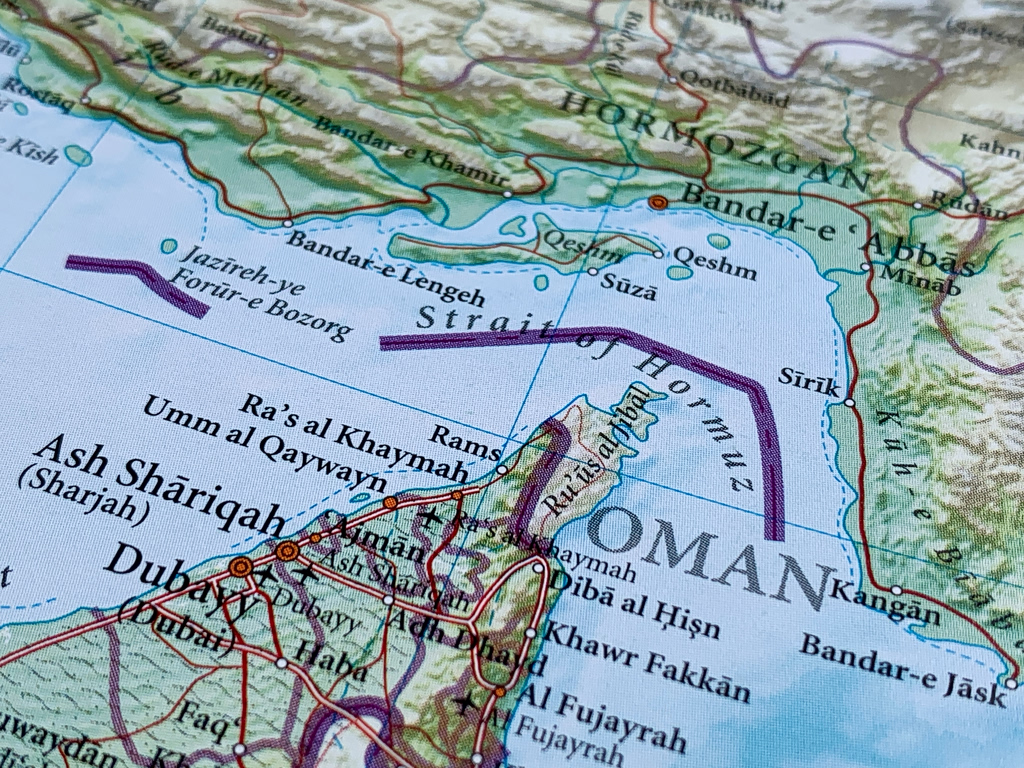
Iran partially closed sections of the Strait of Hormuz on Tuesday as indirect nuclear talks with the United States commenced in Geneva, escalating tensions in a critical global shipping lane. The elite Revolutionary Guards conducted military drills as a security precaution, according to Iran’s semi-official Fars news agency, while diplomatic efforts to resolve the nuclear standoff began in Switzerland.
The strait closure affected one of the world’s most strategically important waterways, through which approximately one-fifth of global oil supplies pass. Tehran has previously warned it could block commercial shipping through the strait if faced with military attack, underscoring the high stakes surrounding the negotiations.
Nuclear Talks Begin Amid Military Posturing
The Geneva negotiations brought together U.S. envoys Steve Witkoff and Jared Kushner with Iranian Foreign Minister Abbas Araqchi, with mediation provided by Oman. According to a source briefed on the discussions, the talks represent a renewed diplomatic effort to address longstanding disputes over Iran’s nuclear program. U.S. President Donald Trump indicated he would participate indirectly in the discussions.
However, Trump suggested that Iran faced serious consequences if negotiations failed. Speaking to reporters aboard Air Force One, he referenced last year’s B-2 bomber strikes on Iranian nuclear facilities, stating that he did not believe Tehran wanted to face the repercussions of failing to reach an agreement.
Supreme Leader Issues Warning
Shortly after the talks commenced, Iranian Supreme Leader Ali Khamenei delivered a defiant message, warning that U.S. efforts to overthrow his government would fail. Iranian media quoted him as saying that even the strongest military forces could be dealt devastating blows. The statement highlighted the deep mistrust characterizing relations between Washington and Tehran.
Meanwhile, the negotiations unfolded against a backdrop of recent military confrontations. In June of last year, Israel launched a bombing campaign against Iran that subsequently involved U.S. B-2 bombers targeting nuclear sites, according to reports. Iranian officials have stated that uranium enrichment activity was halted following these strikes.
Military Preparations and Regional Tensions
The United States has deployed a battle force to the region and is preparing for potential extended military operations if ordered, according to two U.S. officials. Additionally, Iran’s military drills in the Strait of Hormuz earlier this week reinforced the atmosphere of brinkmanship surrounding the diplomatic efforts. The strait closure coinciding with the nuclear talks appeared designed to demonstrate Tehran’s leverage in the negotiations.
Washington and its ally Israel maintain that Iran seeks to develop nuclear weapons, allegations that Tehran consistently denies. Iranian officials insist their nuclear program serves exclusively peaceful purposes. As a signatory to the Nuclear Non-Proliferation Treaty, Iran is permitted to pursue civilian nuclear energy while renouncing atomic weapons and cooperating with the International Atomic Energy Agency.
Sanctions Relief Remains Key Issue
Iranian officials have made clear that the success of the nuclear talks depends heavily on U.S. willingness to lift economic sanctions. Tehran has indicated it will only discuss limitations on its nuclear program in exchange for sanctions relief. Furthermore, Iranian negotiators have stated they will not agree to completely end uranium enrichment or engage in discussions about the country’s missile capabilities.
The outcome of the Geneva discussions remains uncertain, with both sides maintaining firm positions on key issues. Authorities have not confirmed when the next round of talks will occur or whether progress has been made on core disagreements. The coming days will likely reveal whether diplomatic engagement can overcome the deep divisions separating Washington and Tehran on nuclear matters and regional security concerns.

Follow Live Media News on Google News
Get Live Media News headlines in your feed — and add Live Media News as a preferred source in Google Search.
Stay updated
Follow Live Media News in Google News for faster access to breaking coverage, reporting, and analysis.
- Search any trending topic on Google (for example: Greece news).
- On the results page, find the Top stories section.
- Tap Preferred sources and select Live Media News.