


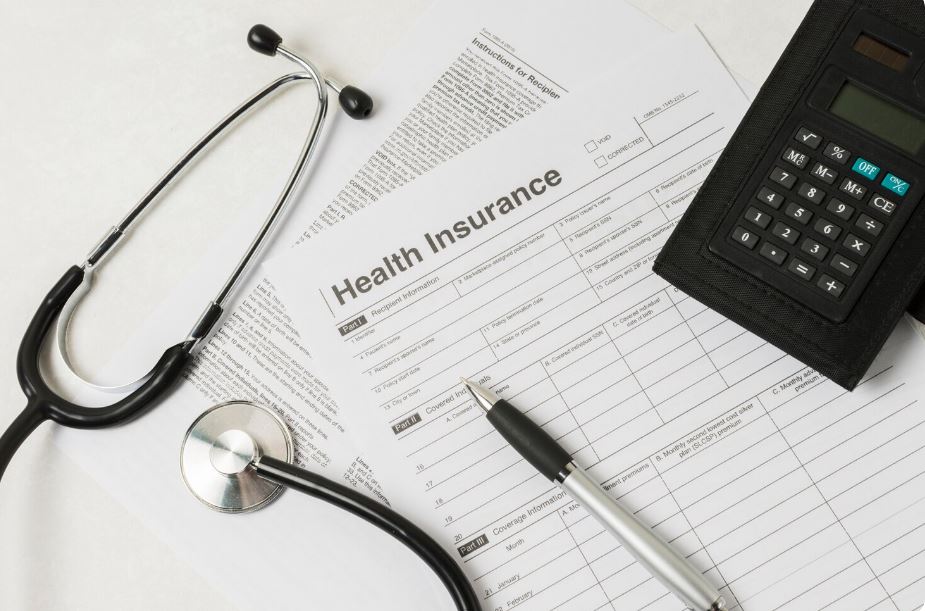
Many Irish PAYE employees just never access the section for claiming health credits located somewhere in the Revenue’s myAccount portal. It is positioned beneath other options, making it simple to ignore, postpone, and assume that someone else has already taken care of it. Most people who pay their own health insurance premiums directly to VHI, Laya, or Irish Life Health have already received their 20% discount before they even see it because of the Tax Relief at Source system. At the point of sale, the relief is automatically and covertly applied. However, things completely change for workers whose employers cover that premium on their behalf, viewing it as a Benefit in Kind rather than a direct payment. The employee is left with a credit that they are legally entitled to claim, but it won’t materialize unless they request it, after the employer deducts tax from the entire gross value of the policy.
At the household level, the numbers are not insignificant. The Irish Medical Insurance Relief Tax Credit is limited to €200 for adults and €100 for children annually; the amounts are calculated as 20% of the €1,000 cap for adults and the €500 cap for children. A refund of €200 is available if an employer paid €1,000 for health insurance on behalf of an employee and their family.
The annual credit for a family policy with two adults and two children can be up to €600. Over the course of four years—the full window Revenue permits backdated claims—that amounts to €2,400 sitting uncollected in a system that only takes a few minutes to access and requires a login. Perhaps awareness alone is the obstacle. The majority of people are unaware that their employer’s generosity in covering the health premium has also made it necessary for them to submit a separate claim in order to receive the related tax relief.
| Key Information | Details |
|---|---|
| Relief Type | Medical Insurance Relief Tax Credit — available in Ireland, USA (PTC), Pakistan, and other jurisdictions |
| Ireland: Standard Relief Rate | 20% of premium paid — applied via Tax Relief at Source (TRS) or direct Revenue claim |
| Ireland: TRS Rate (2024–2025) | 19% (temporarily reduced) |
| Ireland: TRS Rate (from Jan 2026) | 20% — restored by Revenue from 1 January 2026 |
| Maximum Credit: Adult | €200 per adult per year (based on 20% of €1,000 cap) |
| Maximum Credit: Child | €100 per child per year (based on 20% of €500 cap) |
| BIK Claimants | Must claim directly via Revenue myAccount — not applied automatically |
| Claim Window | Up to 4 years prior to current year |
| US Equivalent | Premium Tax Credit (PTC) — refundable credit via IRS.gov |
| Pakistan Relief | Medical allowance up to 10% of basic salary exempt from tax; BIK reimbursements fully exempt |
| Irish Insurers Applying TRS | VHI, Laya Healthcare, Irish Life Health — all apply TRS automatically at point of payment |
| Who Must Claim Manually | Employees whose employer pays insurance as a Benefit in Kind (BIK) — tax charged on gross; relief must be reclaimed |
One of the major insurers in Ireland, Laya Healthcare, updated its TRS data prior to contracts beginning in January 2026. Following a revenue adjustment that moved slightly against policyholders, the rate was set at 19% for the two-year period covering 2024 and 2025, a slight decrease from the standard 20% that had previously applied. Revenue reinstated the full 20% rate in January 2026, which means that net premiums for individuals with new or renewed contracts have slightly dropped since the beginning of the year. When TRS is applied automatically at the source, customers don’t need to take any action, according to Laya’s very clear communications on the subject. It is handled by the insurer. However, that clarity also serves as an implicit reminder that there is no such automatic handling for individuals in BIK arrangements.

Although the parallel situation in Pakistan has a different structure, its fundamental logic is the same. Medical benefits up to 10% of base pay are tax-free under Pakistani individual tax laws as long as the employee does not already have access to direct medical reimbursement from their employer. In many ways, this is a more generous arrangement, but it also creates its own set of documentation and record-keeping requirements. When a company reimburses actual medical treatment or hospitalization costs, those reimbursements are fully exempt from income tax without a percentage ceiling. Although the structure is clearly laid out in PwC’s Pakistan tax summaries, which were updated in January 2026, employees may find it difficult to determine which regime they fall under and whether their payroll calculations have accurately assessed them.
The mechanism is completely different in the United States. The IRS-managed Premium Tax Credit is a refundable credit that can lower a tax bill below zero and result in an actual refund if the credit exceeds the amount owed. It is linked to coverage purchased through the Health Insurance Marketplace. The credit is intended for people who do not have access to government programs or employer-sponsored insurance and whose income is between 100% and 400% of the federal poverty line. Additionally, it can be paid in advance, which lowers monthly premium costs instead of necessitating a single claim at the end of the year. Although the eligibility framework is laid out in fairly straightforward language in the IRS’s own guidance, which was updated in August 2025, many filers are caught off guard by the complexities created by the interaction between advance payments, year-end reconciliation, and income changes.
There is a discrepancy between what people are entitled to and what they actually receive in all three of these systems: the US premium tax credit, the Irish BIK relief, and the Pakistani medical allowance exemption. There is a legal entitlement. There is genuine relief. Most of the time, claiming it is not a particularly difficult process. However, the window for filing a claim is limited, and the claim does not file itself. The cutback period in Ireland is four years, so a taxpayer who paid BIK premiums in 2022 but hasn’t filed yet can still do so, but 2021 is quickly approaching. The way these systems operate in real life gives the impression that the architecture was created under the presumption that people would look for what they were entitled to. The data indicates that assumptions are frequently incorrect.

Follow Live Media News on Google News
Get Live Media News headlines in your feed — and add Live Media News as a preferred source in Google Search.
Stay updated
Follow Live Media News in Google News for faster access to breaking coverage, reporting, and analysis.
- Search any trending topic on Google (for example: Greece news).
- On the results page, find the Top stories section.
- Tap Preferred sources and select Live Media News.