


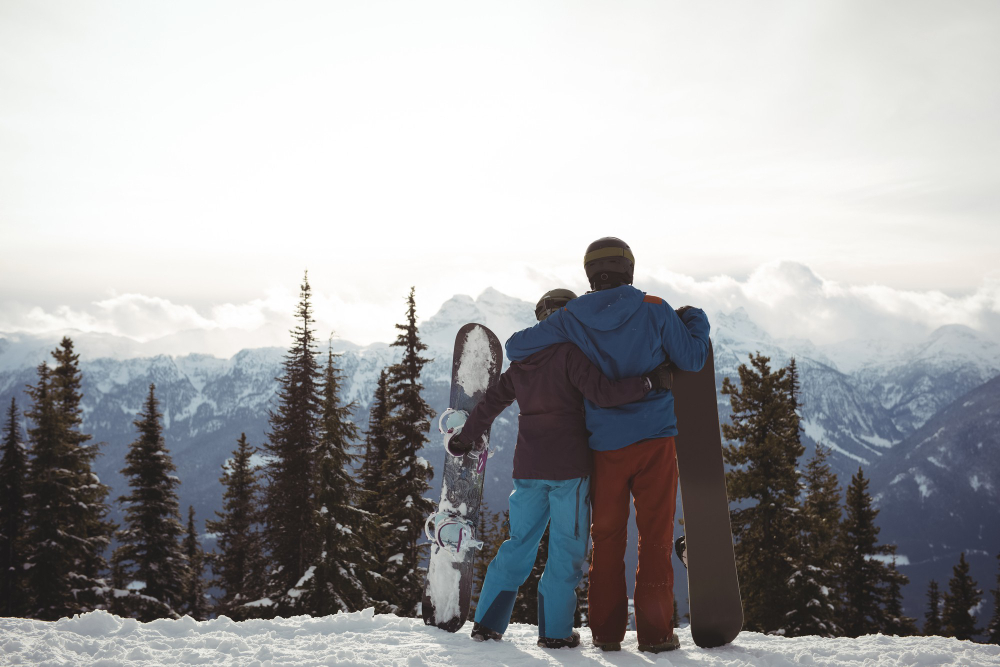
In winter, the mountains above Lake Tahoe appear surprisingly serene. The air is quiet enough to hear skis slicing through powder, and pine trees lean beneath deep snow. On some mornings, particularly following a storm, the terrain seems almost welcoming—as if danger had graciously moved aside.
However, that tranquility can be deceiving. A team of seasoned backcountry skiers and expert guides traversed the Sierra Nevada landscape late one morning close to Castle Peak, negotiating slopes that had just been engulfed by a strong storm cycle. Over the past few days, things had somewhat stabilized. That’s what it appeared to be.
| Category | Information |
|---|---|
| Location | Castle Peak |
| Region | Lake Tahoe |
| Incident | Deadliest avalanche in California history involving backcountry skiers |
| Victims | Nine people including experienced skiers and professional guides |
| Guiding Company | Blackbird Mountain Guides |
| Terrain | Remote backcountry slopes in the Sierra Nevada |
| Rescue Response | Search teams required roughly six hours to reach the site |
| Avalanche Monitoring Authority | Sierra Avalanche Center |
| Reference Source | https://www.sierrasnow.org |
The mountain then shifted. Nine people were killed in the ensuing avalanche, including six mothers and multiple guides who had arrived for what friends said was a meticulously organized ski trip. It turned into the deadliest avalanche in California’s lengthy history of skiing. Almost instantly, a complex query started reverberating throughout North American ski towns.
When something is “safe enough,” who makes that decision? It seems to be a technical query. It’s actually very human.
Every day, avalanche forecasting centers release bulletins detailing temperature variations, wind loading, and snowpack instability. Like many forecasting agencies, the Sierra Avalanche Center assigns a danger level between low and extreme. The rating indicated significant risk in some terrain on the day of the accident.
There’s something odd about that word—considerable. That does not imply “don’t go.” “Guaranteed disaster” is not what it means. It is open to interpretation. Skiers are aware of this. Guides are even more aware of this.
As seasoned backcountry skiers discuss conditions, a silent calculus is frequently taking place. A single individual examines wind patterns. Another uses a shovel and probe to examine the snow layers. Another looks over the slope above, picking up on hints in the snow.
Seldom is the choice made in a split second. Usually, it consists of a series of smaller decisions.
Such incidents almost never depend on a single error, a mountain guide who was familiar with these systems later said. He reflected on how risk progressively increases and remarked, “It’s decision after decision.”
The conversation may sound informal as you stand at the edge of a steep bowl. After the storm, the snowpack has consolidated, someone says. Another observes that the slope angle appears to be controllable. A third recommends skiing one at a time, which is a common safety measure designed to lower exposure.
Every remark encourages the group to take action. The odd thing is that a large number of those who make these choices have extensive training. The foundation of contemporary backcountry culture is risk awareness, as evidenced by rescue drills, certification programs, and avalanche education courses.
Mountains, however, don’t act like textbooks. Hours after a forecast is issued, warm temperatures have the potential to weaken snow layers. In areas that seemed stable earlier in the day, wind can deposit new slabs. A slope may remain stable for weeks before abruptly collapsing.
The skiers near Castle Peak might have thought they had enough knowledge to move forward. That’s a common belief in backcountry skiing, in fact. Although risk doesn’t go away, it may seem controllable.
And it is occasionally. Every winter, thousands of ski tours take place without any problems. People carve turns down unspoiled snow, climb silently through forests, and reach ridgelines. They bring stories, pictures, and weary legs back home.
Season after season, that success gradually boosts self-assurance. Perhaps too much self-confidence.
There is a subtle cultural understanding that adventure necessitates a certain amount of uncertainty tolerance in ski towns like Truckee, Whistler, and Chamonix. Skiers discuss understanding the terrain, having faith in their partners, and honoring the mountain.
But when it comes to physics, the term “respect” is ambiguous. Slope angle, snow density, and buried weak layers are the cold mechanics that drive avalanches. Everything moves at once when the structure fails. A slope that appeared innocuous just moments before turns into a wall of thousands of tons of moving snow.
One detail sticks out when you listen to the rescue reports from the Tahoe incident. Before hypothermia set in, survivors frantically dug through the rubble in an attempt to free buried companions. The scene was depressing when search teams eventually showed up hours later.
The weight of that moment is difficult to ignore. It’s not just the size of the avalanche that makes the tragedy unnerving. It’s the understanding that a large number of participants were knowledgeable, cautious, and extremely familiar with the mountains.
What exactly does “safe enough” mean if experts can misjudge the boundary between adventure and danger?
The skiing community lacks a definitive response. Some contend that tour companies and guides bear the responsibility. Others think that people have to accept the risk they decide to take in the end. Although liability waivers are frequently signed prior to guided tours in an effort to formalize this understanding, legal experts claim they don’t always protect businesses from negligence claims.
The mountains, meanwhile, keep acting just as they always have. It snows. Overnight, winds reshape slopes. Layers that appeared stable hours before are softened by sunlight.
And somewhere, a group of skiers observes a white slope below from the top of a ridge. speaking softly. assessing the situation. I’m wondering if today feels safe enough, maybe without voicing it aloud.

Follow Live Media News on Google News
Get Live Media News headlines in your feed — and add Live Media News as a preferred source in Google Search.
Stay updated
Follow Live Media News in Google News for faster access to breaking coverage, reporting, and analysis.
- Search any trending topic on Google (for example: Greece news).
- On the results page, find the Top stories section.
- Tap Preferred sources and select Live Media News.