


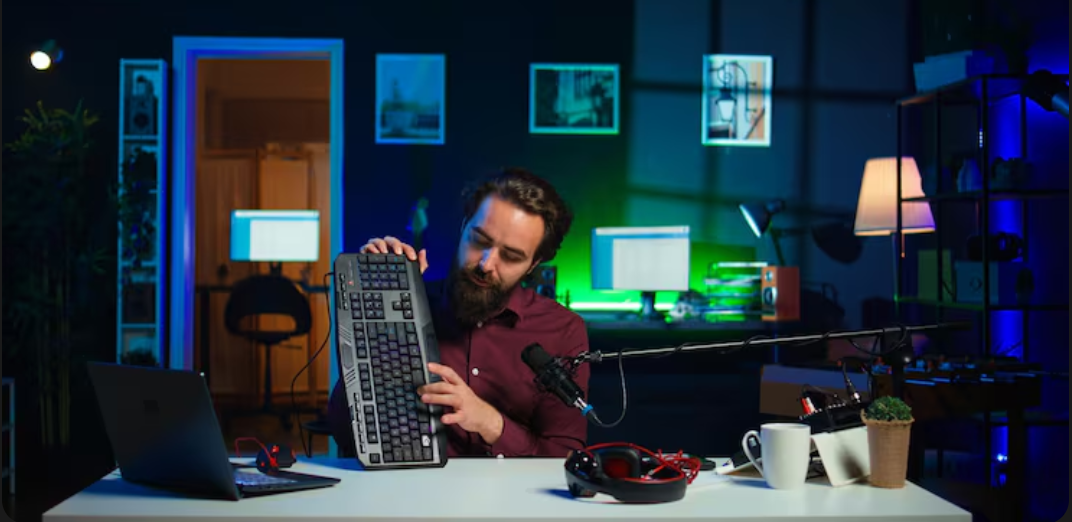
When you look at a RAM listing online and see that a 32GB DDR5 kit is priced somewhere above the price of a brand-new PlayStation 5 at your neighborhood electronics store, a certain kind of silent frustration descends upon you. It doesn’t hit you all at once. It appears gradually, then abruptly, and finally indisputably, just like inflation always does.
This is not how PC gaming was meant to feel. Building your own rig was a source of pride for many years. After locating the components, comparing benchmarks at midnight, and waiting for a sale on Amazon or Newegg, you would have something truly potent for a fair price. The $60 RAM kit was practically a representation of that, demonstrating that frugal purchasing could go farther than any console manufacturer would have you believe. In 2026, it will be more difficult to defend that reasoning.
| Category | Details |
|---|---|
| Topic | PC Gaming vs. Console Gaming — Cost & Value Comparison (2026) |
| Key Hardware Referenced | DDR5 RAM, Nvidia RTX 40/50-series GPUs, PlayStation 5, NVMe SSDs |
| Console Price Point | PS5 Digital Edition — approx. $499 (US) |
| Estimated PC Build Cost (PS5-rival spec) | $900–$1,400+ (2026 estimates) |
| RAM Pricing Concern | 32GB DDR5 kits exceeding PS5 retail price in some markets |
| Industry Factor | AI-driven silicon demand inflating gaming hardware prices |
| Key Platforms | Steam (PC), PlayStation Network (Console) |
| Reference Links | PlayStation Official Site / PC Part Picker — Build Guides |
There were other factors that contributed to the RAM crisis. The majority of PC builders are still processing the broader hardware reckoning that came with it. Prices for memory have increased throughout the stack, and not in the neat, predictable manner that tech pricing typically operates.
The way it compounds is layered and almost architectural. If you’re using a modern platform, DDR5 is now required. If you’re playing anything serious, you’ll need 32GB. Stuttering becomes your main character if you don’t have an NVMe SSD. These days, none of them are inexpensive or optional.
More than anything else, the competition for attention among PC hardware has changed. Not only did the AI explosion change software, but it also had a freight train effect on the supply chain. The same silicon pool that gamers shop in is used by every big company with a cloud strategy and a model to train. When it comes to memory, VRAM, and manufacturing capacity, gaming loses.
It hardly has a place at the table. Additionally, when supply becomes scarce at the top, prices plummet across all tiers, even the entry-level DDR5 kit that was once the starting point for a decent build.
You might have written off console gaming as a compromise a few years ago. Now, that story is actually falling apart. You can still keep the price of the PlayStation 5 in your head. You don’t need to use a spreadsheet, wait for a GPU to drop ten percent, or figure out whether the power supply you found will be able to support the draw of a new RTX card under load. It operates the game after you enter and purchase it. That kind of simplicity has subtly evolved into its own kind of value in 2026.
Even though the PC building community hasn’t publicly acknowledged it, there’s a feeling that it is aware of this. The tone has changed, but people are still building, the benchmark comparisons are still going on, and the forums are still buzzing with excitement. The cost of building a PC that can truly compete with a PS5 in terms of visual quality and frame consistency is now well beyond the “budget” range.
The VRAM required by contemporary AAA games is frequently too much for mid-range GPUs to handle. While DLSS and FSR are helpful, they are merely band-aid solutions to an issue that continues to grow.
As I’ve watched this develop over the past year, it’s almost ironic where things have ended up. Because console manufacturers were told their hardware was outdated, their ecosystems were closed, and their upgrade cycles were too slow, they spent years on the defensive. These days, it seems like the most sensible thing in consumer gaming is the very stability that critics used to ridicule: fixed price, fixed specs, and fixed experience.
The PS5 did not significantly improve. The construction of PCs did not significantly deteriorate. AI demand, supply chain pressure, and the growing awareness that $60 RAM kits don’t create gaming rigs on their own have all contributed to the gap between them.
Right now, the math is not conducive to PC evangelism for someone who is just starting out in gaming or returning after a few years away. It’s still unclear if AI-driven demand will continue to squeeze memory and GPU supply indefinitely or if hardware prices will level off over the next twelve to eighteen months. More games, greater customization, greater flexibility, better monitors, crossplay benefits, and streaming capability without the hassles are all still available in PC gaming. That hasn’t changed at all.
However, “more” only makes sense if you have the means to get there. Additionally, the $60 RAM kit, which used to feel like the first brick in a clever, reasonably priced construction, now feels more like a footnote on a much longer, much more costly receipt than a foundation.

Follow Live Media News on Google News
Get Live Media News headlines in your feed — and add Live Media News as a preferred source in Google Search.
Stay updated
Follow Live Media News in Google News for faster access to breaking coverage, reporting, and analysis.
- Search any trending topic on Google (for example: Greece news).
- On the results page, find the Top stories section.
- Tap Preferred sources and select Live Media News.