


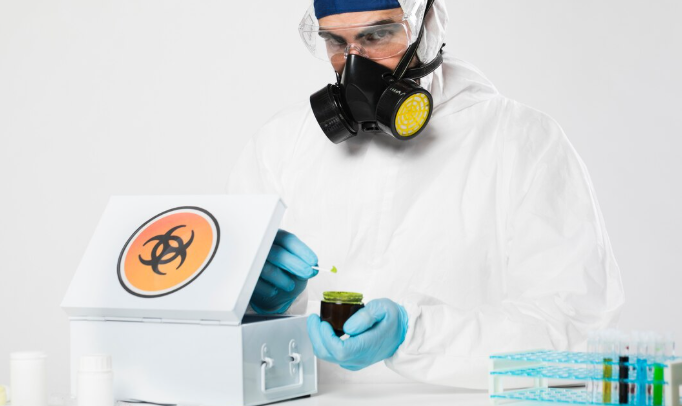
Hospital infection wards are plagued by a certain kind of dread, which is quieter and more procedural than the loud, cinematic dread of emergency rooms. When a patient arrives with pneumonia or a wound infection, cultures are performed. The results show that Acinetobacter baumannii, which is resistant to all treatments, is what every clinician in the room recognizes but no one wants to see. At that point, there aren’t many options.
Critically so most of the time. For more than 50 years, scientists studying antibiotics have had to deal with the fact that bacteria are gradually outgrowing medicine. Because of this, the recent wave of discoveries—including a new class of antibiotics from Roche, a compound discovered by AI at McMaster University, and a molecule discovered by scientists at Warwick and Monash that is 100 times more potent—has created a degree of cautious excitement that feels well-earned.
Drug-resistant superbug antibiotics — key research information
| Key new antibiotic (1) | Zosurabalpin — developed by Roche; first entirely new class of antibiotic targeting Gram-negative bacteria in over 50 years |
| Key new antibiotic (2) | Abaucin — AI-discovered experimental antibiotic (McMaster University / MIT); targets Acinetobacter baumannii |
| Primary target bacteria | Carbapenem-resistant Acinetobacter baumannii (CRAB) — WHO “Priority 1 Critical Pathogen” |
| Other WHO critical pathogens | Pseudomonas aeruginosa, Enterobacteriaceae (e.g. Klebsiella, E. coli) |
| Mechanism of action | Blocks LptB2FGC molecular machine — prevents lipopolysaccharide (LPS) transport to outer membrane, causing bacterial cell death |
| CRAB mortality rate | Up to 60% of infected patients |
| Global annual deaths | Over 1 million per year from antibiotic-resistant infections |
| Lab results | Zosurabalpin killed all 100+ CRAB patient samples tested; prevented sepsis death in mice |
| Current clinical stage | Zosurabalpin — Phase 1 human clinical trials (Roche); Abaucin — further lab testing required |
| AI discovery tool | Trained on thousands of known chemical structures; narrowed candidates from thousands to a handful in hours |
| Norway connection | Norwegian doctors prescribe far fewer antibiotics than other nations — considered a model for preventing resistance development |
| Reference source | The Guardian — Zosurabalpin report |
Although Acinetobacter baumannii, the bacterium at the center of most of this research, is not well-known, it most likely ought to be. McMaster University’s Dr. Jonathan Stokes has referred to it as “public enemy number one,” and not for rhetorical purposes. It can live for a long time on medical equipment and hospital surfaces. The urinary tract, bloodstream, and respiratory system are all infected.
It causes about 20% of infections in healthcare settings and can kill up to 60% of infected patients in its carbapenem-resistant form, known as CRAB. It is one of the three most serious threats to infectious disease, along with Pseudomonas aeruginosa and drug-resistant Enterobacteriaceae, according to the World Health Organization’s designation of it as a Priority 1 critical pathogen. Antibiotic-resistant infections claim the lives of over a million people worldwide each year. A significant portion of those deaths can be attributed to CRAB.
Not only does the novel antibiotic zosurabalpin work, but it does so in a way that medicine has never seen before, which is what makes it so scientifically remarkable. Antibiotics usually work by either targeting the wall itself, as penicillin-based medications do, or by penetrating bacterial cell walls to interfere with internal machinery.
With the ability to degrade carbapenems, which are last-resort medications made from penicillin that are specifically designed to withstand bacterial adaptation, CRAB has evolved to overcome both strategies, giving it what one researcher called a “evolutionary upper hand.”” Zosurabalpin completely avoids this. It inhibits LptB2FGC, a molecular machine that typically moves lipopolysaccharide, a bacterial toxin, from the inner to the outer membrane. The toxin builds up inside the bacteria when that transport is obstructed.
According to one description, the cell essentially destroys itself by pulling the pin on its own grenade but being unable to toss it. When tested against over 100 CRAB samples taken from real patients, zosurabalpin killed each and every one of them.
Norway is on the intriguing periphery of this narrative. Due to their belief that overprescription is the primary cause of resistance, Norwegian doctors have been prescribing antibiotics less frequently than practically anywhere else in the world for decades. As a result, their population has been far less exposed to resistant strains than patients in many other nations.
It is, in some respects, the antibiotic counterpart of budgetary restraint: unglamorous, easily given up under duress, and most likely right. Discoveries like zosurabalpin are both crucial and delicate at the same time because of the lesson Norway’s model teaches: the value of new drugs is inextricably linked to the stewardship of existing ones. Overprescription of a new antibiotic will put it under the same evolutionary pressure as all previous medications.
Artificial intelligence’s contribution to speeding up this search merits more consideration than it usually receives. When scientists at MIT and McMaster set out to discover a novel substance that would specifically target Acinetobacter baumannii, They used an AI that had been trained on thousands of drugs with known chemical structures to screen candidates faster than a human team could. The outcome was abaucin, an experimental substance that showed effectiveness against the target bacterium in lab settings but still requires additional testing.
The AI assisted in condensing what took years for traditional drug screening programs to approximate into something much shorter. This does not imply that the laborious process of clinical trials is no longer necessary. As a result, the funnel narrows more quickly, allowing researchers to find candidates worth testing sooner rather than later. In a field where the development of a single antibiotic frequently takes ten years or longer, that compression is crucial.
As all of this is happening, it’s difficult not to feel a cautious, brittle kind of hope. In Phase 1 human trials, zosurabalpin is being tested for toxicity and side effects to see if what worked in mice also works in humans. It’s still unclear if the medication will easily pass that test or if resistance will develop more quickly than expected.
There have already been some reports of mutations in the drug’s target, but they seem to lessen rather than completely eliminate its effectiveness. In clinical development, the failure rate of novel antibiotic candidates is still very high. Perhaps because they have been let down in the past, researchers are cautious to state this time and time again.
And yet. It’s a novel mechanism. In mice, the outcomes were evident. The scientific community, which is not known for being overly enthusiastic, is characterizing this as a truly important development. There is finally something worth seeing about Gram-negative antibiotics after fifty years of silence.

Follow Live Media News on Google News
Get Live Media News headlines in your feed — and add Live Media News as a preferred source in Google Search.
Stay updated
Follow Live Media News in Google News for faster access to breaking coverage, reporting, and analysis.
- Search any trending topic on Google (for example: Greece news).
- On the results page, find the Top stories section.
- Tap Preferred sources and select Live Media News.