


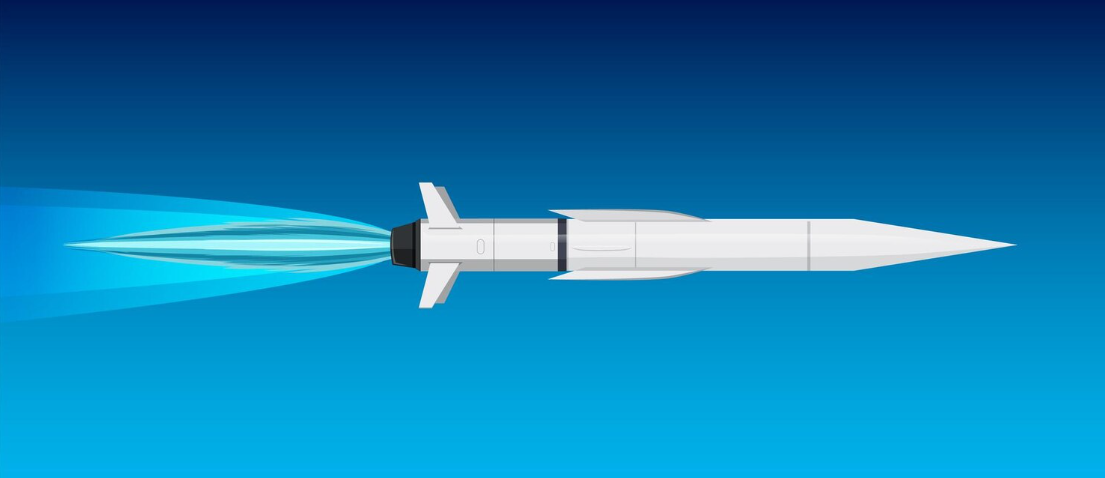
It’s hard to discuss contemporary cruise missiles without eventually bringing up one specific weapon: the Tomahawk. The name itself has a sharp, archaic, almost primitive cinematic quality. However, the item to which it alludes is far from straightforward. When you watch a video of a Tomahawk taking off from a destroyer’s deck, with white smoke curling across gray steel, you can’t help but notice how much industrial strength, engineering, and politics are involved. And that raises the obvious question that a lot of people ask in private: who makes these things?
Today, Raytheon Technologies, commonly known as RTX, is largely responsible for the response. When you enter one of its missile facilities in Arizona or another part of the American defense corridor, you’ll see rows of cylindrical missile bodies resting on metal frames, wiring harnesses hanging like incomplete circuitry, and long assembly areas full of blue-coated technicians. It feels less like a weapons plant and more like an aerospace lab. Silent. Accurate. methodical. The Tomahawk, however, didn’t begin there.
| Category | Details |
|---|---|
| Missile Name | BGM-109 Tomahawk Land Attack Missile (TLAM) |
| Primary Manufacturer | Raytheon Technologies (RTX) |
| Original Developer | Johns Hopkins University Applied Physics Laboratory |
| First Production | 1970s (initially by General Dynamics) |
| Current Primary User | United States Navy |
| Range | Up to about 1,500 miles |
| Speed | ~550 mph (subsonic) |
| Launch Platforms | Ships, submarines, and ground launchers |
| Latest Variant | Block V Tactical Tomahawk |
| Reference | https://www.navy.mil |
Early development of the missile took place in the 1970s in the Johns Hopkins University Applied Physics Laboratory’s research halls, which are located close to Laurel, Maryland. Under the direction of program leader James H. Walker, engineers were attempting to find a solution to a strategic issue that persisted throughout the Cold War: how to hit targets that were far away without endangering pilots. Constructing a missile that could fly low, follow terrain, and cover hundreds or even thousands of miles was an elegant idea.
As the only manufacturer during the program’s initial phase, General Dynamics constructed the early prototypes. Test flights over isolated regions of northern Canada, engineers examining maps of the terrain printed on large sheets of paper, and computers much less powerful than today’s smartphones figuring out missile routes—there’s something almost nostalgic about that period of weapons development.
The challenging topography of the Soviet Union was replicated in those tests, which were carried out as part of the Canada-U.S. Test and Evaluation Program. A large portion of the early navigation logic of the Tomahawk originated from an attempt to comprehend how a missile might fly through forests, mountains, and frozen tundra without getting lost. After that, the manufacturing baton was passed around multiple times.
McDonnell Douglas briefly took over as the primary manufacturer in the early 1990s, putting together upgraded Block II and Block III missiles. A contract to take over production was soon awarded to Hughes Aircraft, which had previously purchased General Dynamics’ missile division. Raytheon and Hughes eventually partnered to carry on developing the weapon.
Then, in 1997, there was a silent but significant event. Hughes’ missile business was outright acquired by Raytheon.
Raytheon essentially became the only producer of Tomahawk cruise missiles after that, a status it maintains to this day. that people don’t realize how important exclusivity is.
Every Tomahawk is more than just a missile body with a warhead fastened to it. Turbofan engines, terrain-matching sensors, satellite communication systems, radar altimeters, and navigation computers are among its many specialized components. A few of these parts are sourced from lone vendors dispersed throughout the defense supply chain. Production may stop if a supplier is lost.
Every now and then, industry analysts bring this up with a hint of worry. Despite its sophistication, the Tomahawk supply chain is perceived as being delicate.
That discussion has only become more acute as a result of recent military operations. According to reports, U.S. naval forces fired hundreds of Tomahawk missiles in a few days during the intense strikes of Operation Epic Fury. Analysts started doing quick math in their heads as they watched that happen. Restoring a few hundred spent weapons quickly turns into a multi-year undertaking if production is limited to about 90 to 100 missiles annually. It appears that defense planners and investors are aware of the imbalance.
Raytheon is currently working to significantly increase production. Over the next few years, production could surpass 1,000 missiles annually under a new deal with the U.S. Department of Defense. For a weapon whose manufacturing line once hummed along slowly in order to survive, that is a remarkable change.
However, hiring more workers isn’t the only way to build Tomahawks more quickly. Certain propulsion components, especially solid rocket motors, have lengthy lead times, and many parts need specific manufacturing procedures. Even with funding, it might take some time for the industrial system to catch up. However, the missile itself continues to change.
The most recent Block V Tomahawk has the ability to loiter over a battlefield, retarget while in flight, and even send imagery back to commanders prior to impact. It’s difficult not to notice an odd contradiction when standing next to one during a military demonstration—long gray body, folding wings tucked tight. The design appears to be modest and nearly straightforward. However, it contains decades’ worth of advancements in aerospace. mThus, the narrative returns to the initial query. Who produces the Tomahawk missiles?
In a technical sense, Raytheon is the answer. However, it is evident from observing the missile’s development—from academic labs to Cold War experiments, from defense mergers to contemporary naval combat—that the weapon is a representation of something greater. a network of subcontractors, factories, engineers, and geopolitical choices that collaborate covertly. It is possible for the missile to fly by itself. Its industry most definitely doesn’t.

Follow Live Media News on Google News
Get Live Media News headlines in your feed — and add Live Media News as a preferred source in Google Search.
Stay updated
Follow Live Media News in Google News for faster access to breaking coverage, reporting, and analysis.
- Search any trending topic on Google (for example: Greece news).
- On the results page, find the Top stories section.
- Tap Preferred sources and select Live Media News.