


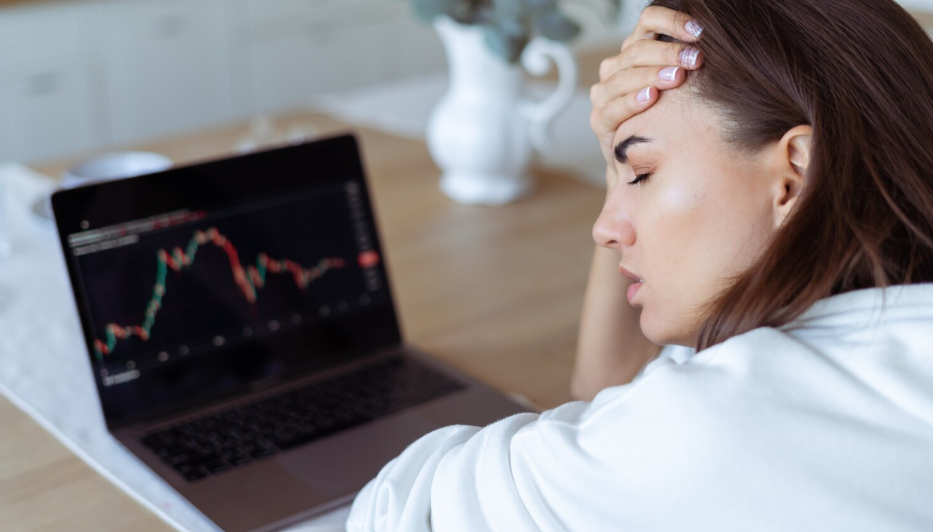
Home offices and trading floors appear surprisingly quiet in the late afternoon. Screens have a gentle glow. Charts veer slightly upward or sideways. Near keyboards are half-finished coffee cups. The market looks calm on paper. Investors, however, appear unusually tense. This contradiction is odd.
Earlier this year, the announcement of a new round of tariffs by Washington, which officials dubbed “Liberation Day,” caused the global stock market to plummet nearly 20%. The drop was swift—the kind of swift descent that causes people to look at their portfolios with a silent sense of dismay. However, an intriguing event followed. By late October, the market had risen about 36% from the bottom as the panic subsided and the charts stabilized.
| Category | Information |
|---|---|
| Market Focus | Global Equities (MSCI ACWI Index) |
| Major Event | Global sell-off following U.S. tariff announcements |
| Market Drop | Nearly 20% decline during April volatility |
| Recovery | Global stocks later rose about 36% from the lows |
| Key Volatility Indicator | VIX Index (“Fear Gauge�) |
| Long-Term Pattern | 10% market declines occur in more than half of years historically |
| Investment Insight | Stocks historically outperform inflation over long horizons |
| Research Sources | Morningstar, CFA Institute, LSEG Datastream |
| Example Reference | https://www.msci.com |
| Market Theme | Investor psychology vs. market reality |
The feeling is probably familiar to anyone who sold during the worst of it. That uncomfortable remorse that comes weeks later.
There has been a discernible change in tone recently when strolling through financial districts in places like New York or London. Not quite a panic. Something more subdued. Investors discuss volatility in the same way that people discuss the weather prior to a storm: they are cautious, a little dubious, and waiting for the sky to change.
The strange thing is that markets aren’t acting very dramatically from an objective standpoint. Prices have slightly decreased from their recent peaks. Less than five percent has been lost. That hardly qualifies as a disturbance in the past. However, the tone is more somber than the figures indicate. Memory contributes to the tension. April comes to mind for investors.
At the time, headlines sounded like they belonged in a different decade, geopolitical tensions were increasing, and tariffs were spreading across trade routes. It made sense to sell. Perhaps even accountable. However, what is emotionally comfortable is rarely rewarded by markets. The losses disappeared in a matter of months.
The speed at which fear and recovery can coexist in financial markets is difficult to ignore. The emotional turmoil that frequently motivates the charts is rarely visible when they are silently displayed on screens.
Additionally, there is the issue of perspective. Even significant market corrections are common. They actually occur more frequently than most people think. Stocks have dropped more than 10% in more than half of calendar years during the last 50 years. About every four years, there is a 20% decline. From that perspective, volatility appears almost normal. However, the human response never becomes habitual.
Observing how investors respond to market fluctuations can occasionally be likened to witnessing individuals approach the edge of a chilly swimming pool. After a minute, everyone knows the water will feel fine. However, hesitation always comes with the first step.
The VIX index, which is frequently referred to as the market’s fear gauge, is the focus of some anxiety. It was sitting comfortably at 15, indicating relative calm, not too long ago. It recently approached 28. It’s still far from historic extremes, but it’s enough to start discussions. These signals appear to be more important to investors than they actually are.
According to history, responding to fear gauges can be costly. Staying invested has often outperformed strategies that exit stocks when volatility spikes. It’s an annoying reality. In theory, timing the market makes sense. In actuality, it typically entails missing the rebound. Rebounds also happen more quickly than people anticipate.
The market’s propensity to linger close to record highs is another cause for concern. That feels dangerous, instinctively. Purchasing at a high price seems like a recipe for trouble. However, the information presents a somewhat different picture. In the last century, markets have often produced higher returns following new highs than during typical times. It seems illogical. However, markets climb for a surprisingly long time.
Since the 1920s, almost one-third of all months have seen levels at or close to records. Many instinctive investor behaviors are called into question by that straightforward fact. Large sums of money have historically been destroyed by selling just because prices seem “too high.” However, the emotional battle is rarely won by logic.
Today’s investors must navigate a world beset by ongoing inflation concerns, trade disputes, and geopolitical tensions. There seems to be a tinge of uncertainty in every headline. There’s always a chance that something could change quickly, even when markets seem stable. Maybe that’s the true tale of the present atmosphere.
The charts appear serene. Resilience is suggested by the numbers. Beneath the surface, however, a lot of investors continue to feel uneasy because they are aware of how easily stability can vanish.
This tension might never completely go away. After all, markets are predicated on future expectations, which are notoriously difficult for humans to forecast.
Observing the current situation, one gets the impression that the market is subtly reminding people of a difficult lesson. Volatility itself is frequently not the greatest risk. Investors make emotional choices in an attempt to avoid it.

Follow Live Media News on Google News
Get Live Media News headlines in your feed — and add Live Media News as a preferred source in Google Search.
Stay updated
Follow Live Media News in Google News for faster access to breaking coverage, reporting, and analysis.
- Search any trending topic on Google (for example: Greece news).
- On the results page, find the Top stories section.
- Tap Preferred sources and select Live Media News.