


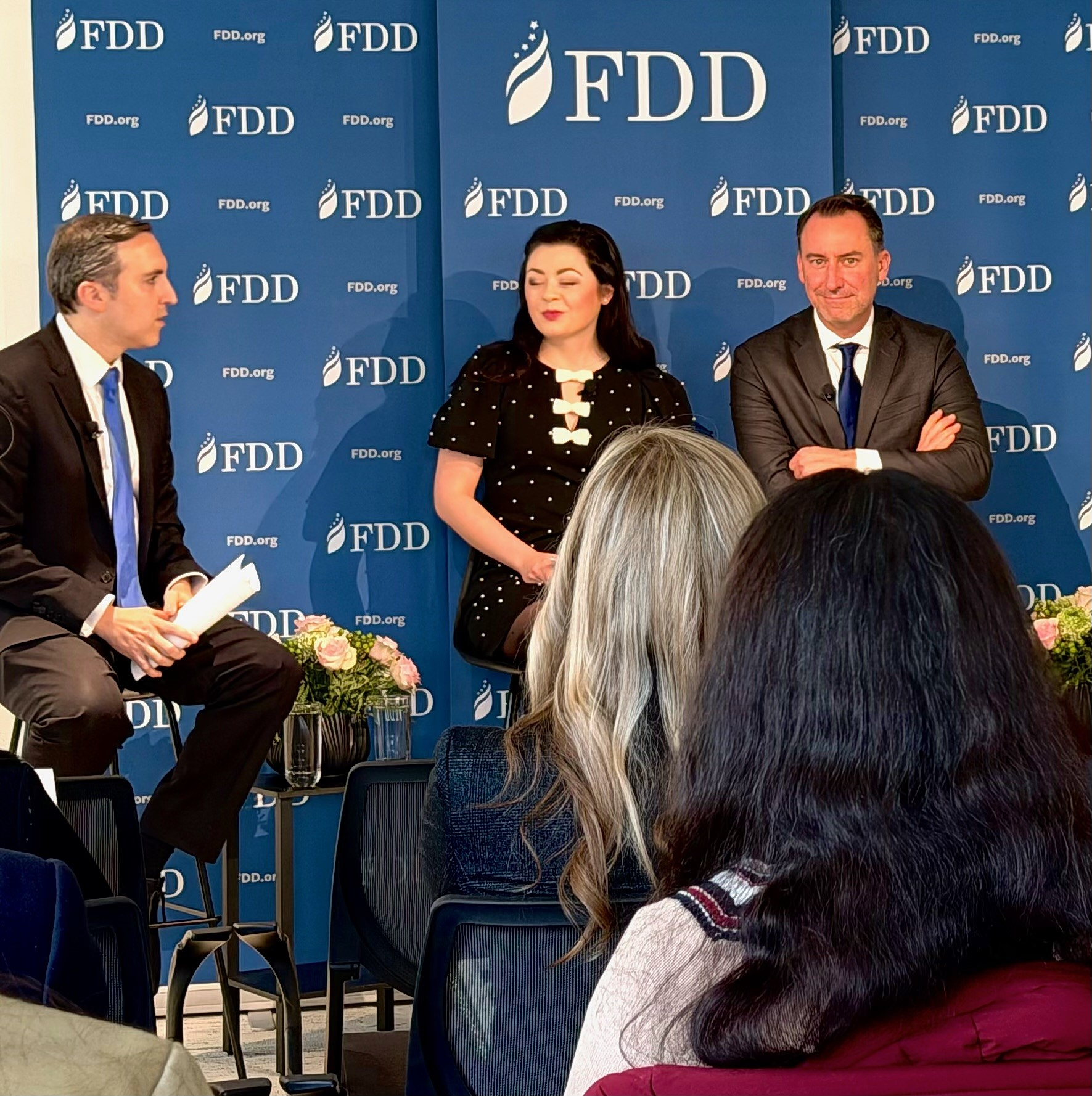
Over the past week, senior Trump administration officials have repeatedly positioned Greece as a central hub in the United States’ evolving energy strategy in Europe, citing recent agreements in Athens as a model for expanding American LNG exports across the continent. The message surfaced first at a forum hosted by the Foundation for Defense of Democracies in Washington and was reiterated days later at the Munich Security Conference, where White House energy officials publicly praised Greece’s role in advancing the Vertical Corridor linking Southern and Eastern Europe to U.S. supply.
Taken together, the appearances offer a clearer view of how the administration defines President Trump’s concept of American energy dominance: not only as domestic production strength, but as a framework for anchoring parts of Europe’s energy infrastructure to long-term American contracts. Whether that strategy can move at the pace officials suggest will depend on financing, regulatory coordination, and infrastructure capacity across several countries.
Greece Emerges as Strategic Energy Gateway
The emphasis reflects structural considerations as much as diplomacy, according to administration officials. Greece has expanded LNG import capacity, including floating regasification units, and sits at the southern edge of the Balkans with pipeline links capable of moving supply northward. For U.S. planners, that combination of port access, regional interconnections, and political alignment makes Greece a practical entry point into Southeastern Europe.
At the Foundation for Defense of Democracies forum, Interior Secretary Doug Burgum delivered the keynote address, while senior White House energy officials detailed efforts to expand U.S. liquefied natural gas flows through Greece. Jarrod Agen, Executive Director of the National Energy Dominance Council, described negotiations in Athens that stretched late into the night, saying the goal was to secure binding commitments tied to the corridor before delegations departed.
Long-Term Contracts Anchor U.S. Energy Strategy
The long-term LNG contract signed in Greece is modest by American export standards, officials acknowledged. However, within the administration it is viewed as strategically useful because it locks in demand at a southern European node capable of feeding supply into Bulgaria and Romania. Officials also noted that sustained engagement between Greek energy authorities and senior U.S. counterparts helped accelerate the process.
Mr. Agen said the next phase is to “look beyond the Greek borders.” Discussions are underway with Bulgaria, Romania, and Ukraine to extend the Vertical Corridor and convert it from concept into an operating supply architecture. The objective is to secure 10-to-20-year commitments that provide commercial predictability and signal durability.
February Summit and Infrastructure Challenges
A Feb. 24 ministerial meeting in Washington is intended to advance that effort, followed by coordination at CERAWeek in Houston. Cross-border infrastructure, however, tends to move more slowly than diplomatic timelines, analysts note. Pipeline capacity, regulatory approvals and long-term pricing structures require coordination among governments and private operators.
Additionally, the emphasis on Greece carried beyond Washington. Speaking at the Munich Security Conference, Mr. Agen again highlighted the recent energy agreements between Athens and Washington and publicly praised Stavros Papastavrou, Greece’s Minister of Environment and Energy, who was present in the audience. He reiterated the importance of the Vertical Corridor as a conduit for U.S. LNG entering Greece and moving northward into Southeastern Europe and Ukraine.
Regional Frameworks and Connectivity Routes
Meanwhile, Merav Ceren, Senior Director for International Energy Policy at the National Energy Dominance Council, linked gas exports to a broader set of infrastructure initiatives, including the 3+1 framework among Greece, Cyprus, Israel and the United States. She also referenced the India Middle East Europe Economic Corridor, or IMEC, suggesting renewed executive branch attention to regional cooperation after a period of lower visibility.
Her remarks pointed to energy projects being presented alongside electricity interconnections, fiber networks, and transport corridors as parts of a wider connectivity map. Turkey entered that discussion as well, with Ms. Ceren describing potential routes passing through northeastern Syria into Turkey before linking to Europe, portraying Ankara as a possible node in future corridor planning.
Energy Dominance as Strategic Doctrine
In contrast to previous administrations, Mr. Burgum placed the corridor strategy within a broader doctrine. He described energy sovereignty as maintaining sufficient domestic production to stabilize U.S. prices while enabling the United States to supply partners abroad. In that formulation, export capacity becomes strategic capacity, he argued.
Energy policy, economic competitiveness, and national security are increasingly intertwined, particularly as electricity demand rises alongside artificial intelligence development, according to the Interior Secretary. For Greece, the shift is tangible, as Athens is being referenced in Washington as an operational node in a broader supply strategy aimed at reshaping parts of Europe’s energy map.
Whether that network matures as officials anticipate will depend on market conditions, financing, and sustained political coordination among participating countries. The February ministerial meeting is expected to provide further clarity on timelines and commitments, though authorities have not confirmed specific targets or delivery schedules.

Follow Live Media News on Google News
Get Live Media News headlines in your feed — and add Live Media News as a preferred source in Google Search.
Stay updated
Follow Live Media News in Google News for faster access to breaking coverage, reporting, and analysis.
- Search any trending topic on Google (for example: Greece news).
- On the results page, find the Top stories section.
- Tap Preferred sources and select Live Media News.