


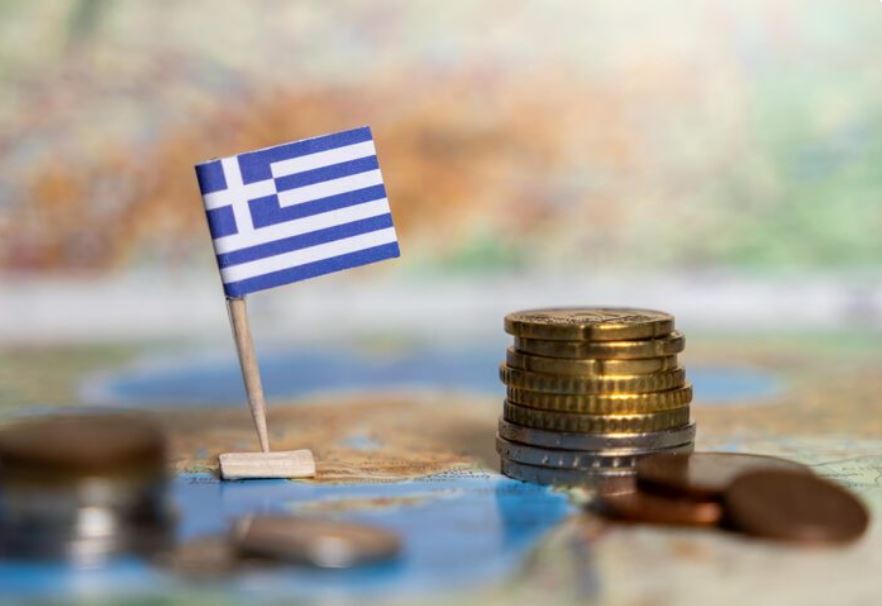
The Greek economy still appears promising when you stroll through Monastiraki on a weekday morning. The cafes are packed. Travelers have returned. The quiet anxiety that characterized the previous ten years has vanished from the ferries to the islands. Greece has been quietly telling Europe and itself that the crisis years are finally over for the majority of the last two years. That progress is not reversed by the IMF’s most recent downgrade. However, it does alter the conversation’s tone—possibly more than the headline number’s 0.2-point cut indicates.
Greek growth is now predicted by the Fund to be 1.8% in 2026, compared to 2.0% in October of last year. In a similar vein, the Bank of Greece has already reduced its forecast from 2.1 to 1.9 percent. Officials in Athens’ Finance Ministry are working on a different budget scenario that assumes growth of between 1.5 and 1.9 percent, which is significantly less than the 2.4 percent that the original budget called for. Quietly, the old “extreme scenario”—built for oil at about $100 for an entire year—is turning into the working base case.
| Detail | Information |
|---|---|
| Forecasting Body | International Monetary Fund |
| IMF 2026 Greek Growth Forecast | 1.8% |
| Previous Forecast (Oct 2025) | 2.0% |
| Bank of Greece Revised Forecast | 1.9% (down from 2.1%) |
| Greek Finance Ministry Range | 1.5%–1.9% |
| Previous Budget Forecast | 2.4% |
| 2025 Actual Growth | 2.2% |
| Revised 2026 Inflation Forecast | ~3.5% |
| Previous Inflation Forecast | 2.2% |
| Primary Surplus Target (2024 actual) | 4.8% of GDP |
| Targeted Medium-Term Surplus | ~2.5% of GDP |
| Debt Reduction Target (by 2028) | Additional 20 percentage points of GDP |
| Global Growth Forecast (IMF, 2026) | 3.1% |
| Trigger for Downgrade | Iran war, Strait of Hormuz disruption, oil shock |
| Oil Disruption Scale | ~20% of global oil and gas stuck in Hormuz |
| Key Vulnerability | Non-performing legacy loans, high services inflation |
| Relevant Institutions | IMF, Bank of Greece |
The logic is more important than the numbers. It’s not a Greek failure. It’s a shock from abroad. Kristalina Georgieva of the IMF has been remarkably direct about it, stating that about 20% of the world’s oil and gas is trapped in the Strait of Hormuz, that a “large” disruption is testing the global economy, and that “everyone will feel the impact.” Greece is right in the middle of that suffering because it is a net importer of energy and heavily dependent on shipping, travel, and fuel-powered services. Families that were beginning to experience some respite from rising grocery and heating expenses will now have to deal with another round of inflation, which is expected to return to 3.5 percent.
The arithmetic of this shock manifests itself in seemingly insignificant ways for average Greeks. Bills for electricity are rising. The cost of diesel for trucks and ferries increases. Higher supplier costs are passed on by restaurants. The very tourism figures that have been driving the recovery are being negatively impacted by the gradual increase in vacation travel costs. Speaking with hoteliers on Crete or shopkeepers in Thessaloniki, it seems like the past two years are starting to feel normal again. After a few months, the anxiety quickly returns.
It’s important to consider Greece’s position five years ago in order to understand the significance of this downgrade, despite its apparent mildness. In 2024, primary surpluses reached 4.8% of GDP. From its peak, the public debt had decreased by almost 55 percentage points. For the first time in ten years, the banking system, which had previously been a national embarrassment, had cleaned up balance sheets, drawn back foreign investors, and started properly funding the real economy. In a recent report, the IMF itself described Greece’s recovery as “remarkable”—a term the Fund hardly ever employs. In that situation, a growth revision is more difficult to implement than in Germany or France. There’s less space for disappointment.
The stock of unprocessed bad loans that still looms over the Greek private sector is the deeper issue, which the IMF has been quietly pointing out for months. Courts and servicing platforms continue to handle millions of legacy non-performing loans. They slow the healing process when things are going well. They can exacerbate a shock year because already vulnerable households and small businesses have fewer safeguards. Greece’s cash reserves are sufficient to mitigate sovereign risk. Greeks do not enjoy the same luxury on an individual basis.
It’s difficult not to get a little déjà vu as you watch this play out. The fundamentals are actually better now, not because of the crisis of the 2010s. However, the Greek economy has always been characterized by its reliance on fuel that it does not produce, on travelers who are free to alter their plans, and on the slowing growth of Europe. No one will be broken by the downgrade alone. It serves as a reminder to every Greek household that, despite its reality, the recovery is still dependent on circumstances outside of Greece’s control.

Follow Live Media News on Google News
Get Live Media News headlines in your feed — and add Live Media News as a preferred source in Google Search.
Stay updated
Follow Live Media News in Google News for faster access to breaking coverage, reporting, and analysis.
- Search any trending topic on Google (for example: Greece news).
- On the results page, find the Top stories section.
- Tap Preferred sources and select Live Media News.