


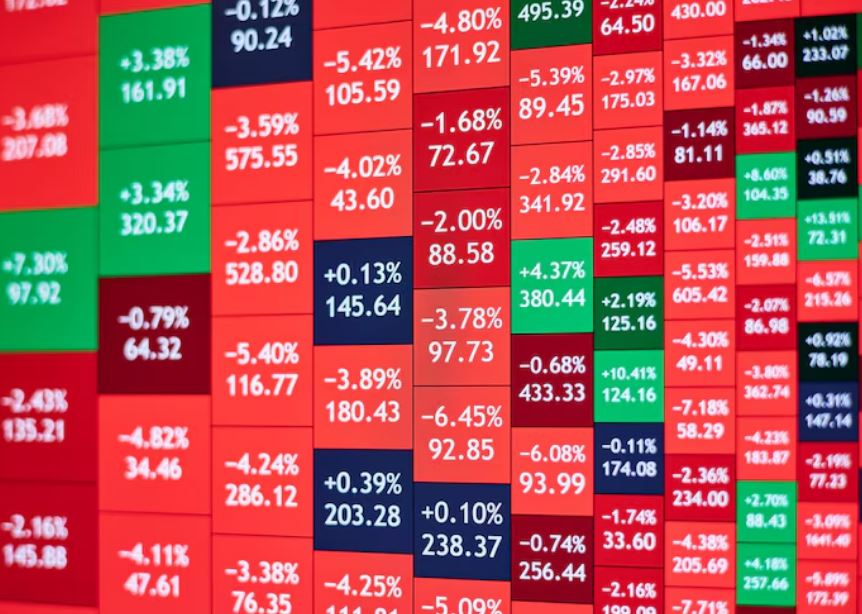
When you view the NBIS chart for the first time without any context, it can be almost confusing. The line begins at $20.25, which was the 52-week low reached sometime in the spring of 2025, when Nebius Group was still regarded as a relatively unknown Amsterdam-based AI infrastructure company with a convoluted corporate history and a modest but expanding revenue base. After that, the queue lengthens. and continues. The stock reached a new all-time high of $166.81 by April 16, 2026, which was recorded as the intraday peak on the day this was written. a 12-month gain of 681%. a return of seven times. The rate of rerating has been truly remarkable to observe for a company that reported $117.5 million in total revenue in 2024.
Even though the pace of what has occurred is mysterious, the business case for it is not. With operations in the US, Europe, and Israel, Nebius Group is based in Amsterdam and develops and manages AI cloud infrastructure, including GPU clusters, data centers, and the related compute capacity that the AI industry is using more quickly than most infrastructure builders can provide.
| Key Information | Details |
|---|---|
| Company | Nebius Group N.V. — AI cloud infrastructure provider |
| Ticker | NBIS (NASDAQ) |
| Current Share Price | ~$166.77 USD (April 16, 2026); pre-market $167.00 |
| 52-Week High | $166.81 — hit on April 16, 2026 |
| 52-Week Low | $20.25 |
| 1-Year Return | ~+681% (one of the strongest performers on NASDAQ) |
| Market Capitalisation | ~$42.20 billion |
| P/E Ratio (TTM) | 1,454.98 — reflecting heavy capital investment mode |
| Q4 2025 Revenue | $227.7 million — +500.79% year-on-year |
| 2026 Revenue Guidance | $3.0–$3.4 billion |
| ARR Target (end of 2026) | $7–$9 billion annualised run-rate |
| Meta Contract (Mar 2026) | $12 billion dedicated AI compute (5 years from early 2027) + $15 billion additional capacity |
| Microsoft Supply Agreement | $19.4 billion |
| Nvidia Investment | $2 billion strategic stake |
| Total Contract Stack | ~$46 billion |
| Goldman Sachs Price Target | $205 (raised by $45 following Meta deal) — Buy rating maintained |
| Analyst Consensus Target | ~$187.33 |
| Capex Plan 2026 | $16–$20 billion — nine new data center sites across US and Europe |
| Headquarters | Amsterdam, Netherlands |
| Employees | 1,371 (2024) |
When compared to the company’s guidance for the entire year 2026, which called for revenue between $3.0 billion and $3.4 billion with an annualized run-rate of $7 billion to $9 billion by year-end, the company’s Q4 2025 revenue of $227.7 million, up more than 500% year over year, sounds remarkable. The size of the planned ramp from the company’s current position to its anticipated position by December is either one of the most ambitious capital deployment stories in the technology sector at the moment or a plan that will run into difficulties before it achieves its goals.
The number that most investors are concentrating on is the contract stack. Nebius and Meta signed a $12 billion deal in March 2026 for dedicated AI compute capacity over five years, beginning in early 2027. Meta also committed to an additional $15 billion in future capacity across upcoming clusters, which Nebius described as the largest contract in its history. The total contracted pipeline is approximately $46 billion, including a $2 billion strategic investment from Nvidia and an existing $19.4 billion Microsoft supply agreement.
In reaction to the announcement of the Meta deal, Goldman Sachs increased its revenue projections for 2027 through 2030 by 30% to 54% and increased its twelve-month price target by $45 to $205, a 32% increase in a single move. At Goldman, such target adjustments are not made lightly. It implies that the Meta deal modifies the long-term model in ways that the earlier hypotheses were unable to account for.

The story becomes more intricate and fascinating when it comes to the capital expenditure commitment. Nebius has already raised $4.34 billion in convertible debt to finance the expansion, and it intends to spend between $16 billion and $20 billion on capital expenditures in 2026 alone across nine new data center locations in the US and Europe. By year’s end, the company hopes to have 800 megawatts to 1 gigawatt of available data center capacity. It has already contracted more than 2 gigawatts of power, with plans to surpass 3 gigawatts. For a business that reported nine-figure quarterly revenues less than a year ago, these are substantial figures. A discernible shift toward longer-term customer contracts is driving the pipeline toward $4 billion in new commitments in early 2026. In Q4 2025, new agreements extended their duration by almost 50%, indicating that customers are locking in capacity rather than keeping options open.
The conflict between the optimistic infrastructure narrative and the valuation calculations is difficult to ignore. Based on projected cash flows through 2035, Simply Wall St’s DCF analysis indicates that the stock may be 75% undervalued compared to an intrinsic value estimate of $627 per share. The same platform’s more conservative narrative model, on the other hand, constructs a bear case around the fair value of $45.62, suggesting that the current share price is more than three times what the cautious model supports. The large discrepancy between those two figures is caused by Nebius’s continued aggressive cash burning, the free cash flow loss over the past 12 months exceeding $3.5 billion, and the need to execute at a scale and speed that is unprecedented in the company’s own history in order to move from current revenue to the $7–$9 billion ARR target. This week, Wolfe Research began reporting with a Peerperform rating, which is neither bearish nor enthusiastic.
Observing Nebius during this stage of its growth gives one the impression that the company has accurately determined where the demand is and is now placing a significant wager that it can expand quickly enough to seize it before the window closes. The contracts with Microsoft, Nvidia, and Meta are not speculative alliances. They are contracts that have been signed with counterparties who have a stake in the timely realization of the capacity. Analysts are debating in real time whether the stock at $167 is pricing in the correct outcome or an overly optimistic version of it. To be honest, the answer is still not entirely clear.

Follow Live Media News on Google News
Get Live Media News headlines in your feed — and add Live Media News as a preferred source in Google Search.
Stay updated
Follow Live Media News in Google News for faster access to breaking coverage, reporting, and analysis.
- Search any trending topic on Google (for example: Greece news).
- On the results page, find the Top stories section.
- Tap Preferred sources and select Live Media News.