


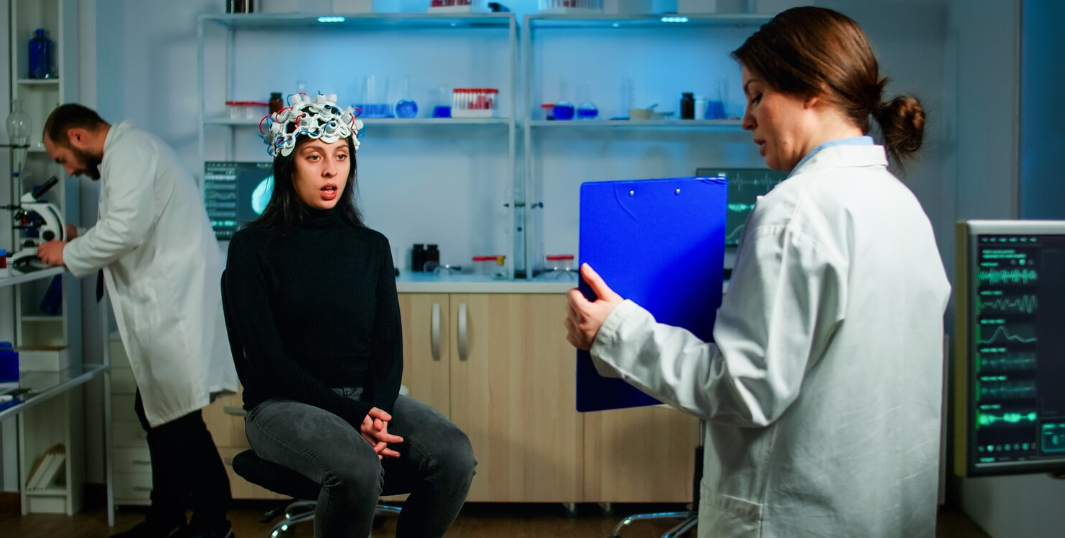
A quiet, almost reluctant revolution is taking place in a research suite at Baltimore’s Johns Hopkins Bayview Medical Center. The hallways have the same neutral walls, fluorescent lighting, and subtle institutional odor as any other academic hospital. On the inside, however, researchers have been doing something that would have seemed professionally suicidal twenty years ago: administering psilocybin, the active ingredient in what most people still refer to as “magic mushrooms,” and witnessing depression alleviate in ways that decades of pharmaceutical development have just not been able to duplicate.
When you sit with the numbers long enough, it becomes difficult to ignore them. Patients with major depressive disorder were given just two psilocybin sessions along with approximately eleven hours of supportive psychotherapy in a randomized controlled trial carried out by the Johns Hopkins Center for Psychedelic and Consciousness Research.
| Category | Details |
|---|---|
| Institution | Johns Hopkins University School of Medicine |
| Center | Johns Hopkins Center for Psychedelic and Consciousness Research |
| Location | Johns Hopkins Bayview Medical Center, Baltimore, Maryland |
| Founded (Psychedelic Research) | 2000 (psychedelic research began); Center formally established 2019 |
| Key Researcher | Dr. Roland Griffiths, Professor of Neuroscience & Psychiatry (founding director) |
| Lead Study Author | Dr. Natalie Gukasyan, Assistant Professor of Psychiatry and Behavioral Sciences |
| Study Period | August 2017 – July 2019 (primary outcomes), follow-up through 12 months |
| Study Published In | Journal of Psychopharmacology; JAMA Psychiatry |
| Participants | 27 adults with major depressive disorder (MDD), ages 21–75 |
| Treatment | Two psilocybin sessions + approximately 11 hours of supportive psychotherapy |
| Remission Rate | 58% at week 1; 54% at week 4 |
| Treatment Response | 71% achieved ≥50% reduction in depression scores |
| Official Reference | Johns Hopkins Medicine – Psychedelic Research |
| Additional Reference | Johns Hopkins Center for Psychedelic and Consciousness Research |
The average self-reported depression score decreased from 16.7 to 6.3 within one day of the first session. Not for weeks. Not after months of dosage titration. One day. 71% of participants had at least a 50% reduction in their depression scores by the first week, which is what doctors refer to as a treatment response. Of them, 58% were in complete remission.
For comparison, the effect sizes of standard antidepressants, such as SSRIs, which have been prescribed since the late 1980s, are usually about four times smaller than what these researchers found. There is no rounding error in that gap. It’s a canyon.
The study, published in JAMA Psychiatry and a follow-up report in the Journal of Psychopharmacology, followed 27 adults who had been living with depression for an average of about two years before entering the trial. The majority had previously used traditional antidepressants. Some had taken them when they were experiencing depressive episodes. These were individuals that mainstream medicine had not yet fully reached, not those who had shunned it. However, their depression scores remained low at one month, three months, six months, and in many cases, twelve months after two psilocybin sessions.
The center’s founding director, Dr. Roland Griffiths, a professor at Johns Hopkins who teaches both neuroscience and psychiatry, has been cautious not to overstate the findings, but he’s also not hiding what they imply. Psilocybin has demonstrated the ability to provide long-lasting relief with just one or two doses, in contrast to antidepressants that need daily adherence for months or years. That treatment logic is essentially different. It’s possible that since SSRIs first emerged, psychiatry hasn’t faced a change this structural.
Psilocybin isn’t being distributed as a stand-alone drug, which is what sets the Johns Hopkins approach apart and is sometimes overlooked in the breathless coverage this research receives. Here, the “assisted” component of psychedelic-assisted therapy is really effective. Prior to their sessions, participants underwent thorough psychological preparation; trained therapists were present during the experience; and afterward, they received structured integration support.
It appears that the therapeutic container and the compound cooperate in ways that neither does on its own. In addition to activating serotonin receptors, especially the 5-HT2A receptors, psilocybin seems to encourage neuroplasticity, which essentially loosens hardened patterns in brain circuits linked to depression and increases their responsiveness to psychological intervention. It is not magical. It’s a mechanism. However, this mechanism has never been observed in this combination before.
Given how frequently early mental health research fails to replicate, Dr. Natalie Gukasyan, the assistant professor of psychiatry and behavioral sciences who oversaw the follow-up study, has been measured in her enthusiasm. She stresses that people shouldn’t try to replicate this on their own because the results were obtained in a carefully regulated research setting with the assistance of qualified clinicians.
That disclaimer is important. The clinical container, which includes the follow-up, the therapeutic alliance, and the preparation, is not incidental. It might be the main reason this works.
Here, there is a larger cultural irony that is worth considering. Although researchers who recalled the promising psychedelic studies of the 1950s and 1960s secretly thought otherwise, psilocybin spent decades as a Schedule I substance, officially considered to have no medical value. Around 2000, Johns Hopkins researchers began publishing thorough safety and efficacy data, which marked the beginning of the current renaissance.
It has taken over two decades of meticulous, methodologically sound work to get to the point where a major academic medical center can state unequivocally: this seems to work, the effects seem to last, and we don’t yet know the upper limit of how long they persist.
The trial’s effect sizes, with a Cohen’s d of roughly 2.5 to 2.6, are not modest. They are more than four times larger than those found in typical pharmacological depression trials and about 2.5 times larger than those usually seen in psychotherapy studies. Whether these figures will hold true for larger, more varied populations is still unknown. There were 27 participants in the trial, most of whom were female and had an average age of about 40. That represents a small portion of the world’s population with major depressive disorder. The next essential test is replication at scale.
Nevertheless, there is a feeling that Johns Hopkins is treating this significant issue with the gravity it merits, given the methodical approaches, cautious language, and insistence on structured therapeutic support rather than a pharmaceutical shortcut. One of the main causes of disability in the world is depression.
Many people benefit from the current treatments, but many more are either completely unaffected or only somewhat improved. If more than half of patients experience remission after two sessions of psilocybin-assisted therapy, and if that remission persists for a year, the implications for how medicine views treating depression are truly profound.
The researchers are advocating for larger samples, longer follow-up, and more research. That’s the correct decision. However, it is difficult to ignore the data that is currently available.

Follow Live Media News on Google News
Get Live Media News headlines in your feed — and add Live Media News as a preferred source in Google Search.
Stay updated
Follow Live Media News in Google News for faster access to breaking coverage, reporting, and analysis.
- Search any trending topic on Google (for example: Greece news).
- On the results page, find the Top stories section.
- Tap Preferred sources and select Live Media News.