


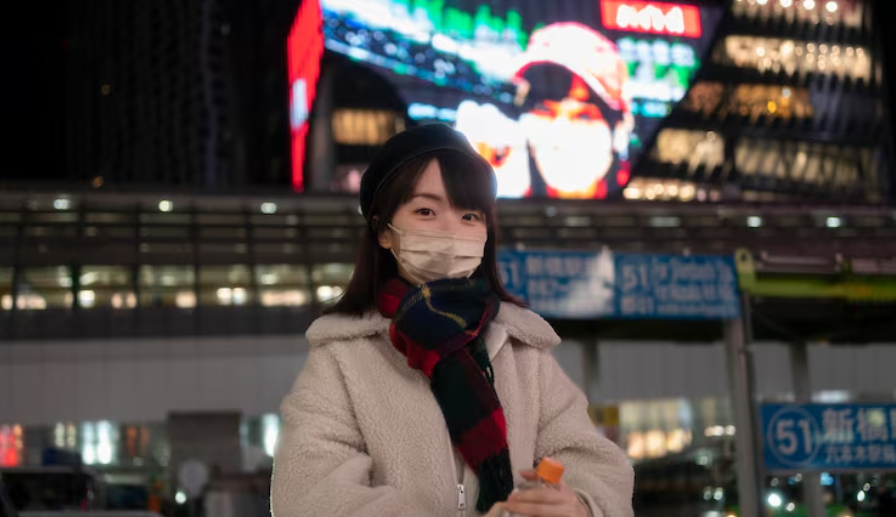
Walk through the financial districts of Seoul on a weekday evening and something strikes you immediately — the screens. Not just the giant LED advertisements wrapping around Gangnam towers, but the smaller ones, the phones in every hand on the subway, the monitors glowing through café windows, all of them blinking with price tickers, portfolio dashboards, and exchange alerts. South Korea didn’t just adopt cryptocurrency. It absorbed it into its daily rhythm the way other countries absorbed television or social media.
This didn’t happen overnight, and it didn’t happen by accident. South Korea’s path to becoming arguably the world’s most crypto-saturated nation is a story built on several intersecting pressures — economic anxiety, political unease, technological familiarity, and a culture that has always been, for better or worse, early to the next big thing.
| Category | Details |
|---|---|
| Country | South Korea (Republic of Korea) |
| Capital | Seoul |
| Population | ~51.7 million |
| First Crypto Exchange | Korbit (2013) |
| Largest Crypto Exchange | Upbit |
| Key Legislation | Virtual Asset User Protection Act (July 2024) |
| Global Crypto Adoption Rank | 15th (Chainalysis, 2025) |
| Peak Daily Crypto Volume | ~$9 billion (December 2024) |
| Youth Unemployment | Significant; ~43% NEET youth cited unmet job criteria |
| Notable Crypto Term Coined | “Kimchi Premium” |
| Key Annual Event | Korea Blockchain Week (KBW) — 136,000+ participants |
| Reference Links | Chainalysis Crypto Adoption Index / Korea Blockchain Week |
The country had its first domestic exchange, Korbit, running as early as 2013, before most Western investors had ever heard the word “blockchain.” Bithumb followed in 2014. By the time 2017 arrived and the global ICO boom detonated, South Korea wasn’t catching up. It was already in the room.
The numbers from that period are still staggering to consider. At the peak of the 2017 frenzy, South Korea’s daily cryptocurrency trading volume reportedly surpassed that of its own stock markets. The Korean won briefly ranked as the third most active currency in global Bitcoin trading, sitting behind only the US dollar and the Japanese yen.
That’s a country of roughly 51 million people punching well above its weight in a market that the entire world was only beginning to understand. And yet, even then, the Western narrative reduced it to a punchline — the “Kimchi Premium,” a quirky market distortion where Bitcoin in Seoul traded as much as 10% above global prices, born from intense domestic demand and limited arbitrage.
It’s possible that framing missed something important. The premium wasn’t just a sign of irrational exuberance. It was evidence of genuine, deep, sustained retail conviction in a market that, at the time, had very few institutional participants. South Korean retail investors — many of them young, many of them locked out of traditional wealth-building paths — were doing something considered radical: treating digital assets as a serious financial instrument years before Wall Street would admit the same.
There’s a broader social context that explains this, and it’s uncomfortable to ignore. South Korea’s youth unemployment problem isn’t simply about joblessness. It’s about a mismatch — a generation of highly educated graduates facing a labor market that can’t absorb them at the levels they were promised.
A 2023 Statistics Korea survey found that nearly 43% of young Koreans classified as NEET who wanted to work couldn’t find positions meeting their criteria for pay and conditions. When traditional paths feel sealed off, people look for cracks in the wall. Crypto, with its 24-hour markets and theoretically democratic access, looked like one.
Add to that the political geography. South Korea shares a border — and decades of unresolved tension — with North Korea, a nuclear-armed state that has formally designated its southern neighbor a hostile nation. That kind of background anxiety doesn’t fade. It shapes financial behavior in ways that are subtle but real.
Bitcoin and other cryptocurrencies, stateless by design and unanchored from any single government’s fate, carry a particular appeal in that context. It’s hard not to notice how the combination of economic frustration and geopolitical unease created almost ideal conditions for a crypto-obsessed culture to take root.
What’s changed recently, though, is genuinely interesting. By late 2025, trading volume on Upbit — South Korea’s dominant exchange — had collapsed to roughly $1.78 billion in daily average volume, down from around $9 billion just a year prior.
The KakaoTalk group chats that once buzzed with altcoin tips have reportedly shifted their energy toward AI semiconductor stocks, riding a surging KOSPI index that hit fresh all-time highs. There’s a sense that the retail frenzy phase has cooled, at least temporarily, and what’s emerging in its place is something more structured, more institutional, more deliberate.
South Korea’s regulatory evolution reflects this maturation. The Virtual Asset User Protection Act, which came into force in July 2024, introduced meaningful guardrails for traders — protections against unfair practices, clearer reporting standards, and a framework that treats digital assets as a legitimate asset class requiring serious oversight.
This followed earlier 2021 revisions requiring exchanges to operate with real-name accounts and meet anti-money laundering standards. It’s still unclear whether these regulations will accelerate or slow the market’s next phase, but they signal a government that has, after years of ambivalence, chosen to engage rather than suppress.
What South Korea is building now — and what most outside observers still underestimate — is the institutional and developer infrastructure that the next generation of digital assets will likely run on. Korea Blockchain Week has grown from a modest annual gathering into a global event with over 136,000 cumulative participants. Enterprises are running blockchain pilot projects.
Developers who’ve been quietly building for years are starting to surface. “From the outside, people still view South Korea through the lens of trading speculation,” Seonik Jeon, CEO of Factblock and a key organizer of KBW, said recently. “They do not see the engineering research and development, enterprise pilot projects, or the builders who have been genuinely doing research and development for years.”
South Korea’s crypto obsession was never just about speculation. It was — and still is — a reflection of something deeper: a highly connected, technically literate, economically pressured society searching for new ways to build wealth and stability. Whether the current market cooldown represents a permanent shift or simply the quiet before another cycle is genuinely uncertain. But dismissing South Korea as yesterday’s story would be a mistake the global crypto market has made before. It didn’t work out well for those who underestimated Seoul in 2013. It probably won’t work out better now.

Follow Live Media News on Google News
Get Live Media News headlines in your feed — and add Live Media News as a preferred source in Google Search.
Stay updated
Follow Live Media News in Google News for faster access to breaking coverage, reporting, and analysis.
- Search any trending topic on Google (for example: Greece news).
- On the results page, find the Top stories section.
- Tap Preferred sources and select Live Media News.