


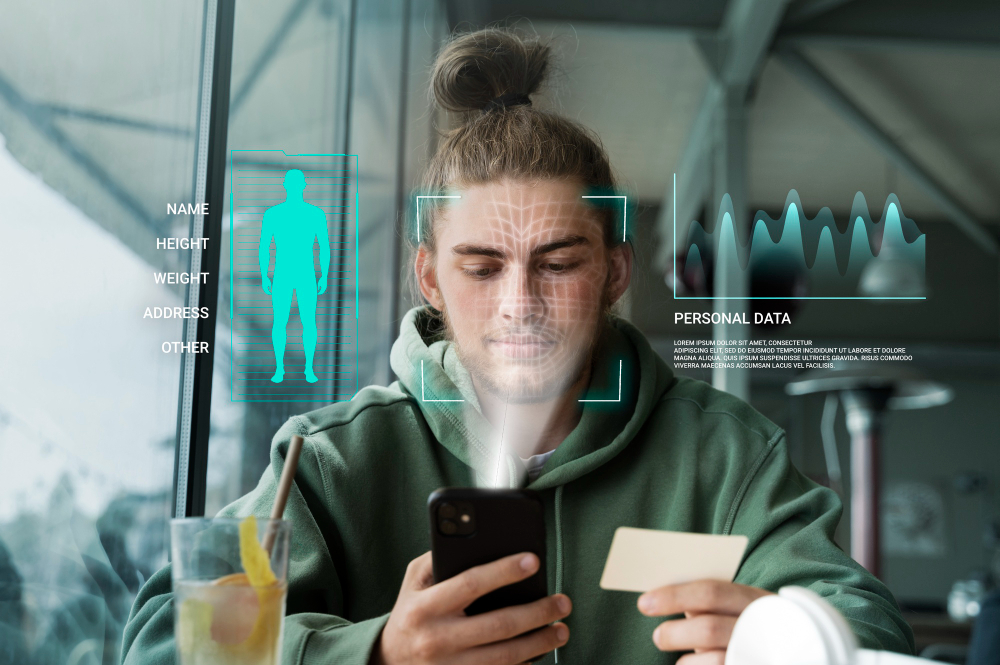
It used to be a little embarrassing to forget a password. It’s almost nostalgic now.
Last week, a man in a Brooklyn café looked at his laptop and unlocked it. Do not type. Without hesitation. The screen just acknowledged him, like it was saying hello to an old acquaintance. A teenager half-listening to a podcast across the room pressed her thumb to her phone. The movement was instinctive and hardly conscious. Passwords, those awkward combinations of capital letters and special characters, are quietly disappearing from everyday life.
It’s easy to understand why. There are an estimated 300 billion passwords in use globally, or about 40 for every person on the planet. For years, security reports have consistently stated that the majority of breaches are caused by weak, stolen, or reused passwords. It turns out that dozens of cryptographic secrets were not intended for human memory. Passwords are the weakest link, according to security teams and investors.
| Category | Details |
|---|---|
| Organization | Apple Inc. |
| Founded | 1976 |
| Headquarters | Cupertino |
| Biometric Technology | Face ID, Touch ID |
| Industry Shift | Passkeys and biometric authentication replacing passwords |
| Estimated Passwords in Use | ~300 billion globally |
| Reference Website | https://www.apple.com |
Biometrics intervened to alleviate that annoyance. By integrating fingerprint sensors and infrared cameras into commonplace devices, Apple Inc. popularized Touch ID and Face ID. Windows Hello was the next product from Microsoft. Instead of using memorized codes, Google promoted passkeys linked to devices. All of a sudden, your credential was your face. Your signature was created using your fingerprint.
It has an indisputable elegance to it. It feels more natural to scan your face than to type “P@ssw0rd!23” ten times this week. Phishing is decreased as a result. The temptation to reuse credentials is eliminated. It makes logging in seem effortless and nearly undetectable.
However, frictionless systems typically gather information.
That’s where the anxiety starts. Earlier this year, ResearchGate published a study that examined biometric authentication techniques and found that although facial recognition and fingerprints improve security, they raise serious privacy concerns. It is possible to reset a stolen password. A fingerprint that has been stolen cannot.
It’s difficult to ignore how permanent it is. Passwords were known secrets. Biometrics are characteristics of who you are.
These days, cameras at a Chicago airport security checkpoint automatically scan faces and compare passengers to government databases. It takes a few seconds to complete. There is no need for a boarding pass. There is a sense that identity has changed from something asserted to something extracted when one observes its silent efficiency—travelers moving forward, oblivious to the software operating behind tinted glass.
Businesses demand that biometric data be encrypted and safely stored, frequently on-device as opposed to in the cloud. That is often the case. For instance, according to Apple, facial maps never leave the safe haven of the iPhone. It sounds comforting, that architecture. However, breaches do occur. Systems are misconfigured. Databases leak.
What happens when biometric authentication extends beyond phones to retail establishments, workplaces, and insurance plans is still unknown. Employers are already experimenting with fingerprint-based clock-ins, which lowers time fraud but raises unspoken worries about surveillance creep. Retailers are experimenting with facial recognition technology to detect recurring customers or potential shoplifters.
Convenience grows rapidly. Oversight frequently doesn’t. Surprisingly, the cultural shift has been peaceful. When social media companies changed their privacy settings, there were more vocal protests. However, the adoption of biometrics has seemed almost voluntary. One thumbprint at a time, we chose to participate. Without the need for philosophical contemplation, it resolved a pressing annoyance: password fatigue.
This tension is more profound. Experts in cybersecurity contend that biometrics significantly lessen phishing attacks. Scammers lose leverage if they don’t have a password to give. That is not insignificant. Every year, data breaches cost billions of dollars, not to mention the stress that regular users experience when they have to reset their login credentials after another breach.
However, biometrics concentrate trust in organizations and hardware producers. Power gradually shifts in favor of those in charge of the systems that verify identity when it becomes ingrained in algorithms and silicon. Governments are making significant investments in frameworks for digital identities. Passkey standardization is a race among tech companies. There is a consolidation of the infrastructure.
It seems like we’ve exchanged vulnerability for permanence as we watch this develop. Passwords were weak but adaptable. Biometrics are unchangeable but safe. The consequences of compromise are long-lasting.
What about behavioral biometrics, which are systems that examine how we hold our phones, type, and scroll? These tools offer almost undetectable authentication and real-time anomaly detection. They also imply that gadgets are constantly monitoring minute details of human behavior, creating profiles that are so intricate they resemble surveillance.
Maybe the passcode isn’t the true death. Anonymity is what it is. A tiny degree of abstraction between identity and access was made possible by passwords. That distance is eliminated by biometrics. The login is the body. The credential is the face. It seems effective. It has a contemporary vibe. It seems inevitable.
However, inevitability does not equate to neutrality. In many respects, the battle for authentication has been won by biometrics. Now, the question is whether society is ready for the fallout from tying identity to biology in systems that are growing more quickly than laws can keep up. Stronger encryption, improved laws, and careful oversight might be able to strike a balance between security and civil liberties.
Convenience may also continue to prevail over caution. There’s a feeling that the messy, forgettable, human world of paswords has vanished as you stand in that Brooklyn café and watch gadgets unlock themselves with quiet certainty. It is replaced by something strong, smooth, and a little unnerving.
The passcode is expiring. It is being replaced by our bodies. Additionally, there might not be an undo button once that trade is finished.

Follow Live Media News on Google News
Get Live Media News headlines in your feed — and add Live Media News as a preferred source in Google Search.
Stay updated
Follow Live Media News in Google News for faster access to breaking coverage, reporting, and analysis.
- Search any trending topic on Google (for example: Greece news).
- On the results page, find the Top stories section.
- Tap Preferred sources and select Live Media News.