


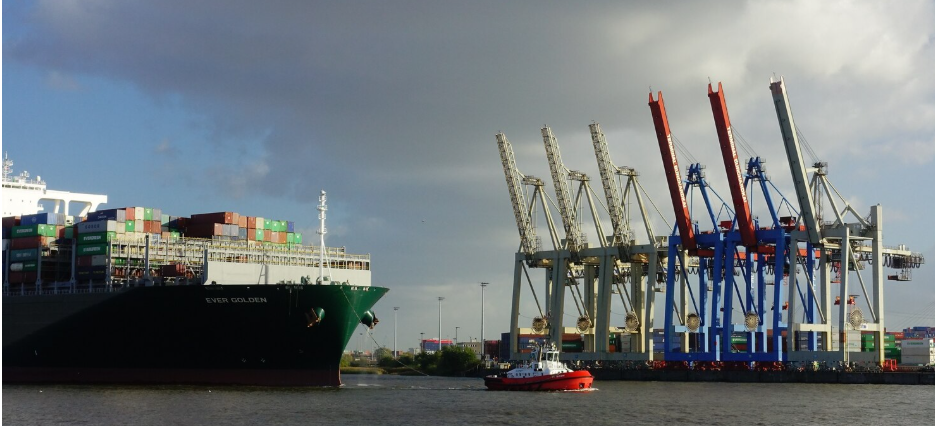
Container ships typically move with quiet predictability through the narrow waters between Spain and Morocco in the early morning, shortly after sunrise. Stacked with metal boxes painted red, blue, and faded orange, they appear almost slow from the hills above the port of Algeciras. It has long seemed routine to watch them go. However, there seems to be a deeper shift going on beneath those steady movements lately.
The shipping industry is suddenly talking about the Strait of Gibraltar again. It was because something exploded thousands of miles away, not because anything directly happened there. Global shipping routes started to shift in small but significant ways as the fighting around the Strait of Hormuz grew more intense. The majority of customers might not even notice. Traders and shipowners have, of course.
| Category | Details |
|---|---|
| Location | Between Spain and Morocco, connecting the Atlantic Ocean to the Mediterranean Sea |
| Narrowest Width | About 14 km (8.7 miles) |
| Strategic Importance | One of the world’s major maritime chokepoints for global trade |
| Nearby Ports | Algeciras (Spain), Tangier Med (Morocco) |
| Role in Global Shipping | Major gateway for trade between Europe, Asia, and the Americas |
| Current Context | Rising geopolitical tensions in the Middle East affecting shipping routes |
| Related Chokepoints | Strait of Hormuz, Suez Canal, Bab el-Mandeb |
| Economic Impact | Shipping insurance costs rising, freight routes shifting |
| Main Cargo | Oil, LNG, containerized goods |
| Reference | https://www.marinetraffic.com |
After Israeli and American strikes on Iran sparked retaliatory attacks throughout the region, the Hormuz crisis broke out. Tanker traffic through the strait was essentially stopped within days after Iran’s Revolutionary Guard issued warnings. That kind of disruption seems nearly unthinkable for a waterway that typically transports about 20 million barrels of oil every day. Like anxious birds, tankers started to huddle together in open waters, awaiting orders that never seemed to come.
According to shipping executives, there is more drama than just the fighting. It’s insurance. It is uncommon for oceangoing vessels to travel without war-risk insurance, and the logistics system as a whole comes to a complete halt when insurers begin to remove that coverage. According to reports, premiums that previously hovered around 0.2 percent of a ship’s value suddenly increased to 1 percent in a matter of days. That’s the difference between a $200,000 fee and a million-dollar risk for a $100 million tanker.
That financial tension is nearly imperceptible from the deck of a cargo ship close to the western Mediterranean. The ocean still appears placid. Above the stacks of containers, gulls continue to circle. However, the map of international trade is currently being shaped by choices about whether to sail through hazardous waters or reroute around Africa. The Strait of Gibraltar then reappears in the narrative.
Routes have been extending westward for ships to avoid the tense edges of the Persian Gulf and the Red Sea. The patterns of traffic are changing. Before reentering the Mediterranean through Gibraltar, some ships are opting for longer routes around the Cape of Good Hope. Others are completely avoiding the area. In any case, the strait has once more turned into a sort of crossroads where the aftereffects of far-off conflicts subtly come together.
Global freight prices have already been erratic for months, according to shipping analysts. Vessels were forced to avoid the Suez Canal due to attacks close to the Red Sea, which resulted in weeks-long detours around Africa. The cumulative effect is hard to ignore. Once moving in a predictable rhythm from Shanghai to Rotterdam, a container now navigates a complex web of geopolitical risks. The industry seems to be recalculating all the time. The map is somewhat redrawn with each conflict.
There are some numbers that seem almost unreal. As traders speculated about the potential consequences of a prolonged disruption to Hormuz, Brent crude briefly surged more than 10%. With the uncertainty surrounding LNG shipments from Qatar, natural gas prices in Europe skyrocketed. Uncertain of whether it was safe—or even insurable—to move forward, over 150 ships reportedly waited outside the Gulf.
When one observes these changes from a distance, the brittle structure of international trade becomes apparent. It relies on small waterways. Insurance markets are calm. geopolitics that is predictable. When one of those components is taken away, the system as a whole starts to falter.
Traffic spikes have previously been managed by the Strait of Gibraltar itself. Volumes through Gibraltar increased as cargo flows reorganized as a result of the Russia-Ukraine war, which changed the nature of Black Sea trade. With cranes swinging across container yards late into the night, ports like Tangier Med and Algeciras quickly adjusted. However, if global rerouting speeds up, even those seasoned hubs might experience stress.
The duration of the current disruption is still unknown. According to some analysts, the Hormuz corridor could be reopened in a matter of weeks through diplomatic pressure or naval escorts. Others believe that the risk premium on shipping from the Middle East will persist for a long time, subtly changing the freight economics. For now, the ships continue to arrive.
Tankers moving east, container ships moving west, and ferries transporting people between continents frequently fill the strait with silhouettes at sunset. From a distance, it appears well-organized. Nearly tranquil.
However, a spreadsheet of calculations involving fuel prices, insurance premiums, war zones, and political risk is hidden behind every vessel.
It turns out that international trade operates on extremely thin margins. and occasionally through extremely narrow water.

Follow Live Media News on Google News
Get Live Media News headlines in your feed — and add Live Media News as a preferred source in Google Search.
Stay updated
Follow Live Media News in Google News for faster access to breaking coverage, reporting, and analysis.
- Search any trending topic on Google (for example: Greece news).
- On the results page, find the Top stories section.
- Tap Preferred sources and select Live Media News.