


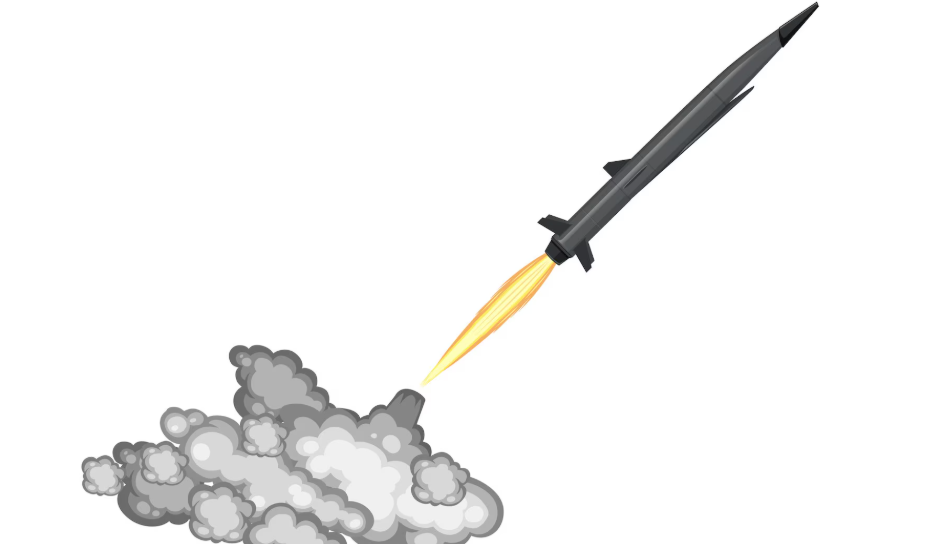
The factories that make missile defenses are oddly silent. Behind layers of fencing and cameras are rows of unidentified buildings outside one of Lockheed Martin’s production facilities in Texas. Employees with security badges and coffee arrive early. There aren’t many indicators of what’s being built inside. However, the THAAD missile defense system, one of the most advanced military devices ever created, is derived from these structures.
The American defense behemoth Lockheed Martin is the obvious choice for anyone wondering who manufactures THAAD missiles. However, the longer response is more intriguing. THAAD is more than just a single assembly line product. It is the outcome of a vast industrial network that includes military contractors managing logistics across multiple nations, steel manufacturers creating launcher components, radar experts developing sensors, and engineers in design labs.
| Category | Details |
|---|---|
| System Name | Terminal High Altitude Area Defense (THAAD) |
| Primary Manufacturer | Lockheed Martin |
| System Type | Ballistic Missile Defense System |
| Interceptor Range | Approximately 150–200 km |
| Interception Method | Kinetic “hit-to-kill” impact |
| Battery Components | Radar, launchers, interceptors, command system |
| Typical Crew | Around 95 trained soldiers |
| Cost per Battery | $1 billion – $1.8 billion |
| Countries Using It | United States, South Korea, Guam deployments |
| Official Reference | https://www.lockheedmartin.com |
The actual system, known as Terminal High Altitude Area Defense, was created in the 1990s as the US looked for a method to stop ballistic missiles before they could reach military installations or cities. Analysts witnessed an uncommon moment when they watched early tests in Alaska years ago: a thin interceptor rising silently into the chilly sky, relying only on speed and physics rather than carrying explosives.
People are still surprised by that detail. The explosions of THAAD missiles do not occur close to their targets. Rather, they use kinetic energy to smash into approaching ballistic missiles, effectively transforming the interceptor into a high-velocity projectile. It’s frequently referred to as “hit-to-kill.” The idea seems straightforward. When both objects are racing through the upper atmosphere, it is more like threading a needle to strike a missile that is traveling several times the speed of sound.
The THAAD program has become one of the most significant initiatives within Lockheed Martin’s defense division. With tens of billions of dollars a year from the U.S. Department of Defense, the company is already the biggest Pentagon contractor. However, an intriguing development has occurred in recent years. THAAD has become a topic of discussion as the need for missile defense systems has subtly increased due to rising tensions in the Middle East and Asia.
Investors took notice. During times of geopolitical unrest, Lockheed Martin’s stock has surged, particularly when tensions over North Korea or Iran heighten concerns about missile strikes. Despite the fact that most people only hear about missile defense systems in military briefings, there is a perception in the financial markets that they will become a permanent aspect of contemporary warfare.
However, Lockheed Martin is not the only company building THAAD. The system is dependent on transport systems, launcher structures, and radar technology made by affiliated businesses. For example, steel parts for the missile launchers have started to show up in locations far from American factories. The first locally constructed components for the THAAD launcher system were recently produced in Saudi Arabia by regional manufacturers collaborating with Lockheed Martin.
This action is part of a larger change in the defense sector. More and more governments purchasing cutting-edge weapons prefer some degree of domestic production. The concept is a combination of political and economic. Nations desire technology transfer, jobs, and the capacity to manage intricate systems without totally depending on outside contractors.
However, THAAD’s production and design are still predominantly American. A typical THAAD battery consists of dozens of interceptors, multiple truck-mounted launchers, a robust radar system, and a fire control center that connects all of the components. It requires about ninety-five skilled soldiers to operate. It’s difficult not to feel a mixture of unease and technological ambition when you watch one of these batteries deployed in a distant military base, launchers angled skyward, radar dishes silently scanning the horizon.
The price is outrageous. The cost of a single THAAD battery can range from $1 billion to $1.8 billion. According to reports, individual interceptors cost over $12 million. The cost is deemed essential for governments that are threatened by missiles. The figures make detractors uneasy about the economics of contemporary warfare.
That debate has only gotten more heated in recent years. The United States has placed THAAD systems in locations such as Guam and South Korea, and talks about further deployments are ongoing whenever tensions in the region escalate. To bolster air defenses against possible ballistic missile attacks, U.S. officials have even contemplated sending THAAD batteries to Israel.
However, the system has its limitations. The purpose of THAAD is to intercept ballistic missiles with medium and intermediate ranges that are flying at high altitudes. Smaller threats like drones and low-flying cruise missiles are too small for it to effectively stop. Other defense systems like Patriot batteries or Iron Dome typically handle those.
Nevertheless, THAAD embodies a specific missile defense philosophy: neutralize the threat in midair before it ever reaches its target. The horizon is searched by the radar. Launch tubes are where interceptors wait. Trajectories are computed by computers in milliseconds. Everything hinges on accuracy and timing.
It’s difficult not to wonder how many people are aware of what’s being built inside one of those silent defense facilities. Radar electronics, steel cylinders, and guidance systems. Piece by piece, everything was put together with care.
“Who makes THAAD missiles?” might seem like a straightforward question. However, the answer reveals something more significant: a whole industry centered on predicting the next missile long before it is launched. And those peaceful factories might continue to be extremely busy for years to come as long as tensions around the world continue to simmer.

Follow Live Media News on Google News
Get Live Media News headlines in your feed — and add Live Media News as a preferred source in Google Search.
Stay updated
Follow Live Media News in Google News for faster access to breaking coverage, reporting, and analysis.
- Search any trending topic on Google (for example: Greece news).
- On the results page, find the Top stories section.
- Tap Preferred sources and select Live Media News.