


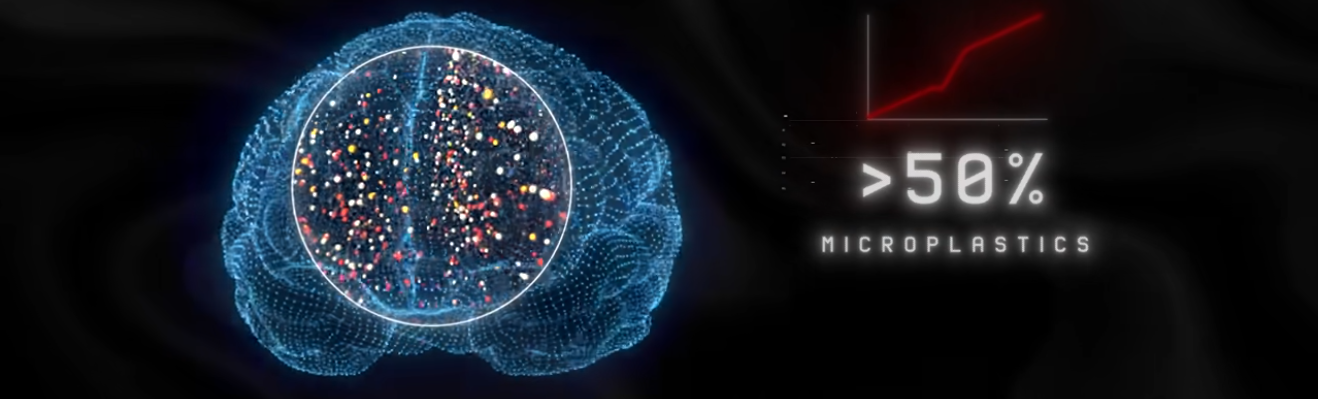
It was in a typical kitchen that the idea first truly clicked. The leftovers slid into the fridge, a plastic container clicked shut, and the subtle aroma of reheated curry permeated the air. The cutting board, bottle caps, and the thin film that surrounds vegetables are just a few examples of how much plastic frames everyday life. The idea that some of that plastic doesn’t remain outside the body is less obvious and more concerning.
Scientists have found microplastics almost everywhere they have searched for them. Microplastics are defined as fragments smaller than five millimeters and occasionally much smaller. They float in household dust, cling to Arctic ice, and drift with the currents of the ocean. The material world that humans created for convenience seems to have subtly atomized, disintegrating into particles that are small enough to pass undetected. Scientists now claim that these particles are biological hitchhikers rather than merely environmental debris.
| Category | Details |
|---|---|
| Topic | Microplastics & Human Health |
| Defined Size | 1 nanometer to 5 millimeters |
| Primary Sources | Microbeads, industrial pellets |
| Secondary Sources | Degrading plastic waste, textiles, tires |
| Entry Into Body | Food, water, air, skin contact |
| Found In | Blood, organs, placenta, arteries |
| Global Plastic Production | ~400 million metric tons annually |
| Estimated Human Intake | Up to 52,000 particles per year |
| Environmental Presence | Water, soil, air, food chain |
| Key Organization | United Nations Environment Programme (UNEP) |
| Reference | https://www.unep.org |
Certain microplastics, like the industrial pellets used in manufacturing and the microbeads that were once widely used in cosmetics, start out purposefully small. However, the majority are created by deterioration: tires grinding into dust on hot asphalt, polyester fibers shedding in washing machines, and grocery bags disintegrating in the sun. The residue rises into the air with traffic in urban areas and lands on both window ledges and lungs. It’s possible that there is a slight synthetic signature in the air of modern cities, but no one stops to think about it.
Tens of thousands of microplastic particles are thought to enter the human body annually through food, water, and the air, according to scientists. According to one toxicologist, background noise exposure is unavoidable, continuous, and undetectable. Microscopic particles may be released from bottled water, particularly when heated. Tea steeped in mesh bags made of plastic may shed them. Fibers from carpets and upholstery can even be carried by indoor air that is stirred by ceiling fans and sunlight peeking through curtains.
The story becomes more bizarre inside the body. Placentas, liver tissue, lungs, and arteries have all been found to contain microplastics. Scientists have discovered them in baby feces, indicating prenatal exposure. Scientists’ attitudes have quietly changed as a result of the accumulation of these findings over the past few years: they are now less surprised, more concerned, and still cautious. Although absence is no longer presumed, it is still unclear if presence equates to harm.
Unsettling hints can be found in laboratory studies. Exposure to microplastics in mice has been associated with behavioral abnormalities, oxidative stress, and inflammation. According to certain experiments, particles may be able to penetrate the blood-brain barrier and become deeply embedded in brain tissue. According to other studies, they might cause cellular stress reactions or obstruct red blood cells’ capacity to carry oxygen. However, it is still difficult to translate findings from animals into human outcomes, and scientists are cautious when speaking because the science is still in its infancy.
Some experts are more concerned about the chemicals that the particles carry than they are about the particles themselves. Additives found in plastics, such as pigments, stabilizers, and flame retardants, can seep into the surrounding tissues. According to preliminary research, these substances might interfere with hormones or cause inflammation. The particles might behave more like delivery vehicles than toxins, delivering substances to locations they weren’t intended to go.
It is simpler to see the ecological effects outside of the lab. Because microplastics darken reflective surfaces, they can accelerate snowmelt, reduce soil fertility, and slow the growth of phytoplankton. Fisheries, agriculture, and climate systems are all impacted by these changes, creating a feedback loop that eventually returns to human health. Waste made of plastic rarely remains where it is thrown away; instead, it moves, breaks up, and then comes back.
The amount of plastic produced worldwide is expected to reach over one billion metric tons by the middle of the century. Although agreement is still elusive, negotiations are under way for an international treaty on plastic pollution. Innovation in the industry is uneven; some manufacturers continue to produce single-use packaging at scale, while others redesign products to shed fewer fibers. Investors appear to be paying close attention and are aware of both new opportunities and regulatory risks.
It might not be possible to completely avoid microplastics. Infrastructure, food systems, and medical devices all contain plastic. Small changes, such as storing items in glass, opting for natural fibers, and not putting hot liquids in plastic containers, can still lessen exposure. Although it’s unclear if these actions actually reduce long-term risk, they do represent a larger cultural shift in which awareness is replacing complacency.
There is a subtle conflict between convenience and consequences when you are in a grocery aisle full of produce that has been shrink-wrapped. The plastic appears safe, effective, and clean. However, it starts to break down somewhere in between production, use, and disposal, getting into soil, waterways, and even people’s bodies. One gets the impression that humanity is just starting to realize the scope of its own materials experiment as this is happening.

Follow Live Media News on Google News
Get Live Media News headlines in your feed — and add Live Media News as a preferred source in Google Search.
Stay updated
Follow Live Media News in Google News for faster access to breaking coverage, reporting, and analysis.
- Search any trending topic on Google (for example: Greece news).
- On the results page, find the Top stories section.
- Tap Preferred sources and select Live Media News.