


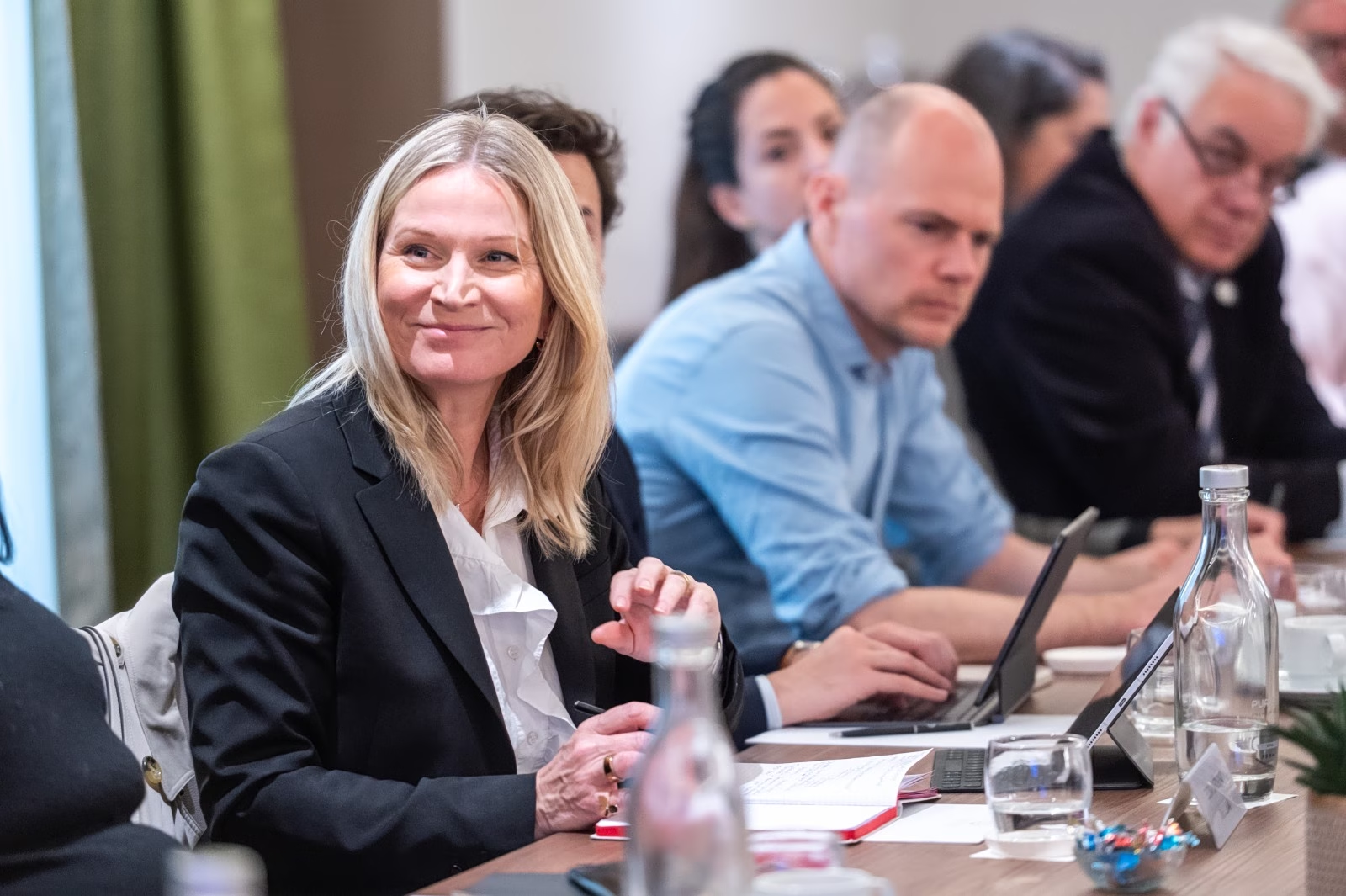
Europe’s energy security crisis driven by geopolitical instability is reinforcing the strategic case for accelerating the continent’s green transition, according to a senior European Commission climate official. As war in Iran disrupts global energy flows and drives fuel prices upward, the European Union’s dependence on imported fossil fuels has once again exposed a critical vulnerability that decarbonization efforts aim to address.
Elina Bardram, Head of the European Climate Pact at the European Commission’s Directorate-General for Climate Action, emphasized during an official visit to Athens that strategic independence requires rapid electrification and harmonization across member states. “The only way we can be strategically independent is for us to be harmonized, electrified,” Bardram told To Vima International Edition.
Global Climate Action Shows Progress but Falls Short
According to Bardram, the world has made significant strides since the Paris Agreement shifted climate action from a few countries with binding commitments under the Kyoto Protocol to universal participation. Before Paris, projections indicated the planet was heading toward four degrees of warming by century’s end. However, current trajectories have improved but remain insufficient to meet Paris Agreement targets.
Scientific reports now indicate a reference scenario of between 2.8 and 3.2 degrees Celsius by the end of the century, the Commission official noted. Additionally, she pointed to positive developments, including solar power surpassing fossil fuels in electricity production for the first time last year, demonstrating that decarbonization is gaining ground in major and emerging economies.
EU Priorities Focus on Emissions Reduction and Climate Resilience
The European Union has established two key priorities for climate action in the coming years. First, leaders recently agreed on a 2040 target of at least 90 percent emissions reduction, which includes some international credits for participating sectors. Meanwhile, implementing the legal framework to deliver this target remains crucial for investor predictability and long-term decision-making.
The second priority addresses the reality that physical climate conditions will deteriorate before improvement occurs. “It is inevitable that physical climate conditions will get worse before they get better, and we need to prepare our societies and economies to be better able to withstand those adverse physical conditions,” Bardram explained. This approach emphasizes building resilience by design to prevent disasters from wildfires, droughts, and floods.
Local Implementation of Climate Adaptation Measures
Climate resilience and adaptation measures require deployment at the local level where impacts are directly felt, according to the Commission official. The EU supports this through initiatives such as Mission Adaptation and Mission Cities, which provide technical capacity and scenario planning tools to empower local authorities.
However, challenges persist regarding access to reliable regional data and financing for adaptation projects. In response, the Commission is developing sophisticated climate models that remain granular enough to account for local contexts while providing accessible decision-relevant information for both policymakers and private citizens.
Financing Framework Integrates Climate Considerations
Addressing the financing challenge requires involvement from all governance levels and public-private partnerships, Bardram indicated. The current multiannual financial framework proposed by the Commission introduces an earmarking principle and a resilience-by-design approach. This means all EU-funded projects, whether in agriculture or transport, must incorporate climate considerations as a fundamental design feature.
In contrast to concerns that defense and security priorities might undermine climate funding, Bardram argued that decarbonization aligns with strategic autonomy goals. “Much of the vulnerability of EU industry and EU society is due to our longstanding dependency on fossil fuel imports,” she stated, noting that the green transition prevents hostile states from weaponizing energy supply.
Green Transition Linked to EU Competitiveness and Strategic Independence
The connection between climate policy and European competitiveness has become increasingly central to the EU’s approach. With major economies including Japan, South Korea, India, and China advancing their own transitions and developing clean technologies, the EU risks falling behind without coordinated action. The Clean Industrial Deal and industrial accelerator aim to align different policy portfolios to support innovation and market share in global competition.
Nevertheless, climate policies face attacks from disinformation campaigns that Bardram characterized as attempts to destabilize democratic institutions rather than genuine policy debates. These campaigns often employ sophisticated algorithm-based machinery and troll factories, making them difficult to counter without risking accusations of limiting free speech. The Commission’s response focuses on providing facts, evidence, and storytelling that demonstrate the transition’s added value.
Critical Juncture for European Integration
The confluence of external shocks, including the COVID-19 pandemic, Russia’s war of aggression, the energy crisis, and shifting geopolitical dynamics, represents an unprecedented challenge for the European Union. Despite these pressures, Bardram expressed confidence in continued solidarity and compromise among member states. “The weeks and months ahead will be very important for us and for the European project,” she acknowledged, while remaining optimistic about finding pathways that balance industry concerns, citizen wellbeing, and youth climate anxiety.
The Commission is preparing additional policy frameworks and decision-making tools for release by year’s end, which will establish shared climate projections across governance levels. These instruments aim to make anticipatory planning standard practice rather than the exception, ensuring credible policies based on future climate realities rather than historical conditions that no longer apply.

Follow Live Media News on Google News
Get Live Media News headlines in your feed — and add Live Media News as a preferred source in Google Search.
Stay updated
Follow Live Media News in Google News for faster access to breaking coverage, reporting, and analysis.
- Search any trending topic on Google (for example: Greece news).
- On the results page, find the Top stories section.
- Tap Preferred sources and select Live Media News.