


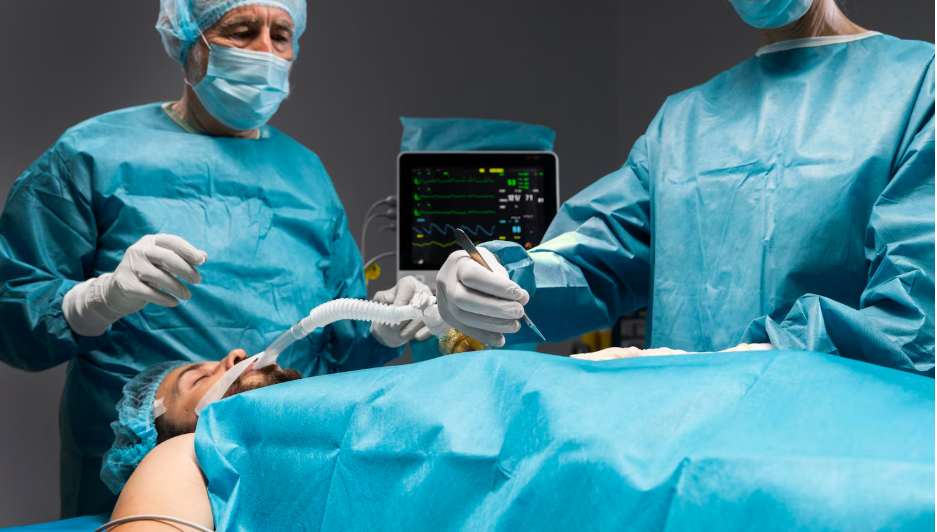
It can be oddly quiet in the waiting area outside a surgical theater. Nurses move quickly, machines hum softly, and someone is getting ready for anesthesia somewhere behind closed doors. However, in recent months, bariatric surgeons and anesthetists have started having a different kind of conversation. It concerns a class of medications known as GLP-1 weight-loss drugs, such as Ozempic, that were once praised as medical wonders. Additionally, more and more medical professionals are questioning whether the miracle may have unidentified complications.
GLP-1 medications slow digestion and reduce the overwhelming desire to eat by imitating a hormone that makes people feel full. The outcomes have been startling for millions of people who suffer from diabetes or obesity. Weight decreases. Blood sugar levels rise. From medical conferences to celebrity interviews, there has been a tangible cultural excitement surrounding these drugs. However, surgeons have begun to notice a problem subtly developing inside operating rooms.
| Key Information | Details |
|---|---|
| Topic | GLP-1 Weight-Loss Drugs and Surgical Risks |
| Drug Class | GLP-1 Receptor Agonists |
| Common Drugs | Ozempic (semaglutide), Wegovy, Mounjaro (tirzepatide) |
| Primary Use | Treatment of Type 2 Diabetes and Obesity |
| Main Concern | Delayed gastric emptying increasing risk during anesthesia |
| Reported Complication | Pulmonary aspiration during surgery |
| Relevant Medical Fields | Bariatric surgery, anesthesiology, endocrinology |
| Notable Experts | Prof. David Story, Dr. Vida Viliunas, Dr. Paul Burton |
| Estimated Users (example data) | ~500,000 patients in Australia alone |
| Reference | https://www.who.int |
It turns out that when these medications are involved, the stomach doesn’t always act as doctors anticipate.
Before surgery, anesthetists make the straightforward assumption that a patient’s stomach will empty if they fast long enough. Because anesthesia relaxes airway reflexes, having an empty stomach is important. A potentially fatal condition known as pulmonary aspiration occurs when food or liquid rises from the stomach while a person is unconscious and enters the lungs. Pneumonia can occasionally result from it. It can be lethal in rare circumstances. GLP-1 drugs make that assumption more difficult.
Even after extended fasts, food may still be in the stomach because they slow gastric emptying. Someone who hasn’t eaten in ten or even thirteen hours might still be quietly waiting with partially digested food. Surgeons are learning this in novel ways. There has been a delay in procedures. Midway through preparation, endoscopies have been abandoned. Sometimes doctors don’t realize the problem until the patient is on the operating table.
The Australian and New Zealand College of Anaesthetists’ president, Professor David Story, has put it plainly. He says that having stomach contents get into the airway during surgery is the nightmare scenario. It is uncommon. However, when it occurs, the effects can worsen rapidly and occasionally call for critical care.
As the situation develops, it seems like medicine is dealing with a success story that came along a bit too quickly.
Before the surgical implications were fully understood, the popularity of these drugs skyrocketed. Tirzepatide, semaglutide, and similar medications soon entered the mainstream. They were advertised by weight-loss clinics. They were sold by internet pharmacies. On social media, patients talked about dosages. There were times during that surge when there was a breakdown in communication between surgical teams and patients.
Some patients just forget to mention the medication, according to doctors. Others are unaware that it qualifies as pertinent medical information. Surgeons believe that some people are ashamed to admit they use a medication to lose weight. In the operating room, those tiny communication gaps can lead to difficult situations.
Recently, anesthetist Dr. Vida Viliunas reported seeing a patient who had stopped taking the drug two weeks prior to surgery, thinking the effect had subsided. Sadly, these medications can remain in the body for several weeks. Sometimes they have a longer-lasting effect on digestion than patients anticipate.
How frequently this results in major complications is still unknown. There are still few large studies. Smaller studies, however, have begun to draw criticism. About 24% of endoscopy patients who had taken semaglutide within the preceding month had retained stomach contents, according to one analysis. The percentage was closer to five percent among patients who were not taking the medication. Surgeons are prompted to pause by that difference.
The situation is even more ironic within bariatric clinics. GLP-1 drugs are often used by patients who eventually seek weight-loss surgery. It makes sense. Surgery is rarely the first choice. Usually, it starts with years of dieting, drug trials, and frustration.
According to bariatric surgeon and researcher Dr. Paul Burton, the majority of his patients have already tried weight-loss medications before thinking about surgery. However, surgery on the stomach becomes more dangerous when those drugs are still interfering with digestion.
When performing procedures that require cutting through the stomach, the stomach must be empty. If not, surgeons are faced with an issue they would prefer to avoid.
Hospitals are starting to change. During pre-surgical evaluations, new guidelines recommend asking patients directly about GLP-1 medications. Longer fasts are advised by some anesthetists; occasionally, a full day of clear fluids is advised prior to the customary six-hour fast. Others modify anesthetic methods to safeguard the airway.
The changes seem realistic, almost standard. Nevertheless, they allude to a more significant query that lurks in the background.
GLP-1 medications are here to stay. They are already approved by the World Health Organization as long-term obesity treatments. Pharmaceutical firms are in a rush to create new iterations. Demand continues to increase. Researchers, anesthetists, and surgeons are left to catch up.
It’s difficult to ignore how oddly timed everything is. A drug that has been praised for revolutionizing weight control is now compelling operating rooms to reconsider fundamental beliefs regarding digestion and fasting. Although there aren’t any dramatic emergency alarms going off in hospitals, the tension is subtly changing surgical procedures.
This is how medicine frequently advances. Make a breakthrough first. issues later on. comprehending in the middle.
Furthermore, the bariatric backlash isn’t actually a backlash at the moment. Before the lights go down and the anesthesia starts, it’s more like a protracted pause in operating rooms where surgeons double-check stomachs and anesthetists ask one last question.

Follow Live Media News on Google News
Get Live Media News headlines in your feed — and add Live Media News as a preferred source in Google Search.
Stay updated
Follow Live Media News in Google News for faster access to breaking coverage, reporting, and analysis.
- Search any trending topic on Google (for example: Greece news).
- On the results page, find the Top stories section.
- Tap Preferred sources and select Live Media News.