


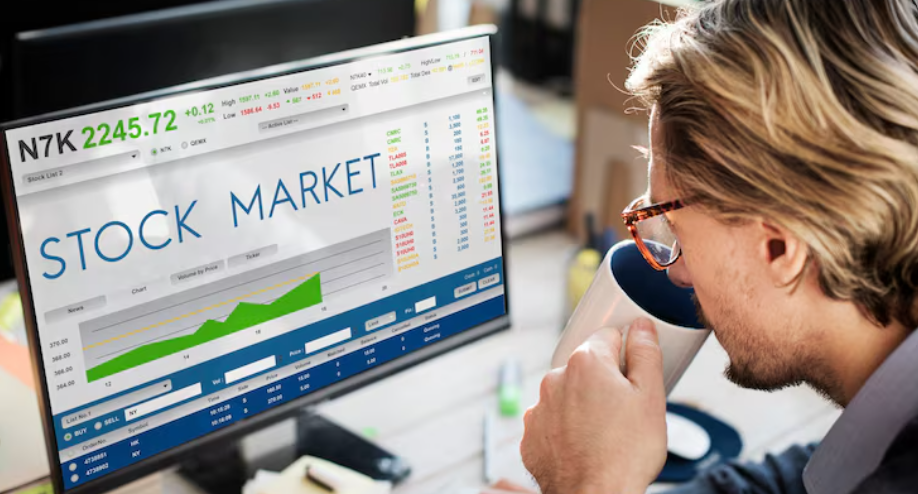
The air outside the Shanghai Stock Exchange building frequently contains a subtle blend of financial anticipation and urban humidity. On the trading floor, digital boards flicker with numbers that seem strangely dramatic, screens glow in brokerage offices, and taxi drivers stand by the curb. For a long time, people have been quietly fascinated by the Shanghai Composite Index. Not because it moves dramatically all the time. However, when it does, a deeper aspect of China’s economic narrative appears to change.
The index’s design is surprisingly straightforward. It tracks all stocks listed on the Shanghai Stock Exchange, including B-shares that have historically been targeted at foreign investors as well as A-shares that are traded by domestic investors. The computation measures market capitalization in relation to a base period in 1990 using a Paasche weighted formula. The exchange was still in its infancy at the time, and China’s markets were cautious and experimental. Companies valued at trillions of dollars are now captured by the same formula, a change that still seems a little strange.
| Category | Details |
|---|---|
| Index Name | Shanghai Composite Index (SSE Composite Index) |
| Exchange | Shanghai Stock Exchange |
| Launched | July 15, 1991 |
| Base Date | December 19, 1990 |
| Base Value | 100 |
| Coverage | All A-shares and B-shares listed on the Shanghai Stock Exchange |
| Calculation Method | Paasche weighted composite price index |
| Major Related Indices | SSE 50, SSE 180, SSE Mega-Cap, CSI 300 |
| Currency Consideration | B shares calculated in USD and converted to RMB |
| Official Reference | http://www.sse.com.cn |
It can be strangely cinematic to watch the index move on a trading screen. A gradual ascent. A sharp decline. Leaning toward monitors are traders. The Shanghai Composite recently surged above 4,083 points following the New Year’s holiday, reaching levels not seen in ten years. Perhaps inspired by China’s policy support and economic signals, investors appeared energized. Parts of the market seem to be regaining their once-fragile confidence.
However, the mood is rarely clear-cut. Brain-computer interfaces, semiconductors, and cutting-edge pharmaceutical companies are among the industries that drive the index’s occasional spikes. In others, chip stocks or suppliers of electric vehicles pull it back. This is how markets breathe: they expand and contract, rarely remaining motionless for extended periods of time.
That movement is subtly reflected in the index’s computation. As investors buy and sell, the market capitalization, which is calculated by multiplying the price by the number of issued shares, changes minute by minute. Prices for US dollar-denominated B-shares must be converted into yuan before being included in the index computation. The Shanghai market is situated between domestic policy priorities and global financial currents, which is a technical detail that may be simple to ignore but suggests something more significant.
The degree to which the stock market now permeates daily life is evident when strolling through Shanghai’s financial district. Young analysts with laptops rush between office towers. While riding the metro, small retail investors use their phones to monitor prices. Some think that policy support and growing interest in Chinese technology companies are driving the market into a longer growth phase. Others, recalling the volatility that characterized previous cycles, continue to be doubtful.
It’s possible that the rally that many investors discuss has more to do with psychology than momentum. In recent years, household savings in China have been moving toward capital markets, gradually changing investment practices. If real estate investments lose some of their previous appeal, that change alone may cause more liquidity to move into stocks.
It’s also difficult to ignore the global aspect. Once enthusiastic about Chinese stocks, foreign investors later withdrew due to geopolitical unpredictability and regulatory tensions. However, analysts at companies like Goldman Sachs have recently proposed that Chinese stocks are valued lower than their international counterparts. Investors appear to be paying attention once more.
However, optimism seldom goes unaccompanied. Geopolitical news can cause the same index that rises on policy hopes to stumble. Chipmakers and AI companies may be affected by reports about restrictions on semiconductors or technology exports, which could have a negative impact on the market as a whole. The Shanghai index occasionally seems more like a mirror reflecting worldwide uncertainty than a reliable indicator of economic health.
Even the industries that top the index provide insight into China’s changing aspirations. Startups in the biotech, electric vehicle, and artificial intelligence sectors seem to be playing a bigger role in market narratives. Observing the volatility of their stocks begs the silent question: are investors wagering on future innovation instead of current profits?
This is comparable to markets in other places. Similar enthusiasm was once generated in Silicon Valley prior to the full realization of profits. With investors making long-term wagers on technological advancements and international expansion, China’s version might be taking shape right now.
The index does not, however, move in a vacuum. It frequently moves alongside more general benchmarks like the CSI 300 Index and Hong Kong’s Hang Seng Index, demonstrating how intertwined the Chinese capital markets are. It becomes challenging to ignore the momentum when optimism spreads concurrently across these indices.
It’s difficult not to consider how recently this financial system came into being when you’re standing by the river in Shanghai at night with the skyline shining across Pudong. The exchange hardly existed thirty-five years ago. These days, its index affects portfolios in the US, Europe, and Asia.
It’s unclear where the Shanghai Composite will go next. Markets seldom move in a straight line, and China’s economic transition—balancing consumer demand, policy management, and technological advancement—still seems incomplete.
However, the index is currently surrounded by a subdued energy. Policymakers push liquidity into the system, analysts argue over valuations, and investors study charts. Something is developing, gradually coming to light.
There is a persistent sense that the numbers represent more than just prices when one watches the Shanghai index move up or down on a trading screen. One trading day at a time, they depict a nation experimenting with the rhythms of capitalism, sometimes with confidence and sometimes with caution.

Follow Live Media News on Google News
Get Live Media News headlines in your feed — and add Live Media News as a preferred source in Google Search.
Stay updated
Follow Live Media News in Google News for faster access to breaking coverage, reporting, and analysis.
- Search any trending topic on Google (for example: Greece news).
- On the results page, find the Top stories section.
- Tap Preferred sources and select Live Media News.