


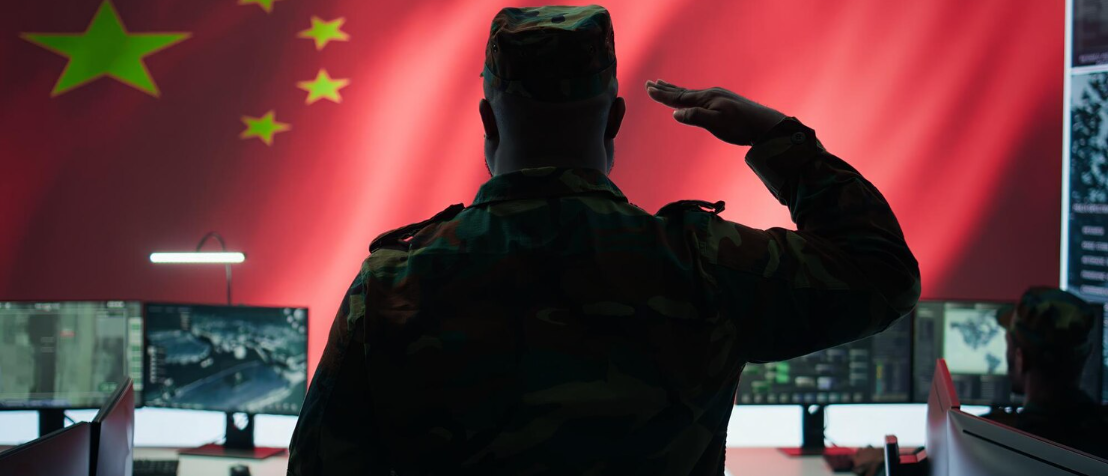
At first, Beijing’s response was subdued. Chinese officials didn’t make their first statement until a few hours after the attacks on Iran. It expressed “serious concern,” was circumspect, and asked everyone to back off. That tone frequently conveys a deeper meaning in diplomatic language, which is neither approval nor a hasty move toward conflict.
Foreign Minister Wang Yi allegedly informed Israeli counterpart Gideon Saar while standing in the expansive corridors of China’s Foreign Ministry in Beijing that the strikes had disrupted talks that were “making significant progress.” It sounded measured and courteous. There was frustration there, though, if you read between the lines. Chinese officials thought that negotiations were progressing when the bombs started to fall again.
| Category | Information |
|---|---|
| Country | People’s Republic of China |
| Leader | Xi Jinping |
| Foreign Minister | Wang Yi |
| Strategic Partner | Iran |
| Major Concern | Energy security and regional stability |
| Key Oil Imports | Over 13% of China’s seaborne crude oil imports from Iran |
| Satellite System | BeiDou Navigation System |
| Diplomatic Position | Opposes military strikes and calls for negotiations |
| Global Strategy | Balance relations with Iran while avoiding conflict with the U.S. |
| Reference Source | https://www.fmprc.gov.cn |
At least in public, China’s response has followed a well-known pattern. The use of force is condemned. It demands conversation. It issues an escalation warning. However, it refrains from adopting a military stance. It’s difficult to ignore how cautiously Beijing responds to conflicts that arise far from its borders when this pattern is repeated.
China’s message appears to be straightforward: put an end to the fighting. The underlying reality, however, seems more nuanced. One of China’s most significant energy partners is still Iran. Huge shipments of Iranian crude oil were quietly absorbed by Chinese refineries last year alone, sustaining some of Tehran’s most important exports. Tankers unload oil that, in some cases, started its journey in Iranian ports weeks earlier outside refinery complexes along China’s eastern coast.
There is an awkward tension created by that connection. Instead of explosions that endanger shipping lanes, China prefers stability in the Middle East. When conflict spreads, the Strait of Hormuz, a narrow waterway that transports a large portion of the world’s oil, abruptly turns into a nerve center. A single disturbance there has the potential to affect the world’s energy markets. Beijing is well aware of this.
However, China hasn’t expressed much interest in getting involved directly. Despite its rapid modernization, analysts frequently note that China’s military was developed primarily to defend its interests in the South China Sea, Taiwan, and the larger Indo-Pacific region. It would be completely different to send troops into a conflict in the Middle East.
Additionally, it seems as though Chinese leaders have thoroughly researched the past. Beijing was profoundly affected by the wars in Afghanistan and Iraq. The United States was drawn into costly, protracted commitments during both conflicts. Chinese strategists may quietly conclude that patience is frequently the better course of action after considering those experiences.
China is not totally passive, though. Technology is one subtle example. Iran has become more and more dependent on China’s BeiDou satellite navigation system, which serves as a substitute for the GPS network under American control. In the past, GPS signals were occasionally interfered with during regional conflicts. The move to BeiDou provided Iran with an additional means of communication, navigation, and military asset monitoring.
Seldom do these kinds of low-key technological collaborations garner media attention. However, they are important. They demonstrate how power can increase without the need for troops to ever cross a border.
At the same time, the conflict’s political calculations extend beyond Tehran. In contemporary geopolitics, Beijing and Washington continue to have one of the most complex alliances. The relationship between former U.S. President Donald Trump and Chinese leader Xi Jinping is already strained by trade disputes, tensions in Taiwan, and technological rivalry.
The stakes would be even higher if there was a direct conflict over Iran. Business executives, diplomats, and investors who are keeping an eye on the situation appear to be aware of this fact. China may publicly denounce Washington’s actions, but there isn’t much proof that it wants the conflict to get worse.
Everything is made more brittle by the economic layer. Instability in the Gulf region has a rapid impact on oil prices. Traffic on tankers slows. The cost of insurance is increasing. Energy markets can experience nervous swings due to even minor disruptions. These shocks swiftly spread to factories and transportation networks in a nation like China, which imports over half of its oil.
The issue of worldwide influence is another. For years, Beijing has positioned itself as a diplomatic substitute for Washington, occasionally filling in for Western nations when they falter. China mediated an unexpected diplomatic thaw between Saudi Arabia and Iran in 2023. Beijing gained a reputation as a discreet mediator as a result of its success.
The area is currently on the verge of another crisis. As this is happening, it seems like China would rather project an image of stability than combat. Beijing’s rhetoric, which is calm, procedural, and calls for negotiations, appears to have been carefully crafted to reinforce that perception.
Skepticism persists, though. China’s influence in conflicts such as these, according to some analysts, is not as great as it seems. Diplomacy tends to take a backseat once missiles are in the air. Beijing can denounce the violence, but it is difficult to put an end to it.
Conflicts, however, cast a long shadow. The strategic ramifications of a protracted conflict may extend well beyond Iran. Chinese planners surely notice that a protracted Middle East crisis could divert American military focus from Asia.
China’s response to the Iran attack appears to be a careful balancing act for the time being. Strong words. regulated distance. silent observation. Beijing appears committed to ensuring that its interests are safeguarded while avoiding becoming overly involved in a global crisis.

Follow Live Media News on Google News
Get Live Media News headlines in your feed — and add Live Media News as a preferred source in Google Search.
Stay updated
Follow Live Media News in Google News for faster access to breaking coverage, reporting, and analysis.
- Search any trending topic on Google (for example: Greece news).
- On the results page, find the Top stories section.
- Tap Preferred sources and select Live Media News.