


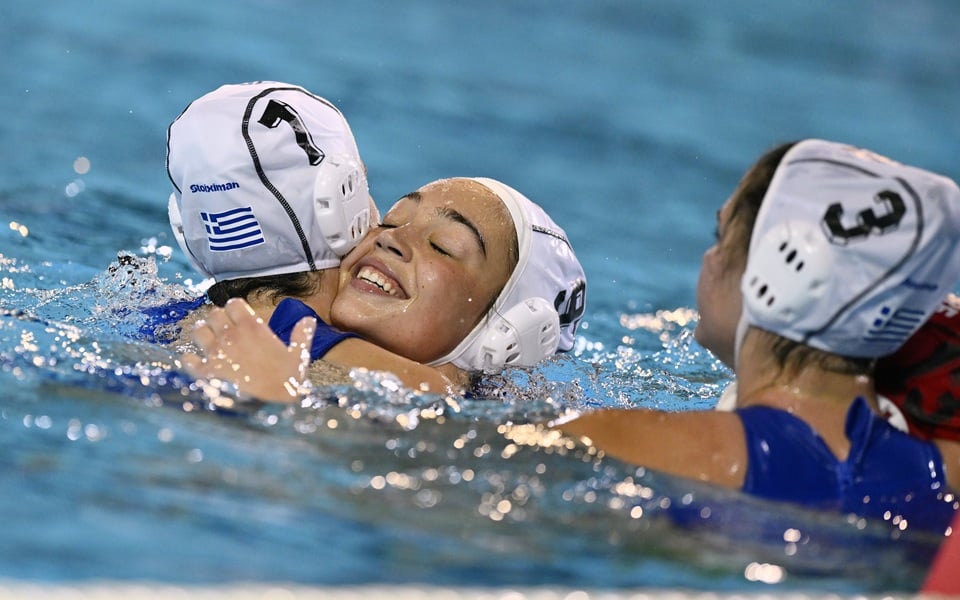
Greece’s women’s water polo team secured a bronze medal at the European Championships in Portugal, mirroring the achievement of their male counterparts from last month. The world champions defeated Italy 15-8 in the third-place match on Thursday in Funchal, claiming their sixth European medal in the competition’s history.
Coach Haris Pavlidis led his squad to the podium finish after a campaign that followed a strikingly similar pattern to the men’s tournament in Belgrade. The Greek women dominated the group stage with a perfect record of five consecutive victories before their medal hopes were altered in the knockout rounds.
Greece Women’s Water Polo Team Continues Medal Streak
The Greece women’s water polo team entered the European Championships as world champions with high expectations for gold. Their flawless performance during the preliminary rounds demonstrated their competitive strength and technical superiority against top European opponents. However, the semifinal stage proved to be an insurmountable barrier, according to reports from the tournament.
In a heartbreaking semifinal on Tuesday, Greece faced Hungary and fell in a shootout after a tightly contested match. The loss marked a turning point in the tournament, forcing the world champions to shift their focus to securing a place on the podium rather than competing for the continental title.
Bronze Medal Match Victory Over Italy
The third-place match against Italy showcased Greece’s resilience and determination to finish the championships with hardware. The Greek squad dominated from start to finish, building a commanding lead that Italy could not overcome. The final 15-8 scoreline reflected Greece’s superior performance throughout the bronze medal contest.
Additionally, the victory provided some consolation for a team that entered Portugal aiming for their first European title. While the bronze represents a successful tournament by most standards, it also highlights unfulfilled ambitions for a squad capable of winning on the world stage. The team’s world championship credentials suggested they possessed the talent to claim Europe’s top prize.
Comparison With Men’s European Championship Campaign
The parallels between the women’s campaign and the men’s tournament last month in Belgrade were remarkable. Both Greek teams swept through their group stages undefeated, building momentum and confidence. However, both squads encountered Hungary as an obstacle in the semifinals, with each team falling short of the championship match.
In contrast to the women’s established medal-winning tradition, the men’s bronze in Belgrade represented a historic first European medal for Greek men’s water polo. The women’s sixth European medal demonstrates their sustained excellence at the continental level over multiple tournaments. Meanwhile, both teams now share the frustration of coming close to European glory without capturing the ultimate prize.
Implications for Greek Water Polo
The bronze medal confirms Greece’s position among Europe’s elite women’s water polo nations, according to tournament observers. The world champions have proven they can compete consistently at the highest level, even when falling short of their primary objectives. Nevertheless, the semifinal loss to Hungary exposes areas where improvement remains necessary to break through to championship level at European competitions.
The dream of a European title remains unfulfilled for the talented Greek squad despite their world championship pedigree. Coach Pavlidis and his players will return home with another medal to add to their collection, but also with unfinished business on the continental stage. The team’s ability to bounce back from semifinal disappointment and secure bronze demonstrates mental toughness that could serve them well in future championships.
Greek water polo officials have not yet announced specific plans for the team’s preparation ahead of upcoming international competitions. The focus will likely shift to analyzing the semifinal loss and developing strategies to overcome Hungary and other top European opponents in future tournaments.

Follow Live Media News on Google News
Get Live Media News headlines in your feed — and add Live Media News as a preferred source in Google Search.
Stay updated
Follow Live Media News in Google News for faster access to breaking coverage, reporting, and analysis.
- Search any trending topic on Google (for example: Greece news).
- On the results page, find the Top stories section.
- Tap Preferred sources and select Live Media News.