


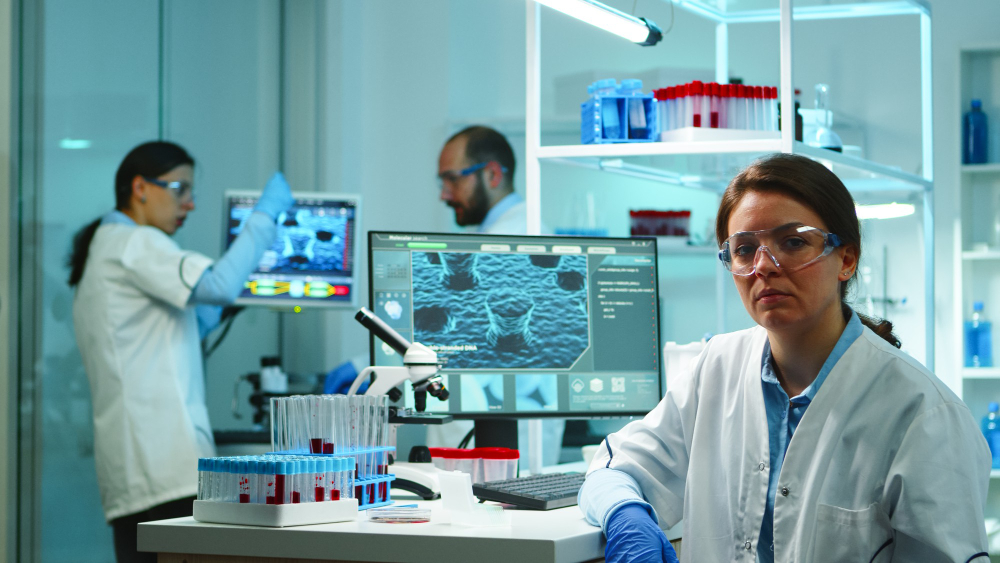
La Jolla’s lab is colder than anticipated. Researchers lean over trays containing samples smaller than a grain of rice inside, under fluorescent lighting and the constant hum of refrigeration units. Bright clusters of magenta dots show up on their computer screens, each one representing a neuron that is actively making proteins. Some have a strong glow. Some hardly flicker.
The imbalance is difficult to ignore. Using a new tool called Ribo-STAMP, researchers from Scripps Research and UC San Diego have started mapping what they refer to as the brain’s “protein factories.” For the first time, they have monitored the production of proteins in the hippocampus, the area of the brain that forms memories, across almost 20,000 distinct brain cells. The fact that neurons produce proteins was not the only surprise. The reason is that some people do it far more frequently than others—almost as if some cells are working extra hours while their neighbors are sitting quietly.
| Category | Details |
|---|---|
| Research Institutions | Scripps Research Institute and University of California San Diego |
| Technology | Ribo-STAMP protein-mapping system |
| Study Published | February 18, 2026 in Nature |
| Cells Analyzed | Nearly 20,000 individual brain cells |
| Focus Brain Region | Hippocampus (memory center) |
| Major Discovery | Some memory neurons produce proteins far more actively than others |
| Biological Focus | Ribosomes, the protein-producing structures inside cells |
| Disease Implications | Autism, Fragile X syndrome, Alzheimer’s, neurological disorders |
| Key Scientist | Gene Yeo, Professor of Cellular and Molecular Medicine |
| Reference | https://www.scripps.edu |
It seems that this alters our understanding of the brain. Neuroscientists studied genes for decades, viewing DNA as the ultimate instruction manual. However, the work isn’t really done by genes. Proteins do. They facilitate the formation of memories, send signals, and create connections. Observing the production of these proteins in real time reveals a previously hidden layer of brain activity. Scientists may have been examining the blueprint without actually seeing the building.
The technology itself functions in a peculiarly graceful manner. The tiny machines that put together proteins, called ribosomes, are tagged with a molecular tag by researchers. Because ribosomes leave behind traceable edits while they function, scientists can determine which proteins are being produced and in what locations. With active and inactive regions continuously changing, what emerges is not a static map but rather something more akin to a living economy. It turns out that some neurons are much busier than anticipated.
Specifically, compared to nearby CA1 neurons, CA3 pyramidal neurons—which are involved in memory circuits—exhibited significantly greater protein production. These cells look alike when viewed under a microscope. However, they appear to function at different speeds. Though the possibility persists, it is still unclear if that difference explains why some memories form more readily than others.
The productivity of cells may affect memory. In recent years, there has been an increasing amount of frustration with unresolved questions when attending neuroscience conferences. Autism and Alzheimer’s disease treatments have made slow progress. Spending billions of dollars. limited innovations. Scientists are beginning to believe that the answers may not only be found in genes but also in the way proteins are made—or not made.
The fact that individual neurons alternate between “high” and “low” production states adds interest to the findings. Certain cells function as fully functional factories, generating energy and communication-related proteins. Others go into periods of reduced activity, conserving resources. Observing these changes is oddly familiar, reflecting the oscillations in human productivity.
It appears that the brain has its own rhythms of effort.
Additionally, there is a subliminal reference to illness. Protein production issues have long been associated with disorders such as autism and fragile X syndrome. However, scientists were never able to measure those flaws inside individual neurons precisely. They do now. Scientists think this may eventually show the precise point at which the process fails.
How soon that knowledge will result in treatments is still unknown.
The discrepancy between RNA and proteins further muddies the waters. It was a common belief among scientists that if a gene was active, the corresponding protein would also be active. However, neurons don’t always act in such a predictable way. Before being translated, messenger RNA may lie dormant for hours or even days. Construction is pending, but the blueprint is in place.
The knowledge that thoughts themselves depend on tiny factories is subtly unnerving when one is standing in front of these glowing pictures. The proper assembly of proteins is essential for every memory, learned skill, and recognition moment. It is a continuous process. Unwavering and invisible.
Pharmaceutical companies and investors are already keeping a close eye on things. Treatments could concentrate on restoring appropriate protein synthesis rather than directly changing genes if mapping protein production identifies new drug targets. Although previous neuroscience hype has taught us painful lessons about overpromising, there is cautious optimism.
This study also comes at a time when there is a greater effort to map the brain with never-before-seen detail. The pace of projects mapping gene expression, electrical activity, and neural connections has increased. However, the process of producing proteins feels different. It displays action in addition to structure. There is work being done.
It’s like looking into the supply chain of the brain as you watch this happen.
The implications are still far-reaching but emotionally charged for patients and their families. Neurological disorders frequently develop gradually, gradually robbing people of their memory and abilities. Knowing how proteins are made could help us understand why some neurons survive while others fail first.
Productivity may be essential for survival, even at the cellular level. Skepticism persists, though. Numerous advances in neuroscience create excitement but stall before they can be used in clinical settings. The brain is obstinately intricate. While mapping protein factories may provide some answers, it also raises a number of other questions.
Things are rarely made simpler by discovery. However, there’s something different about this moment. A fresh viewpoint is provided by the pictures themselves, which show glowing, producing, and resting cells. Not only on illness, but also on the brain’s ability to support thought. Little factories, silently operating in the dark.

Follow Live Media News on Google News
Get Live Media News headlines in your feed — and add Live Media News as a preferred source in Google Search.
Stay updated
Follow Live Media News in Google News for faster access to breaking coverage, reporting, and analysis.
- Search any trending topic on Google (for example: Greece news).
- On the results page, find the Top stories section.
- Tap Preferred sources and select Live Media News.