


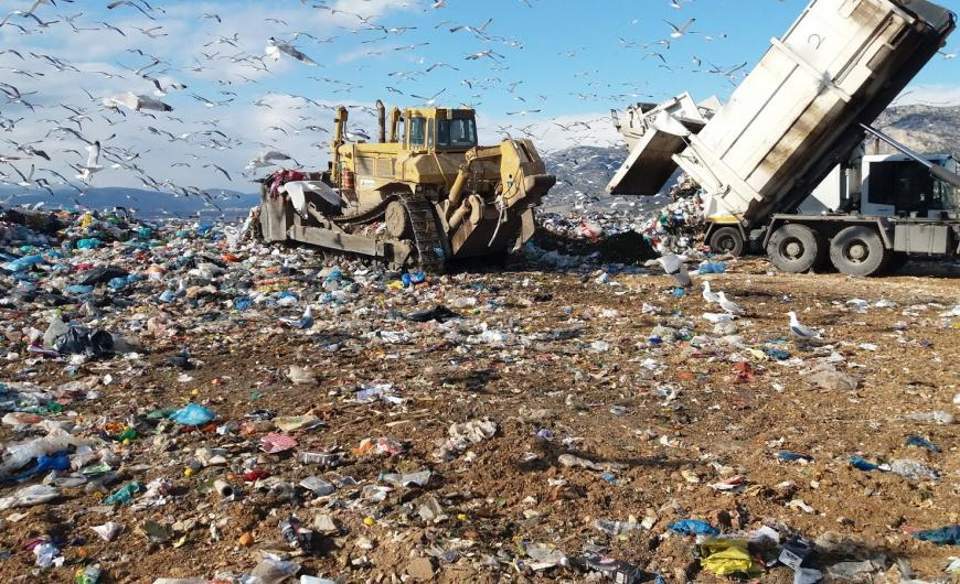
Greece’s largest waste disposal facility continues to expand as the country struggles with persistent waste management challenges. The Fyli landfill, located northwest of Athens, recently received approval from the Environment Ministry for another expansion that will add 2 million cubic meters of capacity and extend operations for at least another year, according to official announcements last week.
The latest expansion represents the fourth vertical extension of Phase 1 of the Fyli landfill, which has been operational since 2004. This ongoing enlargement highlights the ongoing difficulties Greece faces in developing effective recycling programs and reducing overall waste production.
Fyli Landfill Handles Majority of Athens Waste
The facility currently processes approximately 80% of Greater Athens’ garbage, making it the only operational landfill serving the entire Attica region. A planned second disposal site at Grammatiko, situated east of Athens, was never opened due to strong opposition from local communities.
The original Phase 1 section reached full capacity during summer 2017. However, authorities later reused portions of that area after the compressed garbage settled, creating additional space for waste disposal.
Multiple Expansion Phases Reflect Growing Pressure
Phase 2 of the landfill was subsequently constructed and filled to capacity, though the ministry confirmed it has not yet undergone required environmental restoration. Meanwhile, an emergency auxiliary cell built in 2018 accommodated approximately 600,000 tons of garbage before reaching capacity.
This auxiliary space, located in a small ravine several dozen meters from the main facility, is now being reused for waste from transfer stations. Additionally, the garbage deposited there has been compressed and drained before transport, according to waste management officials.
Recycling Efforts Remain Insufficient
The continuing reliance on landfill expansion underscores Greece’s struggles to meet European Union targets for waste reduction and recycling. Despite various initiatives to promote waste separation and recycling among households and businesses, participation rates remain below expectations.
Environmental groups have repeatedly criticized the country’s dependence on landfills rather than investing in modern waste processing infrastructure. In contrast to many northern European countries that have largely eliminated landfill use, Greece continues to rely heavily on this disposal method.
Environmental and Health Concerns Mount
The Fyli landfill expansion raises concerns among nearby residents and environmental advocates about air quality, groundwater contamination, and long-term ecological impacts. However, authorities maintain that the facility operates according to current environmental standards and regulations.
The lack of alternative disposal options in the Attica region leaves officials with limited choices for managing the area’s substantial waste stream. Greater Athens generates thousands of tons of garbage daily, requiring consistent disposal capacity regardless of environmental concerns.
Regional Waste Crisis Reflects National Challenge
The situation at the Fyli landfill reflects broader waste management problems throughout Greece. Many regional landfills across the country have faced similar capacity issues, forcing expensive emergency measures and extensions.
Furthermore, the failure to open the Grammatiko facility has concentrated all regional waste pressure on a single site, accelerating the need for repeated expansions. This centralized approach contradicts modern waste management principles that favor distributed processing facilities.
The Environment Ministry has not announced specific plans for developing alternative waste disposal infrastructure or timelines for reducing dependency on the Fyli landfill. Unless significant progress occurs in recycling rates and waste reduction programs, the facility will likely require additional expansions within the coming years to continue serving the Athens metropolitan area.

Follow Live Media News on Google News
Get Live Media News headlines in your feed — and add Live Media News as a preferred source in Google Search.
Stay updated
Follow Live Media News in Google News for faster access to breaking coverage, reporting, and analysis.
- Search any trending topic on Google (for example: Greece news).
- On the results page, find the Top stories section.
- Tap Preferred sources and select Live Media News.