


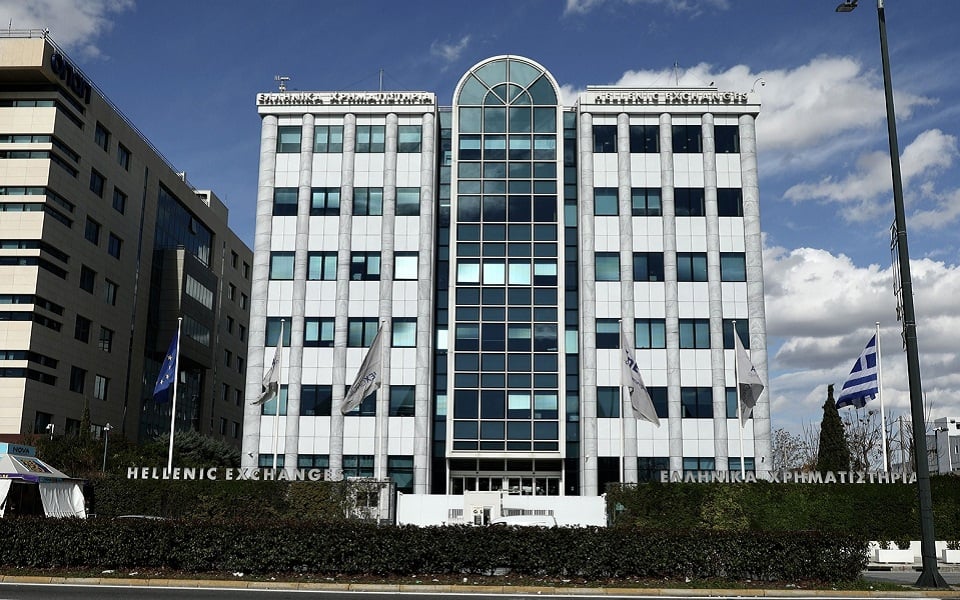
The Greek stock market extended losses for a third consecutive session on Tuesday, with the Athens Exchange general index declining 1.14% as concerns mount over potential profit-taking following recent 16-year highs. Market observers suggest the downturn may reflect a shift in trader sentiment rather than fundamental fiscal or corporate deterioration, with the benchmark possibly having reached overbought territory in the near term.
The Athens Exchange general index closed at 2,253.06 points, down from Monday’s 2,279.10 points, according to official data. The large-cap FTSE-25 index fell 1.16% to finish at 5,732.84 points, continuing the market’s recent retreat from historical peaks.
Banking Sector Leads Greek Stock Market Decline
The banks index posted the steepest losses, contracting 1.71% as all major financial institutions traded in negative territory. National Bank suffered the largest drop among major lenders, falling 2.78%, while Alpha Bank declined 2.41%.
Additionally, Piraeus Bank decreased 1.54% and Eurobank slipped 0.76%. The banking sector’s weakness contributed significantly to the broader market downturn, reflecting the outsized influence these stocks hold on the Athens Exchange.
Industrial and Materials Stocks Face Pressure
Industrial and materials companies experienced substantial declines during Tuesday’s session. ElvalHalcor slumped 6.46%, marking one of the day’s worst performances, while Titan Cement retreated 3.66%.
However, some stocks managed to buck the downward trend. EYDAP, the Athens water utility company, surged 4.47%, and Coca-Cola HBC advanced 1.32%, providing limited support to the broader market.
Market Breadth Reflects Widespread Selling
The decline proved broad-based across the Greek stock market, with 75 stocks recording losses compared to just 29 gainers. An additional 23 stocks remained unchanged during the session, underscoring the universal nature of the selloff.
Meanwhile, trading volume increased compared to the previous session. Turnover reached €336.2 million, up from Monday’s €311.8 million, suggesting active participation despite the negative price action.
Technical Concerns Drive Sentiment Shift
Market analysts attribute the recent decline to technical factors rather than fundamental developments affecting Greek equities. The perception that stocks have become overbought following their rally to 16-year highs appears to be prompting strategic profit-taking among investors.
In contrast to fundamental-driven corrections, this type of technical adjustment often reflects normal market dynamics. Traders who accumulated positions during the rally may be securing gains at elevated levels, creating downward pressure on prices.
Regional Market Performance
The weakness extended beyond Greece’s borders to neighboring Cyprus. The general index of the Cyprus Stock Exchange decreased 0.23% to close at 292.65 points, suggesting regional concerns may be influencing investor behavior across southeastern European markets.
The correlation between the two markets highlights broader risk sentiment affecting the region. Nevertheless, the Cypriot market’s modest decline paled in comparison to the more pronounced losses experienced in Athens.
Market participants will closely monitor upcoming sessions to determine whether the current correction represents a temporary pause or signals a more sustained change in the Greek stock market’s recent positive trajectory. The absence of specific negative catalysts suggests the decline may prove limited, though continued profit-taking remains possible if technical indicators support further downside risk.

Follow Live Media News on Google News
Get Live Media News headlines in your feed — and add Live Media News as a preferred source in Google Search.
Stay updated
Follow Live Media News in Google News for faster access to breaking coverage, reporting, and analysis.
- Search any trending topic on Google (for example: Greece news).
- On the results page, find the Top stories section.
- Tap Preferred sources and select Live Media News.