


When something significant is taken away, a certain type of stubbornness manifests itself in small towns. methodical, quiet, and unassuming. Most people thought the typical conclusion was imminent when Rite Aid filed for bankruptcy last year, started to withdraw from western New York, and closed nearly seventy stores. Lights were switched off, shelves were cleared, and prescriptions were redirected to cities twenty minutes away. These stories usually end like that. It didn’t, however, in Akron.
Rather, the store manager and a longtime pharmacist who had worked behind that same counter for years decided that the closure would not take place under their supervision. They set out to find bettors in a village with roughly 3,000 inhabitants. They discovered Padma Kumar and Dr. Yellamraju Kumar, who together invested over a million dollars to transform the shuttered chain pharmacy into something completely different. locally owned. staffed locally. firmly established. It was something Akron hadn’t seen in a long time.
| Akron Community Pharmacy — Key Information | Details |
|---|---|
| Business Name | Akron Community Pharmacy Inc. |
| Location | 12983 Main Rd, Akron, NY 14001 |
| Phone | 585-518-4117 |
| Lead Investors | Padma Kumar & Dr. Yellamraju Kumar |
| Total Investment | Over $1,000,000 |
| Former Location | Previously a Rite Aid store |
| Key Staff | Former Rite Aid store manager and pharmacist |
| Store Hours | Mon–Fri: 9am–7pm · Sat: 9am–4pm · Sun: 9am–3pm |
| Community Context | Opened after Rite Aid bankruptcy closed ~70 regional stores |
| Supporting Ecosystem | Akron Community Foundation — $45M county health investment |
| Town Population | Approximately 3,000 residents |
| State | New York (Erie County) |
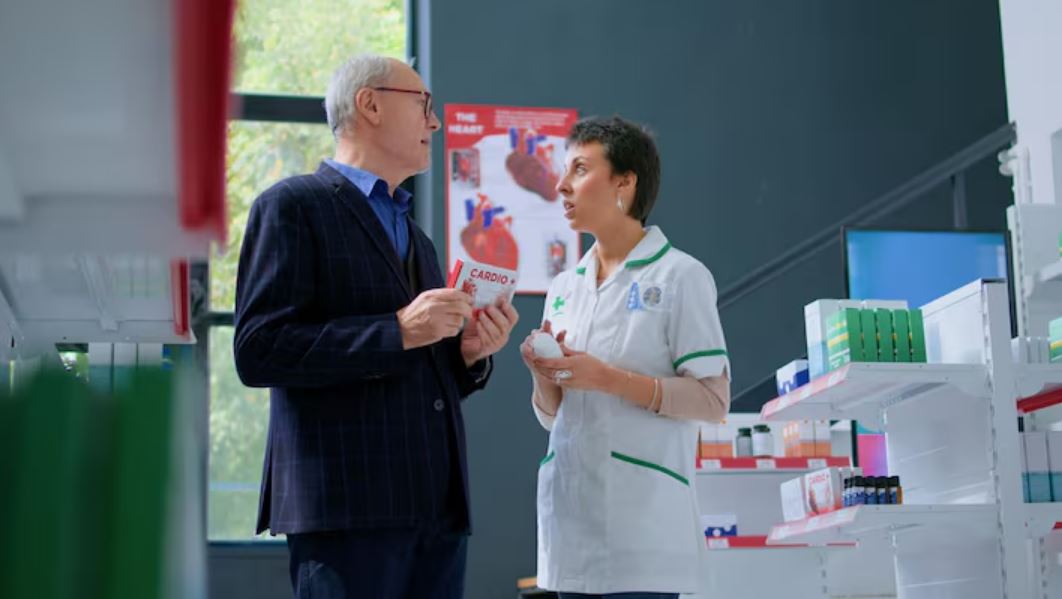
The remains of the former Rite Aid can still be seen when you enter the building today. The front door, parking lot, and floor plan are all the same. However, the atmosphere has changed. Employees can identify faces. They remain open from nine to three on Sundays, which the majority of independent pharmacies discreetly stopped doing years ago due to their lack of profitability. Evenings on weekdays last until seven o’clock. Really small decisions. However, they provide some insight into the motivation behind the investment.
The money itself is worth pausing over. The Kumars are not the type of investors you typically read about in trade publications, and investing a million dollars in a single storefront in upstate New York is not an easy choice. It’s still unclear if this was a cold calculation about the need for healthcare in underserved rural areas or something more intimate related to the local community and its current workforce. Most likely a combination of the two. As I watch it play out, I get the impression that this time, both the moral and financial arguments are pointing in the same direction.

The larger context is also important. Akron lost more than just a pharmacy as a result of Rite Aid’s failure. Pharmacists have begun to refer to dozens of small towns across the nation as “pharmacy deserts,” where it may take forty minutes to fill a prescription. Walgreens and CVS have been closing their own stores. In retrospect, the corporate consolidation that promised efficiency ten years ago appears to be a retreat. The Akron project is filling that void, and it most likely won’t be the last of its kind.
Not to be overlooked is another layer. Operating within the larger Summit County ecosystem, the Akron Community Foundation has been investing in human services and health at an unprecedented rate. The most recent count of quarterly grants was over $4.3 million. a $45 million innovation fund for health and safety that was partially funded by money from the opioid settlement. Technically, it’s a different Akron, but the pattern is the same. Local capital is beginning to fill the void left by the retreat of large institutions, albeit slowly and imperfectly.
It’s difficult to ignore how much of this story contradicts what we typically hear about retail health in the United States. Consolidation, closure, and automated pharmacy counters manned by worn-out technicians have dominated the narrative for the past ten years. Akron’s rendition is not the same. There were two investors, a store manager who stayed, a pharmacist who refused to leave, and a town that still valued a pharmacy where people knew your name.
The real question is whether this model scales, and as of yet, no one truly knows. It takes a lot of money to mobilize when you multiply a million dollars per town by the hundreds of communities that Rite Aid abandoned. For now, though, the pharmacy on Main Road in Akron is open on Sundays, the lights are on, and a familiar person is standing behind the counter. That is not insignificant. It could even be the beginning of something.

Follow Live Media News on Google News
Get Live Media News headlines in your feed — and add Live Media News as a preferred source in Google Search.
Stay updated
Follow Live Media News in Google News for faster access to breaking coverage, reporting, and analysis.
- Search any trending topic on Google (for example: Greece news).
- On the results page, find the Top stories section.
- Tap Preferred sources and select Live Media News.