


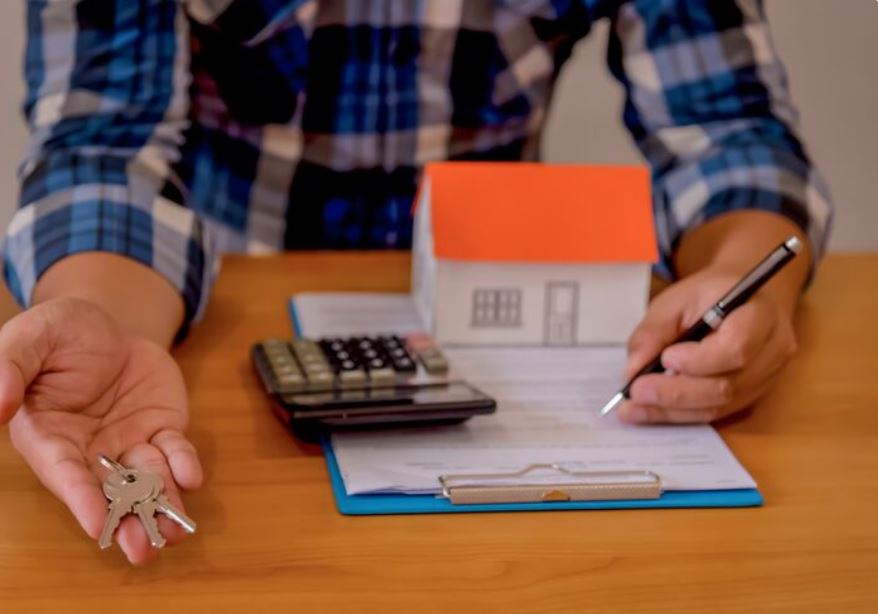
Nearly every home purchase in San Mateo County includes a quiet moment during the closing meeting. The buyer, who is frequently a young family relocating from the city or a tech worker, has just completed signing what seems like every document ever printed. One final sheet is slid across the table by the agent. The buyer pauses when they see their first annual property tax bill written in small type on it. It occasionally exceeds their first year’s car payments. Occasionally, more than three years.
The math of homeownership is truly unique in San Mateo County. Recent data indicates that the median home value is approximately $1,441,300. The average annual property tax bill is about $8,637. For the county, those numbers are in the middle of the pack. The numbers quickly rise to $30,000, $40,000, and more when you enter Hillsborough, Atherton, or the more recent developments in Foster City. The figures appear more recognizable when you enter East Palo Alto or parts of Daly City, but they are still stunning by most American standards.
| Detail | Information |
|---|---|
| County | San Mateo County, California |
| Tax Collector | Sandie Arnott, San Mateo County Tax Collector |
| Tax Collector Office | 555 County Center, Floor 1, Redwood City, CA 94063 |
| Contact Phone | 866-220-0308 |
| Mailing Address for Payments | PO Box 45878, San Francisco, CA 94145-0878 |
| Fiscal Year Start | July 1 |
| Tax Bills Mailed | October |
| 1st Installment Due | November 1 |
| 1st Installment Delinquent | December 10 (10% penalty) |
| 2nd Installment Due | February 1 |
| 2nd Installment Delinquent | April 10 (10% penalty + $35 fee) |
| Base Tax Rate (Prop 13) | 1% of assessed value |
| Annual Assessed Value Cap Increase | 2% per year |
| Median Home Value (2025–26) | ~$1,441,300 |
| Typical Annual Bill | ~$8,637 |
| Tax Lien Date | January 1 (for upcoming fiscal year) |
| Unsecured Deadline | August 31 |
| Online Payment Options | eCheck, Credit Card, PayPal (2.35% fee) |
| Monthly Payment Option | Easy Smart Pay |
On paper, at least, the structure is simple. Nearly fifty years after it was passed in 1978, Proposition 13 still subtly governs California’s tax system. It caps the base rate at one percent of assessed value and caps annual assessed increases at two percent. That sounds humble. For long-term owners, it also feels that way. A couple who purchased their Burlingame Craftsman home in 1985 is most likely paying a much lower price than their more recent neighbor for a home that looks exactly the same. same block. the same amount of space. drastically different tax obligations. One of the most peculiar and politically enduring aspects of California property taxes is this.
The year has a predictable rhythm. The fiscal year begins on July 1. In October, secured property tax bills are mailed by the Treasurer-Tax Collector. The first installment is due on November 1st, and if it is not paid by December 10th, it becomes delinquent. This results in an automatic, harsh penalty of 10% that is surprisingly common among first-time buyers who believe the bank will take care of everything. Due on February 1st and past due after April 10th, the second installment will be subject to a 10% penalty and a $35 collection fee. If you miss both, the penalties compound in a manner more akin to a credit card company venturing into real estate than government accounting.

Tucked away at 555 County Center in Redwood City, the Treasurer-Tax Collector’s office is remarkably modern for something that still sends paper bills. There is a 2.35 percent service fee for online, eCheck, credit card, and PayPal payments. Homeowners can now pay in monthly installments instead of having to deal with the semi-annual sticker shock thanks to Easy Smart Pay, which was introduced a few years ago. There is a downtown location that opens at precisely 9 a.m. on weekdays, as well as a satellite office in South San Francisco that has been moved to 999 Grand Avenue due to construction. People form a line. They do it every time.
Living or visiting San Mateo County, it’s remarkable how much the discussion of who belongs here is influenced by property taxes. The protections provided by Prop 13 are advantageous to long-term residents. On today’s assessed values, newcomers pay the market rate. One of the reasons the area feels so oddly frozen at the same time it’s constantly churning is the gap between those two realities, which can occasionally be five figures wide on nearby homes. It’s difficult to ignore how much the tax code subtly determines who stays, who sells, and who never quite succeeds in buying in. In any case, the bills arrive in October.

Follow Live Media News on Google News
Get Live Media News headlines in your feed — and add Live Media News as a preferred source in Google Search.
Stay updated
Follow Live Media News in Google News for faster access to breaking coverage, reporting, and analysis.
- Search any trending topic on Google (for example: Greece news).
- On the results page, find the Top stories section.
- Tap Preferred sources and select Live Media News.