


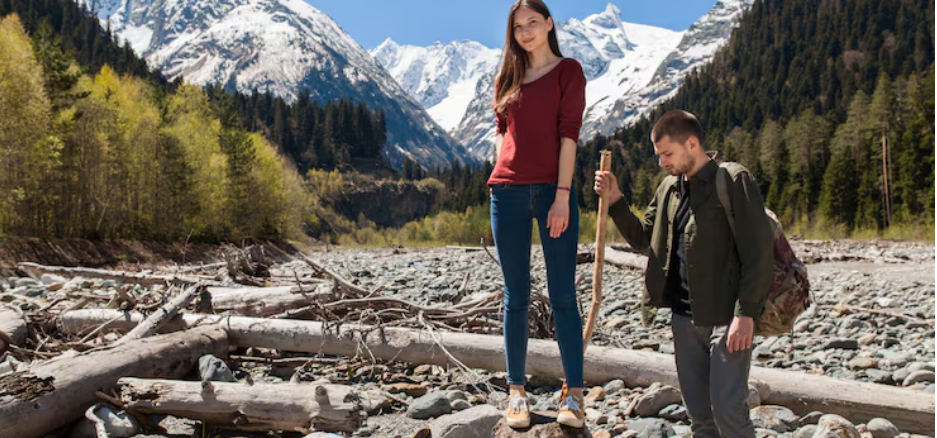
The trail to Mount Elbert starts out silently, meandering through lodgepole pine and spruce before emerging into thin, startling air above the tree line. With their boots crunching gravel and their breath shortening, hikers ascend in steady lines on summer mornings. Some of them will be dehydrated by the afternoon. There will be some lost. And sometimes it will be necessary to carry someone down.
That ascent, along with mountain biking, skiing, fourteeners, and the promise of risk presented as freedom, is the foundation of the modern economies of mountain towns like Leadville and Breckenridge. Locations formerly reliant on logging and mining have been revitalized by tourism. Cafés buzz. Drivetrains are tuned late into the night at bike shops. It appears that investors think there will always be a need for high-altitude adventure.
| Category | Details |
|---|---|
| Report Name | Amenity Trap: How High-Amenity Communities Can Avoid Being Loved to Death |
| Organization | Headwaters Economics |
| Lead Researcher | Megan Lawson, Outdoor Recreation & Public Lands |
| Focus | Economic and fiscal pressures in high-amenity rural communities |
| Notable Region | Colorado mountain towns (Summit, Eagle, Pitkin counties) |
| Reference | https://headwaterseconomics.org |
But in addition to the visible system, there is a more subdued one at work. It is sometimes referred to as the rescue economy by locals.
Every year, Colorado’s search and rescue teams—many of which are volunteer-run—respond to thousands of backcountry incidents. Climbers who are stuck are lifted off ridgelines by helicopters. When unexpected storms arrive, EMTs treat sprained ankles that develop into hypothermia cases. The majority of the costs are borne by counties, which are frequently financed by general tax money. The towns that profit from extreme tourism may also be bearing the costs of its effects. There seems to be little open discussion of the math.
Similar findings were recently reported by the nonprofit organization Headwaters Economics in its study on the “amenity trap.” Natural beauty-endowed communities draw record numbers of tourists and newcomers. Property values are rising. Local wages don’t. strains on the infrastructure. Additionally, public services, such as emergency response and wildfire mitigation, are overburdened by the demands of growth.
It was difficult to ignore how much the scene resembled an urban rush hour last autumn as I stood outside a trailhead near Summit County and watched a line of rental SUVs arrive before dawn. However, the destination was a 13,000-foot ridge.
There are actual tourism dollars. With riders spending money on lodging, food, shuttles, and equipment, mountain biking has emerged as one of the fastest-growing outdoor activities in North America. Nearly overnight, bike shops and tour operators have sprung up in places like Groveland, California, outside Yosemite National Park, diversifying rural economies and generating jobs. Communities that were previously dependent on erratic industries have found stability in catering to tourists seeking scenic views. However, opportunity cost is still present.
Budgets for counties are limited. Improvements to rural health clinics may have to wait in order to finance a new trail network. Parking lot expansions may take funds away from housing programs designed to keep paramedics and teachers on staff. The bill rarely ends up in the climber’s inbox when they misjudge the weather on Longs Peak and cause a multi-hour rescue involving volunteers and airplanes. It is quietly dispersed among taxpayers. As tourism increases, it’s still unclear if this arrangement will last.
The pressure was increased by the pandemic. After being cut off from cities, remote workers purchased second homes in mountainous areas. In certain resort areas in Colorado, home prices doubled between 2019 and 2022. Locals were forced to bid on what was left, frequently in vain, as wealthy buyers paid cash. Working families were forced farther down the valley by the “housing bridge,” as researchers refer to it.
In the meantime, the number of search and rescue calls increased due to new explorers using social media to learn about the backcountry. Instagram has the ability to reduce risk. Seldom does a summit photograph capture the storm forming over the ridge or the windburn.
As we watch this develop, we get the impression that extreme tourism has turned into a liability as well as a product. Adrenaline is sold in towns. They sell technical singletrack and powder days. However, the response system—volunteer crews, sheriff departments, and rural hospitals—absorbs the shock when something goes wrong.
Some localities are trying new things. In an effort to address labor shortages that affect emergency services, Winter Park and Breckenridge have compensated property owners to turn short-term rentals into housing for local employees. Durango has promoted accessory dwelling units, gradually increasing the number of available homes. In order to coordinate across county lines, regional housing authorities are being formed. Perhaps the funding for rescues requires a similar level of coordination.
Some states charge hikers a small fee to cover the cost of carrying search-and-rescue cards. Opponents contend that directly charging for rescues could deter people from requesting assistance, thereby increasing the number of fatalities. That worry seems legitimate. On a mountain during a lightning storm, nobody wants to hesitate. However, depending solely on general funds could also skew incentives by covertly supporting riskier forms of recreation.
The economics of leisure and the economics of emergency care may become inextricably linked as mountain towns enter a new stage.
The more general query is similar to a traditional economic conundrum: what should be produced, how, and for whom? A town must provide safety if it attracts millions of tourists annually through adventure. Both demand capital, labor, and land. Both compete with wildfire protection, housing, and education.
Outside a search-and-rescue garage in Eagle County, trucks sit ready, ropes coiled, stretchers stacked. Volunteers strengthen systems that most visitors never see by training on weeknights after their regular jobs. It’s a quiet job. The expenses are dispersed.
Mountain towns have always struck a balance between danger and beauty. The amount of money, visitors, and rescues feels different now. Investors appear optimistic about the growth’s continuation. Perhaps less so, locals are posing more challenging queries.
Being a destination that people want to visit is something to be proud of. However, as one former governor once cautioned, being loved to death is more than just a catchphrase. It can be costly.
Policy decisions currently being discussed regarding housing, land use, tourism caps, and who ultimately bears the cost when adventure goes awry could determine whether the rescue economy can be controlled.
The trails are still full as of right now. There is still fuel in the helicopters. And everyone who lives in the mountains often pays the same price.

Follow Live Media News on Google News
Get Live Media News headlines in your feed — and add Live Media News as a preferred source in Google Search.
Stay updated
Follow Live Media News in Google News for faster access to breaking coverage, reporting, and analysis.
- Search any trending topic on Google (for example: Greece news).
- On the results page, find the Top stories section.
- Tap Preferred sources and select Live Media News.