


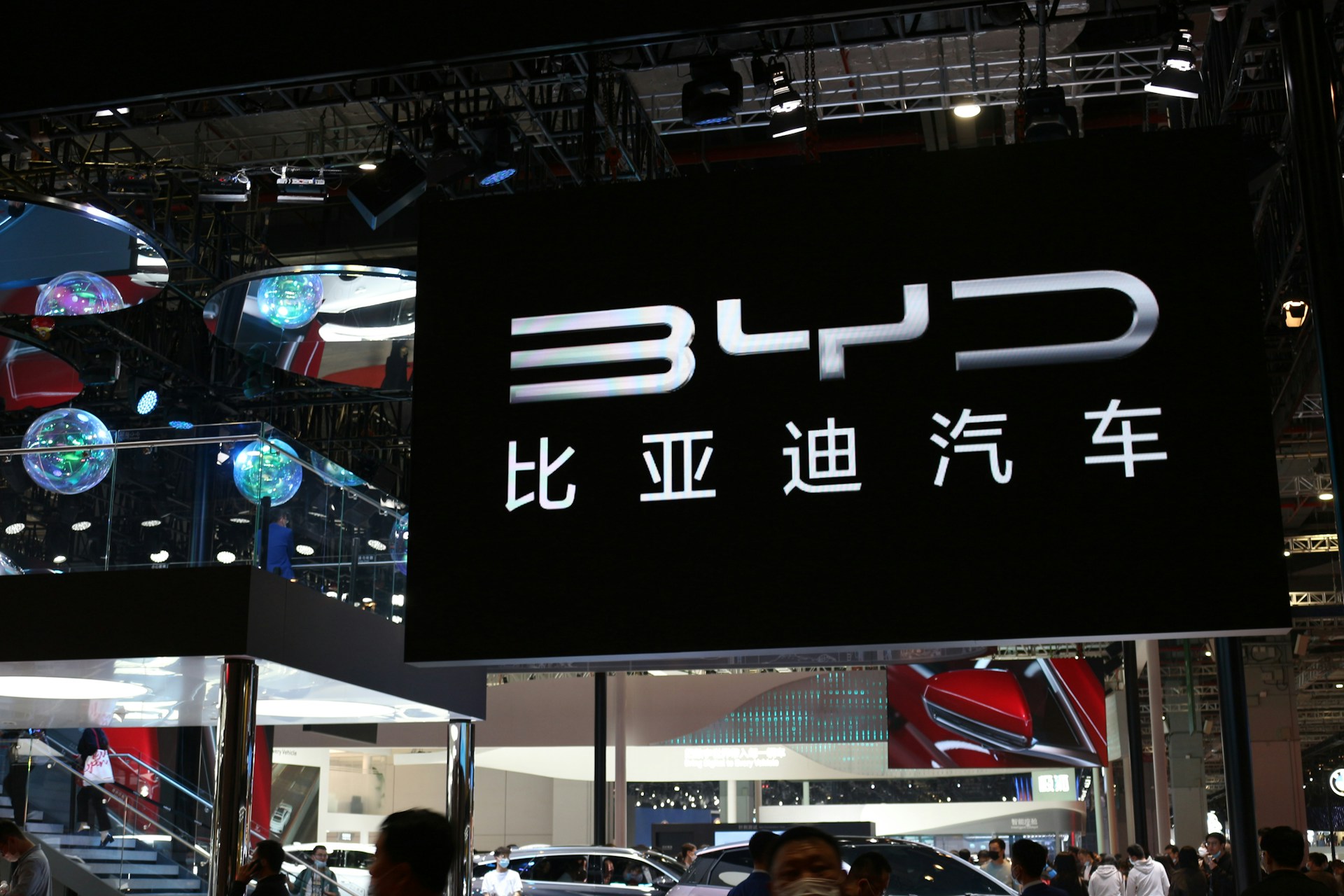
In a strategic move aimed at clearly separating its operations, Chinese automaker BYD has created a new brand, Linghui (领汇), which will target wholesale customers and managers of large corporate fleets exclusively. The decision comes at a pivotal moment for the EV giant: despite overtaking Tesla in sales, BYD must now navigate tighter profit margins and the need to elevate the prestige of its passenger-car lineup.
The identity of the new brand
According to the latest information published by China’s Ministry of Industry and Information Technology (MIIT), Linghui is now officially part of BYD’s portfolio. The brand’s debut includes four models: three fully electric sedans (Linghui e5, e7, and e9) and one plug-in hybrid MPV, the Linghui M9.
Although the vehicles carry a distinct badge—different from BYD’s familiar logo—these are essentially revised versions of existing models from the Dynasty and Ocean series. For example, the new vehicles are based on the BYD Xia, Han DM-i, Qin PLUS EV, and Sealion 07 EV. The “Linghui” trademark, originally registered in 2010, is being activated now to absorb vehicles intended for professional use (such as taxis and corporate fleets), operating through an independent sales network.
A push into the premium space and intensifying competition
This shift is not accidental. BYD’s goal is to decouple the image of vehicles heavily used in ride-hailing and transport services from models marketed to private consumers, strengthening its bid to establish itself in more premium categories. Other major players in China are pursuing similar strategies, such as GAC Aion, which announced in 2025 that it would separate its B2B and B2C operations.
With the number of domestic car brands in China exceeding 100, competition is relentless. Manufacturers are trying to cut costs through synergies while boosting margins by moving into higher-priced models. New brands such as Yijing (Dongfeng and Huawei) and Qijing (GAC and Huawei) are clearly targeting the premium segment of the market.
Staggering numbers and a “Pyrrhic” victory
2025 was a milestone year for BYD, which reported total sales surpassing 4.6 million units, up 7.73% year over year. The company also dethroned Elon Musk’s Tesla from the top spot in global electric-vehicle sales, delivering 2.26 million fully electric cars, while the U.S. automaker’s deliveries fell 8.6% to 1.6 million.
Still, investors remain cautious. The impressive growth in sales volume did not translate into comparable profitability. In the third quarter of the previous year, BYD’s net profit plunged 32.6% to 7.8 billion yuan (about $1.1 billion), marking the steepest drop in the past four years. At the same time, revenue declined for the first time after five consecutive years of growth.
The profitability problem
BYD’s dominance is built largely on its cheaper models, such as the Seagull, which starts at roughly $8,000. But that strategy dramatically compresses profit per vehicle. According to a Morgan Stanley analysis, BYD’s profit per car fell to 4,800 yuan in the second quarter of 2025—far below Tesla’s roughly $6,000 per vehicle.
China’s brutal price war, reduced government subsidies, and the expected slowdown of the domestic market in 2026 create a volatile mix. BYD is trying to offset these pressures by expanding into Southeast Asia, Latin America, and Europe in an effort to work around tariffs. However, building factories abroad is proving complex, amid strict oversight both from host countries and from Beijing, which is concerned about technology transfer.
In addition, a quiet but significant shift involves financing. Under regulatory pressure, BYD has been forced to phase out “Dilian,” a shadow supply-chain financing system that for years helped fuel its aggressive expansion. The future for the new “king” of electrification therefore looks challenging, as BYD must prove it can combine scale with sustainable economic value.

Follow Live Media News on Google News
Get Live Media News headlines in your feed — and add Live Media News as a preferred source in Google Search.
Stay updated
Follow Live Media News in Google News for faster access to breaking coverage, reporting, and analysis.
- Search any trending topic on Google (for example: Greece news).
- On the results page, find the Top stories section.
- Tap Preferred sources and select Live Media News.