


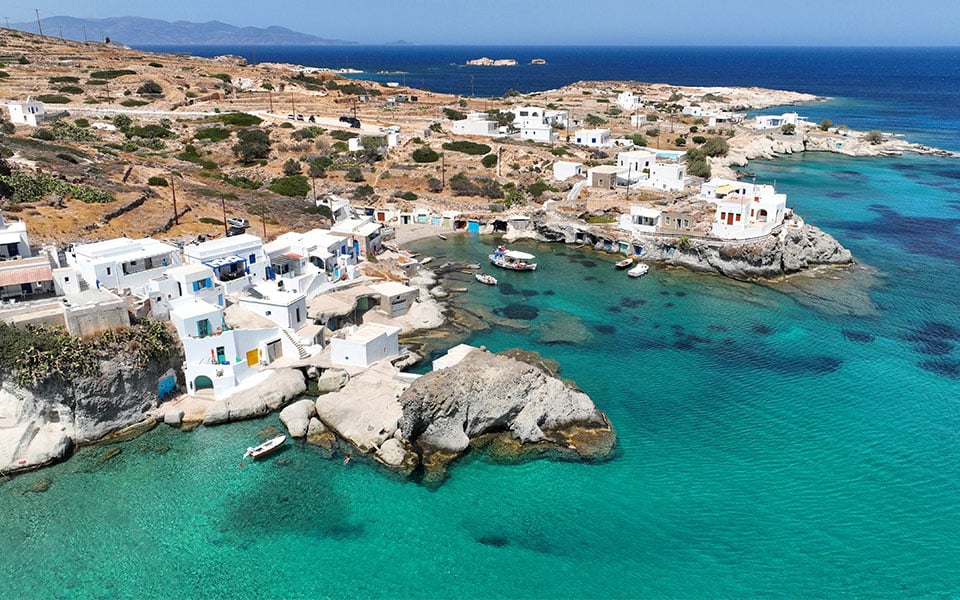
The Greek island of Kimolos is emerging as a compelling travel destination that offers far more than pristine beaches and crystal-clear waters. While international media outlets have recently praised Kimolos as a tranquil alternative to busier Cycladic islands, this small island near Milos deserves recognition for its rich archaeological heritage, medieval architecture, and well-preserved walking trails that reveal centuries of human history.
According to recent coverage from Dutch travel platform griekenland.net and the UK’s Mirror, Kimolos has attracted attention for its unspoiled beauty and exceptionally clear waters. However, cultural travelers are discovering that the island’s historical treasures and hiking opportunities make it an engaging destination for active exploration rather than simply a quiet beach escape.
Archaeological Significance of Kimolos Dates to Neolithic Era
The island has been continuously inhabited since the Late Neolithic period, spanning from the late 6th to mid-5th millennium BC, according to archaeological finds from the Provarma site. The island’s ancient name derives from “kimolia,” a fine white chalky clay mined here for millennia and traded throughout the Mediterranean for use in cosmetics, medicine, and textile production.
During Classical times, Kimolos became strategically important as a member of the Athenian-led Delian League. The island’s position between Athens and Sparta-influenced Milos made it more significant than its modest size might suggest, serving as a contested territory between these rival powers.
The ancient city that once occupied what is now the islet of Agios Andreas represents one of the island’s most evocative archaeological sites. A violent earthquake in antiquity severed this landmass from the main island, leaving ruins both above and below the shallow waters of Ellinika Bay that visitors can explore today.
Museum Reveals Island’s Multilayered Past
The Archaeological Museum of Kimolos, housed in a traditional two-story building in Horio opposite the Metropolitan Church of Panagia Odigitria, opened to the public in 2008. The museum’s carefully curated collection traces human activity from the Late Neolithic through Late Antiquity, with artifacts recovered primarily from the submerged settlement at Agios Andreas and Ellinika.
Notable exhibits include an 8th-century BC carved gravestone depicting a headless woman, among the earliest known examples in Greece, according to museum documentation. Additionally, a 1.3-meter-tall headless female statue from the 2nd century BC and copies of ancient civic decrees illuminate the island’s political life and territorial disputes over nearby Polyaigos.
A distinctive transparent glass floor reveals a reconstructed ancient burial beneath visitors’ feet, creating an immediate connection to Kimolos’ archaeological heritage. The museum operates Tuesday through Sunday from 08:30 to 15:00, remaining closed on Mondays.
Medieval Castle Complex Dominates Main Settlement
Rising above Horio, the medieval castle built between the 14th and 16th centuries represents a layered historical landscape rather than a single monument. The fortified settlement originally contained approximately 123 houses arranged within concentric defensive walls designed to protect residents from pirate attacks and foreign invasion.
The Folk and Maritime Museum within the castle complex occupies a restored two-story residence once belonging to a local seafaring family. Exhibits showcase traditional island life through hand-embroidered textiles, weaving tools, household ceramics, and implements from farming, carpentry, and shoemaking trades, according to museum displays.
Meanwhile, the upper floor recreates an 18th or 19th-century Kimolian home with period furniture, while nautical displays honor the island’s maritime heritage through navigational instruments and photographs. The adjacent Church of the Birth of Christ, constructed in 1592, completes this atmospheric historical quarter.
Modern Saint Maintains Spiritual Significance
Kimolos stands apart from other Cycladic islands for venerating a modern local saint, Osia Methodia, who remains central to the island’s spiritual identity. Born Irene on November 10, 1861, she devoted herself to religious life after losing her husband at sea, eventually taking monastic vows and the name Methodia.
Her small cell within the Inner Castle beside the Church of the Birth of Christ became a pilgrimage destination as islanders sought her spiritual counsel. The Ecumenical Patriarchate canonized her in 1991, though islanders recognized her as a patron saint as early as 1946.
Her relics now rest in the Church of Panagia Odigitria, and her feast day on October 5 remains among the most important dates on the island’s religious calendar. Her legacy continues to shape the spiritual character of Kimolos decades after her death.
Hiking Trails Connect Natural and Historical Landmarks
A network of signposted walking trails extends from Horio across low hills and along the coastline, following centuries-old routes that historically connected fields, chapels, and rural settlements. Popular routes including Horio-Ellinika Beach, Horio-Paliokastro, and Horio-Monastiria combine geological interest with expansive Aegean views and access to quiet coves.
Skiadi, a distinctive mushroom-shaped rock formation on the island’s northwestern plateau, represents one of the most striking natural landmarks. Listed in the Atlas of Geological Monuments of the Aegean, this wind-carved formation developed as softer stone eroded while the harder cap remained intact.
At Ellinika Beach, visitors with snorkeling equipment can explore submerged ruins of the ancient settlement while observing visible tomb remains dating from Mycenaean through Hellenistic periods along the shoreline. This convergence of natural beauty and archaeological significance exemplifies what makes Kimolos distinctive among Greek islands.
As tourism interest continues building following recent international media coverage, Kimolos appears positioned to attract more culturally curious travelers seeking destinations that balance relaxation with meaningful historical exploration. The island’s ability to maintain its unhurried character while welcoming visitors to its archaeological and natural treasures will likely determine its evolution as a travel destination in coming seasons.

Follow Live Media News on Google News
Get Live Media News headlines in your feed — and add Live Media News as a preferred source in Google Search.
Stay updated
Follow Live Media News in Google News for faster access to breaking coverage, reporting, and analysis.
- Search any trending topic on Google (for example: Greece news).
- On the results page, find the Top stories section.
- Tap Preferred sources and select Live Media News.