


Three former SpaceX engineers have secured $50 million in Series A funding for Mesh Optical Technologies, a Los Angeles-based startup focused on manufacturing optical transceivers for AI data centers. Travis Brashears, Cameron Ramos, and Serena Grown-Haeberli announced the investment round led by Thrive Capital on Tuesday, bringing their expertise from developing optical communications for Starlink satellites to address critical supply chain challenges in the artificial intelligence infrastructure market.
The co-founders identified the opportunity while working on compute-intensive satellite designs at SpaceX, where they recognized significant limitations in the current optical transceiver market. According to CEO Brashears, the devices convert optical signals from fiber or laser into electrical signals that computers can process, making them essential components for AI data center operations.
Optical Transceivers Critical for AI Infrastructure
Optical transceivers play a vital role in training and operating large deep learning models by enabling multiple GPUs to function together efficiently. Brashears explained that companies advertising million-GPU clusters actually require four to five times that number in transceivers. The importance of these components is demonstrated by established supplier AOI securing a $4 billion contract with AWS data centers last year, according to industry reports.
Mesh Optical Technologies aims to produce one thousand units daily within the coming year, positioning the company to qualify for bulk orders in 2027 and 2028. This aggressive manufacturing timeline reflects the urgent demand for domestic optical transceiver production as AI infrastructure continues expanding rapidly.
Addressing National Security Concerns in Supply Chain
The optical transceiver market is currently dominated by Chinese manufacturers and suppliers, creating what Mesh and its investors view as a strategic vulnerability. While trade restrictions have not yet affected the market, the founders believe they are addressing a future national security challenge by building supply chains outside China.
Thrive Partner Philip Clark emphasized the strategic importance of the investment in a statement to TechCrunch. He noted that having critical AI data center components dependent on misaligned or competitive countries presents a significant problem, adding that Mesh addresses the immediate need for improved interconnect solutions to continue scaling artificial intelligence systems.
Manufacturing Challenges and Innovation
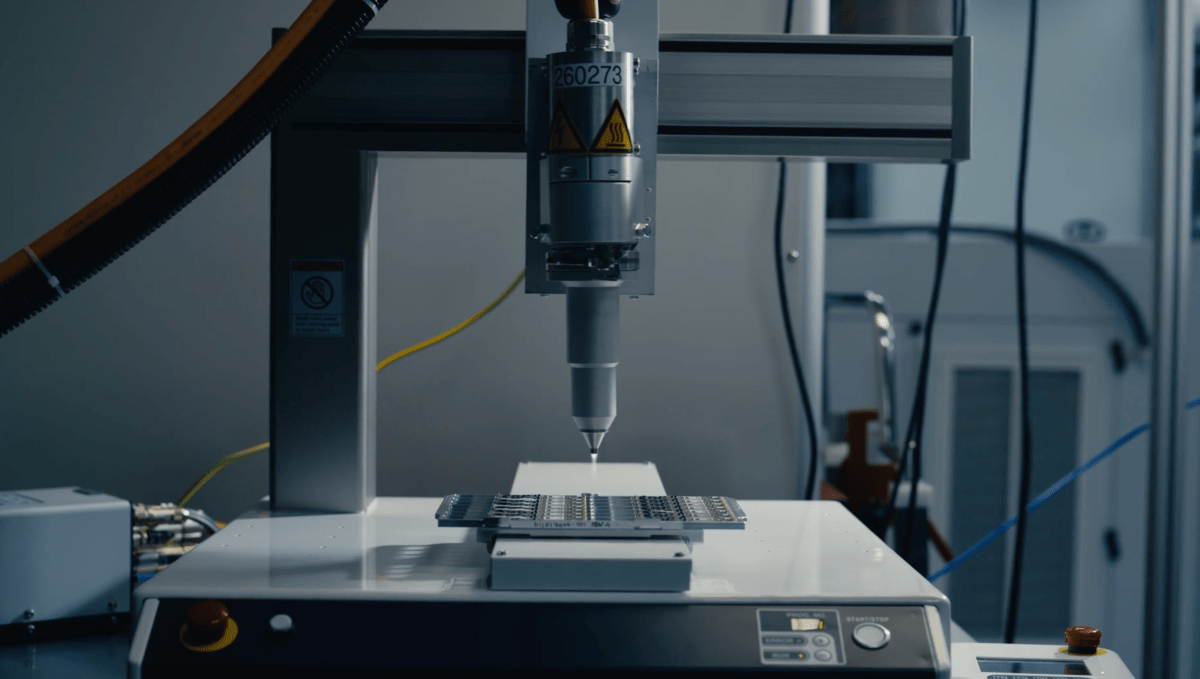
The primary challenge for Mesh involves implementing automated, lights-out manufacturing techniques that remain uncommon in American industry. According to the founders, this expertise is heavily concentrated in China, with even European equipment suppliers expecting Chinese customers by default. One German firm’s standard intake form reportedly requests Chinese company registration numbers as a routine matter.
By integrating design and production facilities, Mesh hopes to achieve more efficient and cost-effective optical transceiver components. Their current design eliminates one power-intensive component commonly used in existing systems. President Ramos indicated this innovation could reduce GPU cluster power consumption by three to five percent, a significant improvement as hyperscale data center operators seek maximum system efficiency.
Long-Term Vision Beyond Data Centers
Data centers represent just the initial market for Mesh Optical Technologies, with broader ambitions extending to optical wavelength communications across multiple industries. Brashears told TechCrunch the company wants to position itself at the forefront of transitioning from radio frequency to photonics-based communications. The ultimate goal involves interconnecting all devices, though the company is strategically starting with computer systems.
The company’s success will depend on meeting its ambitious production targets and securing qualification from major data center operators over the next several years. Industry observers will watch whether Mesh can successfully compete with established Chinese manufacturers while building domestic manufacturing capacity.

Follow Live Media News on Google News
Get Live Media News headlines in your feed — and add Live Media News as a preferred source in Google Search.
Stay updated
Follow Live Media News in Google News for faster access to breaking coverage, reporting, and analysis.
- Search any trending topic on Google (for example: Greece news).
- On the results page, find the Top stories section.
- Tap Preferred sources and select Live Media News.