


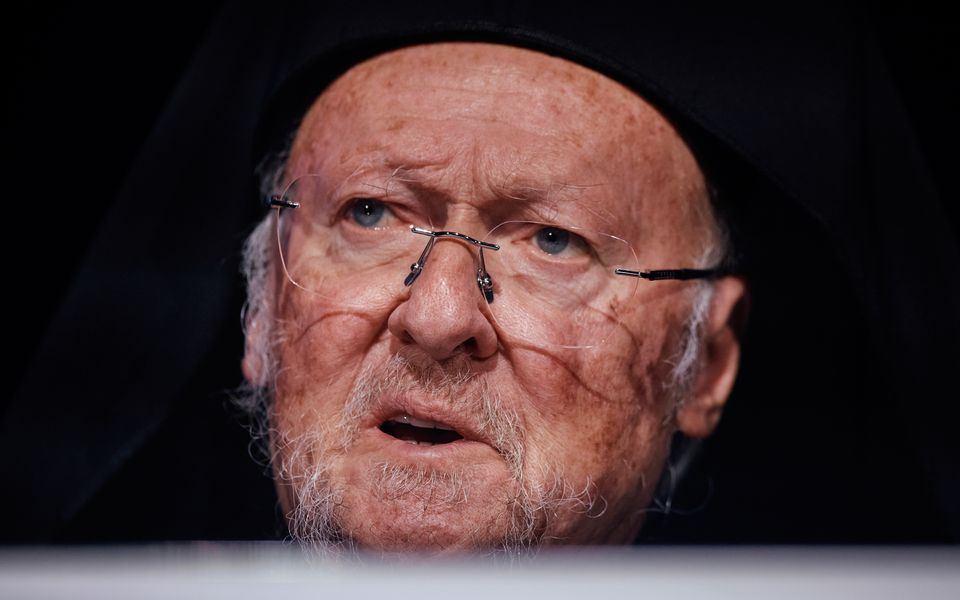
A US-based Orthodox Christian organization has condemned the Russian Foreign Intelligence Service for launching a verbal assault on Ecumenical Patriarch Bartholomew, the spiritual leader of the world’s Orthodox Christians. The Archons, a group honored by the Istanbul-based patriarch for their service to the church, expressed dismay on Friday over inflammatory remarks made by Russia’s SVR approximately one month ago.
According to the Archons’ statement, the Russian Foreign Intelligence Service referred to Patriarch Bartholomew as “antichrist in a cassock” and “devil in the flesh” in a January 12 publication on its website. The SVR accused the Ecumenical Patriarch of dismembering Orthodox Ukraine and allegedly targeting Baltic states to replace Russian Orthodox structures with churches under patriarchate control.
Russian Intelligence Service Attacks Ecumenical Patriarch
The harsh rhetoric from Russia’s intelligence agency represents an escalation in tensions between Moscow and the Ecumenical Patriarchate. The SVR’s statement claimed that Bartholomew seeks to establish churches in the Baltic region that would be completely under the control of the patriarchate, undermining existing Russian Orthodox institutions.
However, the Archons characterized these accusations as part of a broader geopolitical struggle. The group criticized the Russian Orthodox Church for failing to defend the Ecumenical Patriarch against such attacks from a state intelligence agency.
Orthodox Church Divisions Deepen
The Archons stated it is “nothing short of scandalous” that the Russian Orthodox Church has remained silent in the face of such inflammatory language directed at Bartholomew. The organization praised the patriarch for prioritizing the well-being of Orthodox churches over political considerations.
In their statement, the Archons expressed gratitude for the opportunity to support their spiritual leader. They contrasted Bartholomew’s approach with those who have allegedly allowed the church to become “a tool of the foreign policy agendas of an unscrupulous and imperialistic government,” an apparent reference to Russian state influence over the Russian Orthodox Church.
Context of Orthodox Christian Tensions
Relations between Orthodox churches worldwide have grown increasingly strained in recent years. The conflict centers partly on Ukraine, where the Ecumenical Patriarchate granted autocephaly, or independence, to the Orthodox Church of Ukraine in 2019, a move that infuriated Moscow.
Additionally, geopolitical tensions following Russia’s actions in Ukraine have spilled over into religious affairs. The Russian Orthodox Church has maintained close ties with the Kremlin, while the Ecumenical Patriarchate has sought to assert its traditional role as “first among equals” in global Orthodoxy.
Meanwhile, the involvement of Russia’s Foreign Intelligence Service in religious disputes marks an unusual intersection of espionage agencies and ecclesiastical matters. The SVR’s public denunciation of a religious leader underscores how deeply intertwined church and state have become in Russian foreign policy.
Implications for Global Orthodox Unity
The verbal attack on Patriarch Bartholomew and the subsequent defense by the Archons highlight the deepening schism within global Orthodox Christianity. These tensions affect millions of Orthodox Christians worldwide and complicate efforts at unity among various national churches.
In contrast to the coordinated structure of the Roman Catholic Church, Orthodox Christianity comprises multiple autocephalous churches that recognize the Ecumenical Patriarch as spiritual leader but maintain significant independence. This decentralized structure makes resolving disputes particularly challenging.
The extent to which these religious tensions will continue to escalate remains uncertain, as authorities have not indicated any plans for reconciliation talks. The situation underscores ongoing challenges in maintaining unity within Orthodox Christianity amid competing national interests and geopolitical pressures.

Follow Live Media News on Google News
Get Live Media News headlines in your feed — and add Live Media News as a preferred source in Google Search.
Stay updated
Follow Live Media News in Google News for faster access to breaking coverage, reporting, and analysis.
- Search any trending topic on Google (for example: Greece news).
- On the results page, find the Top stories section.
- Tap Preferred sources and select Live Media News.