


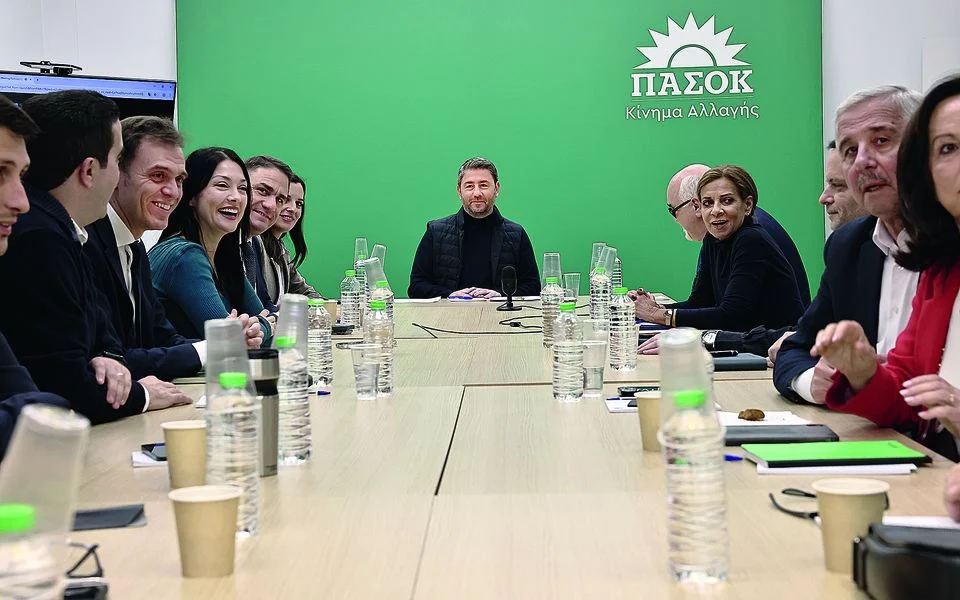
Greece’s main opposition party PASOK is experiencing significant internal discord as it prepares for its upcoming congress scheduled for late March, with party leader Nikos Androulakis and Athens Mayor Haris Doukas clashing over the delegate selection process. The dispute centers on whether congress delegates should be chosen based on national election voter counts or internal party membership, highlighting deeper tensions within the center-left party ahead of crucial national elections.
During a Friday meeting of the political secretariat of the central organizing committee, Androulakis defended his controversial decision to base delegate selection on the party’s performance in national elections rather than on internal membership rolls. The PASOK leader issued stern warnings to critics within the party ranks, according to reports from the meeting.
PASOK Leader Defends Delegate Selection Method
Androulakis emphasized that the party must focus on national electoral success rather than internal procedures. “Some people need to understand that internal party elections are over,” the PASOK leader stated, adding that national elections are the immediate priority. He further stressed the need for party members to respect established party organs and congress procedures.
The congress is expected to include approximately 4,000 delegates plus additional representation from the Greek diaspora. This significant gathering comes at a critical time as PASOK seeks to position itself as a viable alternative to the ruling party ahead of upcoming national elections.
Athens Mayor Challenges Selection Criteria
However, Doukas has emerged as a vocal critic of Androulakis’ approach, insisting that PASOK’s identity as a membership-based organization requires a different selection method. “PASOK is a party of members. And we must elect delegates based on members. There is no other such precedent,” the Athens mayor declared, calling for dialogue and unity to achieve electoral victory.
The disagreement reflects broader questions about party democracy and organizational structure within PASOK. Additionally, it highlights competing visions for how the center-left party should prepare for national elections and rebuild its political strength after years in opposition.
Internal Divisions Overshadow Policy Focus
Meanwhile, other party figures have expressed concern that internal conflicts are distracting from substantive policy discussions. Pavlos Geroulanos attempted to defuse the escalating tensions, criticizing the focus on procedural disputes when the party should be addressing societal issues, according to statements from the meeting.
In contrast to Geroulanos’ call for unity, the sharp exchange between Androulakis and Doukas suggests that internal PASOK divisions may persist beyond the March congress. The dispute over delegate selection procedures has become a proxy battle for influence within the party structure and its future direction.
The tension within PASOK comes as the party seeks to consolidate its position as Greece’s primary opposition force. The outcome of the congress and the resolution of these internal conflicts could significantly impact the party’s ability to present a unified front in upcoming national elections.
The late March congress will test whether PASOK can overcome these internal divisions and establish a coherent strategy moving forward. Party officials have not yet announced specific dates for the congress or indicated whether compromise solutions regarding delegate selection are under consideration.

Follow Live Media News on Google News
Get Live Media News headlines in your feed — and add Live Media News as a preferred source in Google Search.
Stay updated
Follow Live Media News in Google News for faster access to breaking coverage, reporting, and analysis.
- Search any trending topic on Google (for example: Greece news).
- On the results page, find the Top stories section.
- Tap Preferred sources and select Live Media News.