


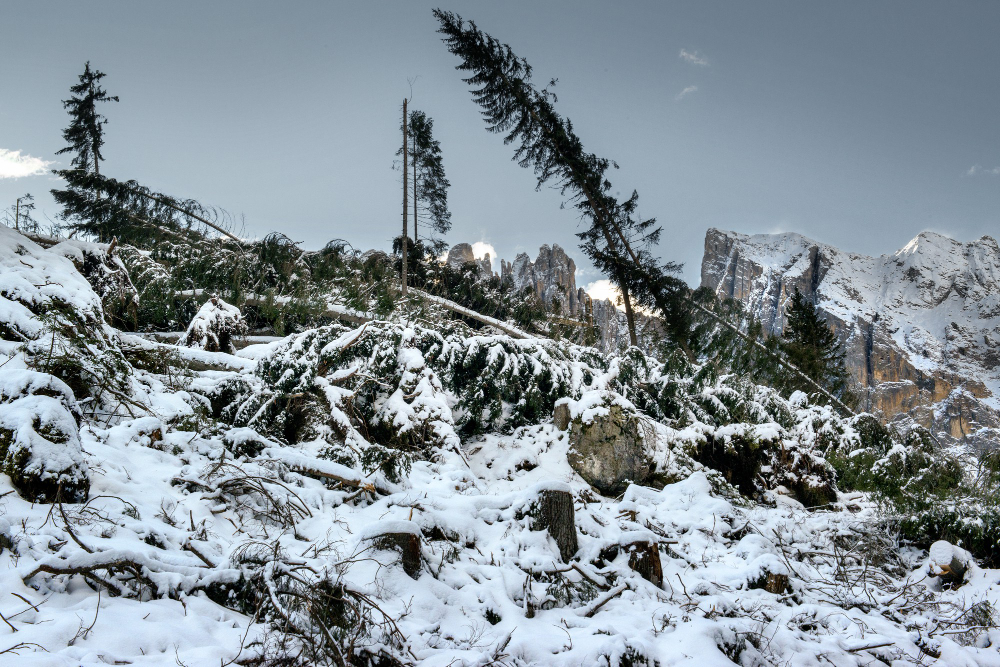
The morning following the avalanche was unusually quiet in the Alder Creek trailhead parking lot. Rescue crews stood in groups, talking softly, while snowmobiles sat motionless, their engines cold. The violence that had occurred only hours before was concealed by the smooth white slopes of the mountains above, which once again appeared serene, almost unconcerned.
There were eight skiers killed. There was still one more to go. The tragedy was initially explained using well-known terminology. I wish you luck. bizarre circumstances. No one could have predicted the sudden collapse of snow. These words came out fast, almost instinctively, as though everyone needed the security of chance. However, it seemed that randomness wasn’t the whole story as I stood there and observed guides slowly and deliberately adjusting their avalanche beacons.
| Category | Details |
|---|---|
| Location | Castle Peak, Sierra Nevada Mountains, near Lake Tahoe, California, USA |
| Date | February 2026 |
| Deaths | 8 confirmed dead, 1 missing presumed dead |
| Survivors | 6 rescued |
| Group | 15 skiers including professional guides |
| Conditions | Severe snowstorm, unstable snowpack, high avalanche warnings |
| Community | Victims included experienced backcountry skiers, guides, and mothers |
| Historical Context | Deadliest avalanche in California’s modern history |
| Terrain | Remote backcountry, accessible only via difficult ski routes |
| Reference | https://www.fs.usda.gov/tahoe |
Members of a close-knit alpine community, professional guides, and seasoned backcountry skiers were among the victims. A few had attended prestigious ski schools. Others had read snowpack layers like sailors read tides, spending years traversing avalanche terrain. They were aware of the dangers. That’s why it was more difficult to explain the result.
and more difficult to ignore.
A strong storm that had already issued avalanche warnings throughout the Sierra Nevada caused the avalanche to occur close to Castle Peak. The wind gusts had gotten dangerously high. Avalanche forecasters had noted the instability that resulted from several feet of new snow falling on top of weaker layers. These threats weren’t concealed. They were well-known.
That choice might have been the right one at the time. It can be difficult for outsiders to comprehend the relationship that backcountry skiers frequently form with risk. It normalizes risk. Known. routine, even. After a sufficient number of successful expeditions, survival begins to seem more like a testament to skill than chance.
Risk is a part of everyday life in the mountain towns surrounding Lake Tahoe. In coffee shops, skiers congregate to compare routes. Weather forecasts and avalanche reports are discussed. Gear stores confidently sell airbags and transceivers, as though being prepared can make danger more tolerable.
It helps to be prepared. It does not, however, remove uncertainty.
In avalanche education, the saying “familiarity breeds complacency” is frequently used. Once a slope has been skied safely, it starts to feel safer than it is. Previous survival turns into deceptive proof. Although the pattern is well known, it is still unclear if that psychological trap was a factor in this case. Blind spots can be created by experience.
Something else became apparent as rescue workers battled to get to the victims, hampered by persistent storms and shaky snow. Experts are not immune. Equipment is useful. Training is beneficial. Avalanches, however, proceed more quickly than judgment. The control vanishes instantly when the snow collapses.
Nature is not a negotiator. Over the past ten years, backcountry skiing has seen a sharp increase in popularity. Social media has contributed by saturating screens with pictures of untracked snow and expansive slopes. Adventure is now seen as a goal. Carefully framed risk is now part of the allure.
Even if no one expresses it explicitly, danger sells. The ability to ski challenging terrain carries a certain quiet prestige. Respect in the community is earned by completing difficult routes. It conveys proficiency. bravery. Identity. But pressure can come from prestige. It gets more difficult to go back, both socially and emotionally.
Momentum turns into a force unto itself. The choices made during that three-day journey are currently being investigated by investigators. What cautions were mentioned? What circumstances were noted? What calculations were performed? These inquiries are not about assigning blame. They are about comprehending how seasoned individuals end up in potentially fatal circumstances.
Because this wasn’t a first. The majority of avalanche victims are not novices, as avalanche experts have long cautioned. They have a lot of skiing experience. People who are self-assured. People frequent it because they feel safe enough to do so. It’s difficult to ignore the awkward implication.
Self-assurance can boost visibility. According to friends and family, the victims were happy, enthusiastic people who cherished the great outdoors. The Lake Tahoe community has been rocked by their deaths. Town squares have seen candlelight vigils. With their helmets in their hands, skiers have stood in silence.
In mountain towns, grief moves slowly. But beneath the sadness lies a sense of unease. an understanding that there was some degree of predictability to this tragedy. that it resulted from years of repeating patterns. When that risk is taken frequently enough, it eventually catches up with you.
Avalanches happen naturally. You can’t get rid of them. However, one can choose to be exposed to avalanche terrain. a decision impacted by perception, identity, and culture. As you watch this play out, you get the impression that the boundary between adventure and vulnerability is blurred more than most people would like to acknowledge.
And the lessons—quiet, uncomfortable, and unsolved—are waiting somewhere beneath the new snow that has already covered the avalanche scar.

Follow Live Media News on Google News
Get Live Media News headlines in your feed — and add Live Media News as a preferred source in Google Search.
Stay updated
Follow Live Media News in Google News for faster access to breaking coverage, reporting, and analysis.
- Search any trending topic on Google (for example: Greece news).
- On the results page, find the Top stories section.
- Tap Preferred sources and select Live Media News.