


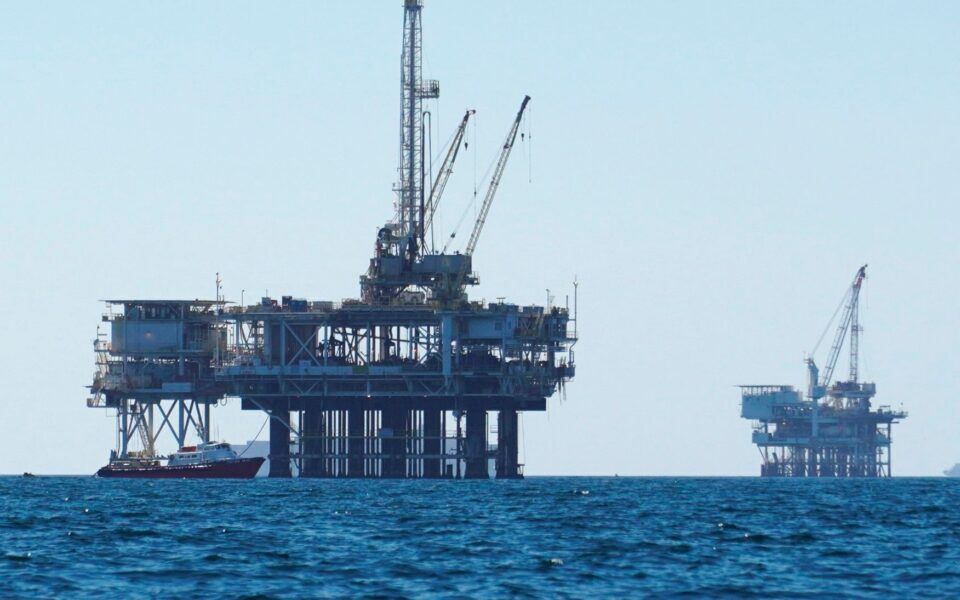
Greece is set to sign four major hydrocarbon exploration agreements with US energy giant Chevron on Monday, marking a significant step toward unlocking vast offshore natural gas reserves south of Crete and the Peloponnese. The hydrocarbon exploration agreements cover the maritime concessions “South Peloponnese,” “A2,” “South Crete I” and “South Crete II,” according to official sources. Following the signing ceremony, the deal will be submitted to Parliament for ratification.
Geophysical surveys in the designated areas are scheduled to commence in the second half of 2026. This initiative represents Greece’s first major effort to open its waters to gas exploration in more than four decades, with American energy companies playing a central role in the development.
Greece’s Energy Strategy and US Cooperation
The Chevron deal follows a similar hydrocarbon exploration agreements signed with ExxonMobil last November, demonstrating Greece’s commitment to developing its offshore energy resources. The country aims to become the first European Union member state actively participating in the US plan to transport American liquefied natural gas to Europe through the Vertical Corridor gas pipeline network.
However, recent auction results for gas infrastructure projects have been disappointing. Greece and the United States are now working jointly to ensure the success of a critical February auction for transporting natural gas from Greece to Ukraine, with deliveries scheduled for March. This auction is widely viewed as a key test for the commercial viability of the broader gas corridor project.
New Labor Market Information System Launches
Meanwhile, the Labor Ministry will launch its new Ergani II information system on Monday, designed to serve as the digital backbone of Greece’s labor market. The upgraded platform will enable practical implementation of regulations introduced under recent labor laws, which have remained on hold pending the system’s full operational status.
Foreign Policy Briefing and Gaza Mission
Additionally, Foreign Minister George Gerapetritis will brief Parliament’s Foreign Affairs and Defense Committee on Monday regarding the recent High-Level Cooperation Council held in Ankara. According to Kathimerini, the minister is expected to discuss Greece’s plans to participate in the International Stabilization Force in Gaza, which would mark the country’s first international mission since its involvement in ISAF operations in Afghanistan.
Prime Minister’s Middle East and Asia Tour
In contrast to domestic policy matters, Prime Minister Kyriakos Mitsotakis will focus on international relations this week with visits to Abu Dhabi on Tuesday and a subsequent two-day trip to India. During the India visit, Mitsotakis is scheduled to meet with Prime Minister Narendra Modi as Greece actively pursues new business ventures and strategic partnerships with the South Asian nation.
Cyprus Observer Status at Trump Peace Initiative
On the regional front, Cyprus will participate as an observer in US President Donald Trump’s Board of Peace meeting on Gaza in Washington on Thursday. Government spokesman Konstantinos Letymbiotis stated that Cyprus’s participation reflects “the consistent and active regional role it has undertaken since the very outset of the crisis.” Hungary and Bulgaria are reportedly the only EU member states that have accepted Trump’s invitation as full participants.
Athens Taxi Strike Disrupts Transportation
Meanwhile, transportation in the Greater Athens region will face significant disruptions as taxi drivers stage a three-day strike from Tuesday through Thursday. Taxi drivers from across Greece will join the strike on Wednesday and Thursday, according to the Attica taxi drivers’ union SATA.
The union is protesting electric vehicle transition timelines and competition from ride-hailing services, while also demanding tax breaks and permission to use public transport lanes in Athens’s congested streets. SATA has warned that once relevant legislation is submitted to Parliament, they will call for an indefinite strike.
The hydrocarbon exploration agreements await parliamentary ratification in the coming weeks, while survey work remains more than a year away. The outcome of these energy initiatives and the February gas auction will likely shape Greece’s role in European energy security for years to come.

Follow Live Media News on Google News
Get Live Media News headlines in your feed — and add Live Media News as a preferred source in Google Search.
Stay updated
Follow Live Media News in Google News for faster access to breaking coverage, reporting, and analysis.
- Search any trending topic on Google (for example: Greece news).
- On the results page, find the Top stories section.
- Tap Preferred sources and select Live Media News.