


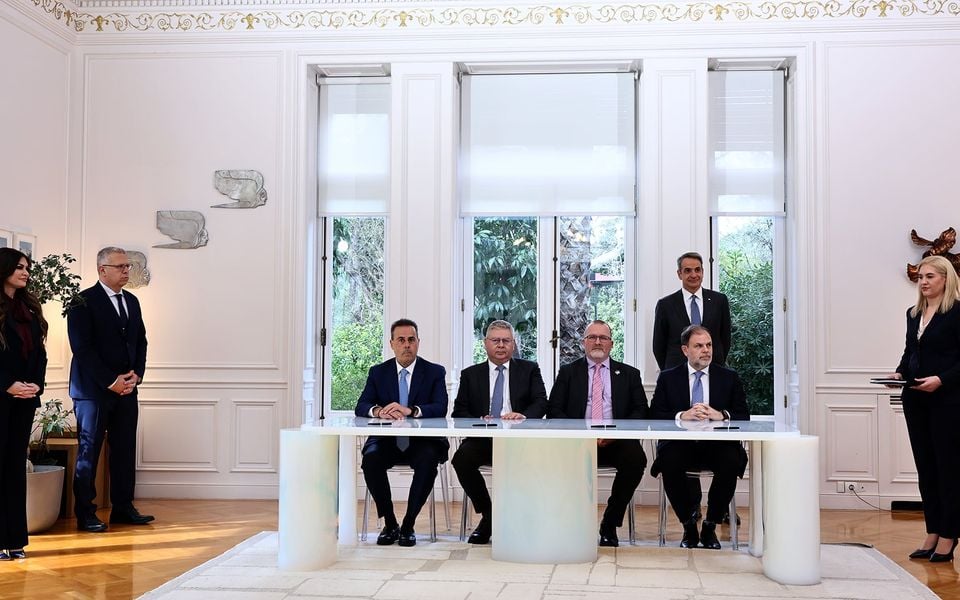
Greece has finalized lease contracts with a Chevron-Helleniq Energy joint venture for four offshore energy exploration areas located off Crete and the Peloponnese. The Greece offshore energy agreements were signed Monday at Maximos Mansion, following the consortium’s designation as preferred investor in October, according to reports.
The signing ceremony marks a significant step in Athens’ efforts to establish itself as a key player in the region’s evolving energy landscape. The contracts cover four maritime concessions: South Peloponnese, A2, South Crete I, and South Crete II.
Investment Timeline and Financial Commitments
According to Kathimerini, the exploration program will unfold in three distinct phases with substantial financial commitments. The initial phase will focus on two-dimensional seismic surveys with minimum guaranteed costs exceeding €20 million.
The second phase involves more detailed 3D surveys estimated at €24 million. Meanwhile, the third phase anticipates drilling operations requiring an investment of approximately €100 million, bringing total projected spending to over €144 million across all phases.
Survey Operations to Begin Later This Year
Seismic surveys are scheduled to commence in late 2025, with Chevron reportedly chartering a specialized vessel to conduct operations. The vessel will cover an extensive area of 47,000 square kilometers across the four offshore concessions.
These surveys will provide critical data about potential hydrocarbon deposits beneath the seabed. The information gathered will inform decisions about whether to proceed with exploratory drilling in subsequent phases.
Greece’s Strategic Energy Positioning
The offshore energy agreements come as Greece pursues a central role in the emerging energy architecture taking shape across Europe and the Eastern Mediterranean. Athens is working to position the country as a strategic energy hub amid shifting regional dynamics.
Additionally, Greece now hosts involvement from the two largest US oil companies in its hydrocarbon sector. Both ExxonMobil and Chevron are now active participants in Greek offshore energy exploration efforts, strengthening transatlantic energy ties.
Greece is also actively participating in reengineering natural gas flows through what is known as the Vertical Corridor. This involvement further enhances the country’s profile as a potential energy transit and supply hub for southeastern Europe.
Regional Energy Context
The Eastern Mediterranean has emerged as an area of growing interest for offshore energy exploration in recent years. Several countries in the region have discovered significant natural gas deposits, prompting increased exploration activity.
However, Greece’s offshore exploration efforts have faced various challenges and delays over the years. The successful completion of these lease agreements with major international partners represents progress in advancing the country’s hydrocarbon ambitions.
In contrast to previous exploration attempts, the current agreements benefit from the involvement of established major oil companies with extensive offshore expertise. This partnership may improve the likelihood of successful exploration and potential development.
The Chevron-Helleniq Energy joint venture brings together American technology and capital with local Greek energy sector knowledge. Helleniq Energy, formerly known as Hellenic Petroleum, is Greece’s largest oil refining company.
The coming months will focus on preparations for the seismic survey operations scheduled to begin before year-end. Results from these initial surveys will determine whether the project advances to subsequent exploration phases and potential drilling operations.

Follow Live Media News on Google News
Get Live Media News headlines in your feed — and add Live Media News as a preferred source in Google Search.
Stay updated
Follow Live Media News in Google News for faster access to breaking coverage, reporting, and analysis.
- Search any trending topic on Google (for example: Greece news).
- On the results page, find the Top stories section.
- Tap Preferred sources and select Live Media News.