


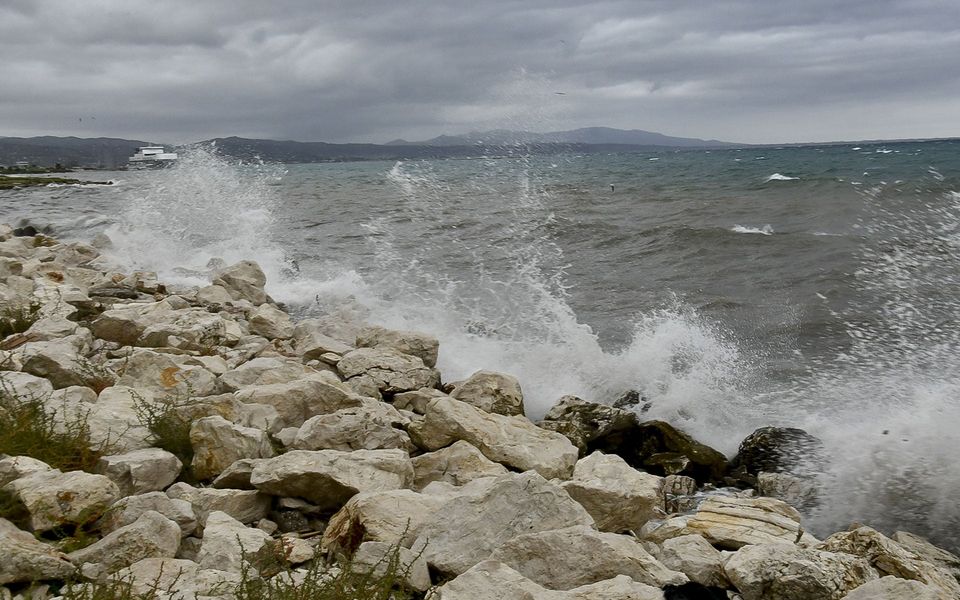
Weather authorities in Greece issued urgent warnings on Tuesday as severe weather conditions bring heavy rain and powerful storms to western regions of the country. The General Secretariat for Civil Protection announced heightened readiness measures for the Peloponnese, Western Greece, the Ionian Islands, and Epirus, where the risk of flooding has increased significantly due to the extreme weather system moving across the Mediterranean nation.
According to forecasters, intense downpours and thunderstorms are affecting Epirus and western Central Greece, with conditions expected to spread to western and southern Peloponnese throughout the day. Additionally, parts of Crete, particularly the western and southern areas, along with the southern Cyclades will experience severe weather, followed by the eastern Aegean islands and the Dodecanese later in the day.
Strong Winds and Coastal Threats Accompany Heavy Rain in Greece
The storm system is bringing dangerous wind conditions alongside the heavy precipitation. Winds over the Ionian Sea and western mainland coastal areas are expected to reach force 7-8 on the Beaufort scale, according to the meteorological service. These winds will later shift to a northwestern direction and intensify further, potentially reaching force 9-10 Beaufort in some areas.
Similar powerful wind conditions are forecast for Crete, the Cyclades, and the southeastern Peloponnese region. The combination of heavy rain and strong winds poses significant risks of coastal damage and flooding in vulnerable areas, prompting authorities to activate emergency preparedness protocols across the affected regions.
Temperature Drop and Mountain Snowfall Expected
Meanwhile, the weather system is also bringing a notable temperature decline across Greece, particularly affecting northern and western areas. Mountain regions on the mainland will experience snowfall, with some parts of Epirus and Macedonia expected to see briefly heavy snow accumulation. The temperature drop will be most pronounced in the north and west, where meteorologists warn that overnight frost is possible in northwestern inland areas.
However, the civil protection secretariat emphasized that residents in affected areas should take necessary precautions and remain vigilant. The combination of flooding risks, strong winds, and rapidly changing conditions requires heightened awareness from local communities and travelers.
Regional Impact and Safety Measures
The Ionian Islands, situated off Greece’s western coast, face particular vulnerability to the approaching storms due to their exposure to the severe weather front. In contrast to the eastern regions of the country, which will be affected later, western areas are experiencing the worst conditions during the initial phase of the storm system.
Civil protection authorities have not confirmed specific evacuation orders at this time, but local municipalities in high-risk areas have been placed on alert. The report indicates that emergency services are monitoring the situation closely, with resources positioned to respond to potential flooding incidents and weather-related emergencies across the affected regions.
Additionally, maritime activities in the Ionian Sea and surrounding waters face significant disruption due to the gale-force winds. Port authorities are expected to issue navigation warnings and potentially restrict vessel movements until conditions improve.
Weather forecasters indicate that conditions are expected to gradually improve across many affected areas beginning Wednesday afternoon, though authorities have not confirmed an exact timeline for the storm system’s complete passage. Residents are advised to monitor official weather updates as the situation develops over the coming hours.

Follow Live Media News on Google News
Get Live Media News headlines in your feed — and add Live Media News as a preferred source in Google Search.
Stay updated
Follow Live Media News in Google News for faster access to breaking coverage, reporting, and analysis.
- Search any trending topic on Google (for example: Greece news).
- On the results page, find the Top stories section.
- Tap Preferred sources and select Live Media News.