


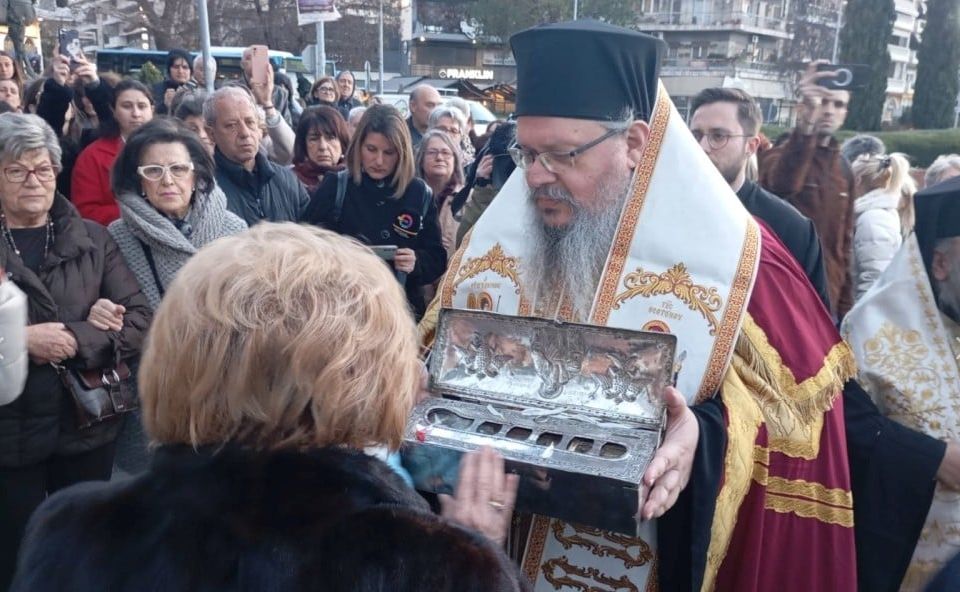
Greece’s left-wing SYRIZA opposition party has condemned educational authorities in central Greece for directing state schools to encourage students to view a Christian religious relic, sparking debate over religious freedom in public education. The controversy centers on a directive issued by regional education officials in Larissa urging teachers to organize student visits to see what is purported to be the lower arm bone of St Basil, housed temporarily at a local church.
According to a SYRIZA statement, the party found it “inconceivable” that a European public educational system would engage in such religious activities in 2026. The Education Ministry’s regional directorate for secondary schools in Larissa issued the directive to local schools, instructing teachers to arrange visits to the Church of St Achillios, where the relic is on display from February 16-24.
Religious Freedom Concerns in Greek State Schools
The opposition party emphasized that state schools should operate with respect for the religious freedoms of all pupils, regardless of their faith or beliefs. SYRIZA argued that school involvement in devotional practices does not constitute an educational act and crosses the line between secular public education and religious worship.
The Christian relic, which is permanently housed in Athens, was brought to Larissa for a temporary exhibition at the Church of St Achillios. However, the official encouragement for students to participate in what SYRIZA characterized as worship activities has raised questions about the separation of church and state in Greece’s public education system.
Church Officials Defend Educational Directive
Meanwhile, Larissa Church officials have pushed back against the criticism, defending the regional education directorate’s decision. According to reports, church representatives accused SYRIZA of taking a “phobic approach” to the religious relic and its public display.
The dispute highlights ongoing tensions in Greece between traditional religious practices and modern secular education principles. Additionally, it raises broader questions about how European Union member states balance cultural heritage, religious traditions, and constitutional protections for religious freedom in public institutions.
Implications for Public Education and Religious Practice
The controversy in Larissa reflects wider debates across Europe about the role of religion in state-funded schools. In contrast to some EU countries with strict secular education systems, Greece maintains closer ties between the Orthodox Church and public institutions, including schools.
However, critics argue that directing students to participate in religious activities at state schools may violate the principles of religious neutrality and freedom of conscience. The debate also touches on whether exposure to religious relics and practices constitutes cultural education or religious indoctrination.
Furthermore, the incident raises questions about whether parents and students of different religious backgrounds or those with no religious affiliation feel pressured to participate in such activities. Educational authorities have not confirmed whether participation in the relic viewing was mandatory or optional for students.
The Education Ministry in Athens has not yet issued a public response to SYRIZA’s criticism or clarified whether the regional directive aligns with national education policy. As the relic’s display period concludes on February 24, it remains uncertain whether similar controversies will arise in other regions or whether the ministry will issue guidance on religious activities in state schools.

Follow Live Media News on Google News
Get Live Media News headlines in your feed — and add Live Media News as a preferred source in Google Search.
Stay updated
Follow Live Media News in Google News for faster access to breaking coverage, reporting, and analysis.
- Search any trending topic on Google (for example: Greece news).
- On the results page, find the Top stories section.
- Tap Preferred sources and select Live Media News.