


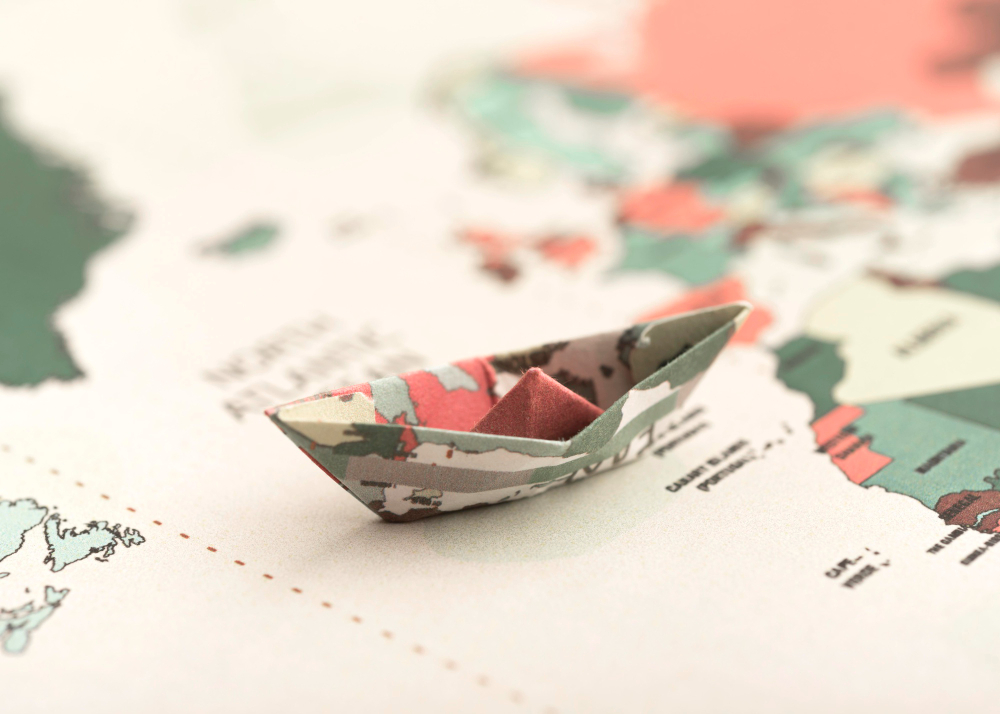
The term “New Middle East” initially sounds like a strategy. It can be found in think-tank articles, diplomatic speeches, and TV panels where analysts discuss shifting alliances under desert skies while maps are shown.
However, the story begins to take a different turn as you stand on a windy dock close to some of the busiest ports in Europe and watch container cranes swing steel boxes onto waiting ships. Not so much a strategy. more akin to logistics.
The world has been reminded of how limited international trade is by the most recent escalation around the Strait of Hormuz. Approximately 25% of the world’s oil and gas exports pass through that narrow stretch of water. The ripple spreads outward almost immediately when tankers slow or stop there.
| Category | Information |
|---|---|
| Strategic Waterway | Strait of Hormuz |
| Global Trade Impact | Roughly one-quarter of global oil and gas shipments move through this corridor |
| Logistics Disruption | Tankers and container ships rerouting around Africa via the Cape of Good Hope |
| Key Energy Benchmark | Brent Crude |
| Logistics Industry Body | Logistics UK |
| Trade Policy Voice | James Mills |
| Major LNG Producer | QatarEnergy |
| Reference Source | https://www.retailgazette.co.uk |
Energy traders are the first to sense it. After the disruption, Brent Crude rose above $85 per barrel in a matter of days. As prices adjusted, trading room screens turned red and green. People are tapping keyboards, looking at charts, and whispering into headsets as massive economic forces subtly reorganize themselves in those rooms, which always have a strange calm.
The shipping companies then respond. Some container ships and tankers have started to completely avoid the area, rerouting their routes around the Cape of Good Hope. A trip from Asia to Europe is extended by about 10 to 14 days due to that detour. In a geopolitical briefing, two weeks might not seem disastrous, but on the ground—or rather, on the water—it multiplies fuel expenses, insurance premiums, and scheduling difficulties.
Once moving in unison, the cargo now moves at a slower pace. Speaking with those who work in the logistics sector, the discussion seems strangely pragmatic in contrast to the drama of global politics. In a recent briefing, James Mills stated plainly that supply chains are capable of adapting, but it is not free.
Political commentary often obscures that point. The world discovered what happens when supply chains fail during the pandemic. The shelves of the store were empty. Schedules for deliveries fell apart. Stacks of shipping containers in the wrong ports. Logistics managers watch developments in the Middle East with a certain quiet anxiety because those memories are still vivid enough.
They have witnessed the speed at which a disruption spreads. It is a shipping route for one week. It’s supermarket prices the following week.
The logistics sector maintains that compared to five years ago, it is now more prepared. Following the chaos of the Covid era, businesses enhanced inventory tracking, added backup routes, and diversified their suppliers. Today’s warehouses are humming silently under fluorescent lights with scanning systems and predictive software.
However, resilience comes with a price tag. Ships use more fuel when they travel longer distances. Premiums increase when insurers believe there is a risk close to conflict areas. Once sporadic footnotes in shipping contracts, war-risk surcharges have begun to show up with uncomfortably regularity.
According to reports, the cost of vessel insurance for ships operating close to disputed waters has increased by as much as 40 to 60 percent. The energy itself comes next.
Energy markets seldom stay steady when the Gulf region falters. Another signal was sent through the system by the temporary suspension of some exports from QatarEnergy, which supplies a substantial portion of the world’s liquefied natural gas.
Insurance, freight, oil, and gas. The expenses start piling up one after the other.
It’s difficult not to consider how delicate this choreography is when you’re walking through a cold-storage warehouse outside of Rotterdam, where forklifts are navigating between tall shelves of chilled produce. Electronic parts from factories thousands of miles away, frozen seafood from Asia, and fresh fruit from South America—all traveling through temperature-controlled hallways on precisely timed schedules.
When a shipping route is extended by two weeks, timing becomes risky.
Certain products handle the wait without any fuss. Textiles, durable goods, and parts for machinery can wait. Fresh food can’t.
According to industry analysts, the disruption is felt most acutely by time-sensitive cargo and refrigerated goods. An alternative is air freight, but it’s costly and complicated by airspace restrictions near conflict areas.
Thus, the system adjusts once more. Logistics always does. Ships change their course. Stocks are a little less elastic. Retailers use higher prices as a hedge. The shock is gradually, almost silently, absorbed by the world economy.
Historians writing about this era in the future might not concentrate on battlefield maps or diplomatic speeches. Instead, they might track container schedules, fuel surcharges, and shipping routes.
Because those specifics convey a different message. The Middle East has been referred to as a crossroads of civilizations for centuries. Silk and spices were once transported across deserts via caravan routes. These days, food, electronics, gas, and oil are transported via maritime corridors.
Technology has evolved. The fundamental truth hasn’t changed. There is a growing sense that geopolitics is becoming more and more apparent through logistics as one watches the shipping data scroll across industry dashboards—vessel speeds, rerouted journeys, delayed arrivals.
The headlines may be shaped by strategy. However, whether or not the world’s goods truly arrive depends on logistics.

Follow Live Media News on Google News
Get Live Media News headlines in your feed — and add Live Media News as a preferred source in Google Search.
Stay updated
Follow Live Media News in Google News for faster access to breaking coverage, reporting, and analysis.
- Search any trending topic on Google (for example: Greece news).
- On the results page, find the Top stories section.
- Tap Preferred sources and select Live Media News.