


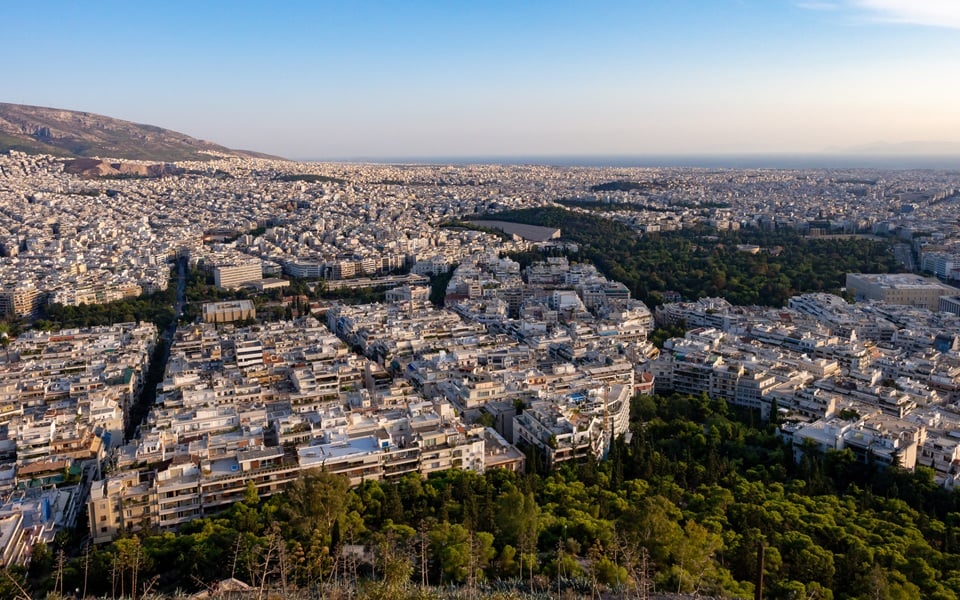
Greece’s housing market continues to face a severe affordability crisis as rising property prices push homeownership out of reach for most residents, according to recent surveys. A University of Macedonia study reveals that only 17% of prospective buyers can afford to spend more than €200,000 on housing, with just 6% able to exceed the €300,000 threshold. These findings underscore the growing disconnect between market prices and purchasing power across Greek urban centers.
The affordability gap comes at a time when more Greeks are expressing preference for buying over renting, according to an Alpha Bank report. However, escalating home prices in major cities have created a significant barrier to homeownership for the majority of interested buyers.
Housing Prices Surge Across Major Greek Cities
The Greek housing market has experienced dramatic price increases over the past four years. Between 2021 and 2025, average asking prices in Attica climbed 41.5%, reaching €2,830 per square meter, the data shows. Meanwhile, Thessaloniki witnessed an even steeper rise of 63.5%, with prices settling at €2,179 per square meter.
These substantial increases have fundamentally altered the real estate landscape in Greece’s largest urban centers. The rapid appreciation has outpaced income growth for most Greek households, creating a widening gap between market values and what average families can realistically afford.
Rental Market Pressures Drive Homeownership Interest
The Alpha Bank report indicates that high rents and mounting long-term financial pressures are motivating Greeks to favor purchasing property over continued renting. However, this preference does not translate into actual purchasing power for most households. Additionally, the rental market itself has become increasingly expensive, squeezing tenants while simultaneously making it harder to save for down payments.
The financial squeeze facing prospective buyers reflects broader challenges in the Greek economy. With limited access to affordable housing finance and stagnant wage growth relative to property appreciation, the pathway to homeownership has narrowed considerably for middle-class families.
Limited Purchasing Power Restricts Housing Market Access
The University of Macedonia survey highlights the stark reality facing Greek home seekers. With only a small fraction of buyers able to afford properties above €200,000, much of the current housing stock in Athens and Thessaloniki remains financially inaccessible. In contrast, the average prices in these markets would require budgets well beyond what most prospective buyers can manage.
This affordability crisis has implications for demographic trends and economic mobility across Greece. Young professionals and families find themselves locked out of homeownership, potentially affecting household formation, family planning decisions, and long-term wealth accumulation.
Market Dynamics and Future Outlook
The combination of rising property values and constrained buyer budgets suggests a potential market imbalance. Nevertheless, demand from foreign investors and wealthy buyers has sustained upward price pressure in desirable urban locations. Short-term rental platforms and investment purchases have further tightened available housing stock for local residents.
Authorities have not announced comprehensive policy measures to address the housing affordability gap, though the issue has generated increasing public concern. The mismatch between available buyer budgets and current asking prices raises questions about market sustainability and the need for intervention to support first-time buyers.
Whether Greek housing prices will stabilize or continue their upward trajectory remains uncertain, with much depending on broader economic conditions, interest rates, and potential government initiatives to improve housing accessibility for Greek households.

Follow Live Media News on Google News
Get Live Media News headlines in your feed — and add Live Media News as a preferred source in Google Search.
Stay updated
Follow Live Media News in Google News for faster access to breaking coverage, reporting, and analysis.
- Search any trending topic on Google (for example: Greece news).
- On the results page, find the Top stories section.
- Tap Preferred sources and select Live Media News.