


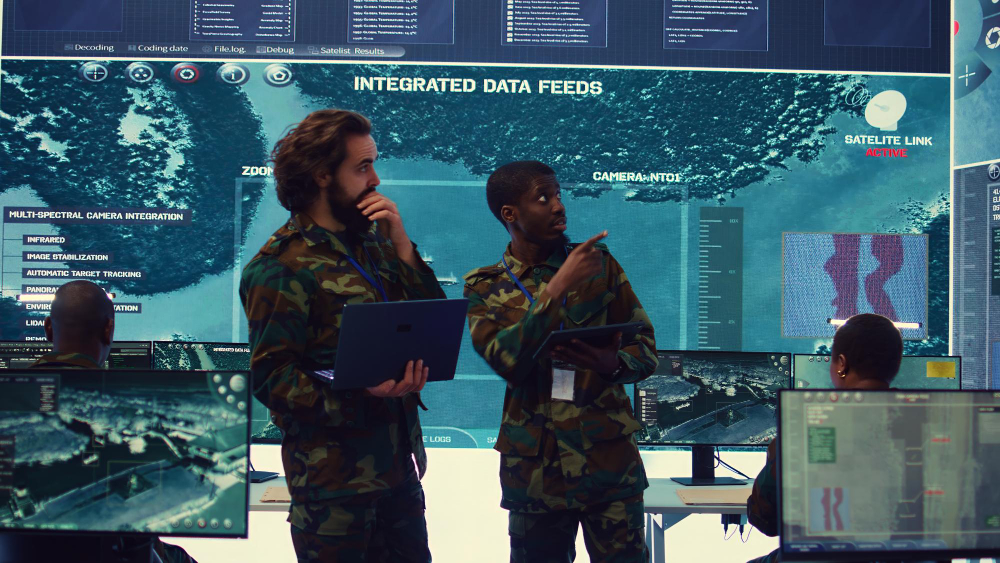
At first glance, the image appeared convincing. A partially destroyed U.S. military installation in the Gulf, with smoke rising in irregular columns. This type of satellite image usually indicates an escalation. It spread swiftly, being shared, reposted, and translated into several languages. Analysts didn’t notice anything strange until much later. The shadows weren’t exactly in line. A line of cars appeared in duplicate. It wasn’t authentic.
In today’s online world, that seemingly insignificant moment feels like something more. It’s possible that reality itself is no longer the main battlefield in warfare. Perception, or what people think they are seeing, has taken center stage instead.
| Category | Details |
|---|---|
| Topic | AI-Generated War Propaganda & Information Warfare |
| Region Focus | Iran, Middle East |
| Key Technology | Generative AI (Images, Video, Deepfakes) |
| Core Issue | Manipulation of Public Opinion |
| Estimated Reach | Millions of global views across social platforms |
| Reference | https://www.carnegieendowment.org |
An increase in AI-generated imagery has coincided with Iranian conflicts in recent months. structures that never existed collapsing. missile attacks that never happened. In ways never seen before, fighter jets were shot down. Not only do these pictures deceive, but they also directly compete with genuine documentation, frequently arriving more quickly and spreading farther.
There’s a feeling that speed has taken center stage. A fake photo can reach millions of people in minutes, while a real one might take hours to verify. It is nearly impossible to discern the difference when watching social media feeds during stressful times. Each image demands attention while blending together and providing no certainty.
For years, experts have been cautioning about this, but at the time, their warnings seemed theoretical. It’s more difficult to ignore the scale now. AI-generated content is no longer exclusive to fringe actors, according to researchers. Organized networks, sometimes in line with state interests and sometimes not, are producing and amplifying it. The end effect is a dense, fast-moving, and challenging-to-navigate informational fog.
The atmosphere has changed when you walk through a newsroom during a breaking story. Editors pause, replay, and ask questions as they scroll through dozens of clips. Game footage could be pieced together to create an authentic-looking video. A photograph that was taken years ago may be authentic, but it has been altered to tell a different story. Once a procedure, verification now seems like a race.
Additionally, a more subtle change is taking place. Fake content isn’t always intended to persuade. A portion of it appears to be meant to raise questions. Even authentic images start to lose credibility if enough fake ones are circulated. This phenomenon, sometimes known as the “liar’s dividend,” makes the truth negotiable.
It’s difficult to ignore the impact this has on public opinion. Five slightly different accounts of the same event, each claiming authenticity, could be seen by someone looking through their phone late at night. Eventually, the natural tendency might be to distrust them all rather than pick one. It feels like a big loss of trust.
Although it would be oversimplified to consider Iran in isolation, its role in this changing landscape has garnered special attention. The nation functions within a larger information warfare ecosystem in which various actors, both state and non-state, vie to control narratives. However, reports indicate that during recent conflicts, Iranian-affiliated networks have been particularly active in disseminating AI-generated images.
One widely circulated video purports to show a missile strike in Tel Aviv, but there is a part where the explosion appears almost too dramatic. The motion is too fluid, and the colors are a little overdone. It’s the kind of detail that might be overlooked when scrolling quickly but becomes apparent when examined more closely. Nevertheless, the video has already gone viral by the time concerns are voiced.
Though maybe not on purpose, the platforms themselves have an impact. Engagement—pictures that elicit strong reactions, videos that capture attention—is given priority by algorithms. Authenticity is less immediate and more difficult to quantify. It’s possible that the very content that warps reality is unintentionally being amplified by the systems meant to keep users interested.
A technical arms race is also in progress. AI-generated content detection tools are getting better, but so are the tools that produce it. Fake “analysis” overlays, deceptive heatmaps, and fake expert claims are examples of how detection techniques themselves are manipulated. The distinction between deception and verification becomes increasingly hazy.
It seems like the rules of war are subtly changing as we watch this play out. Controlling territory, resources, and physical space were key components of traditional conflicts. Control over narrative, or what people think is true, now appears to be equally important.
How institutions and governments will react is still unknown. Enforcement frequently feels reactive rather than proactive, and legal frameworks lag behind technological advancements. In the meantime, the content keeps spreading, changing, and growing more complex.
Additionally, the experience is very personal for each individual. When viewed at the appropriate time, a single image has the power to change perceptions, opinions, and even emotional reactions to far-off events. The impact is more difficult to quantify when you multiply that by millions.
Standing at the nexus of conflict and technology, there’s a sense that something fundamental has changed. steadily, almost silently, rather than suddenly. The battlefield has grown rather than shrunk.
And more and more, it can be found everywhere.

Follow Live Media News on Google News
Get Live Media News headlines in your feed — and add Live Media News as a preferred source in Google Search.
Stay updated
Follow Live Media News in Google News for faster access to breaking coverage, reporting, and analysis.
- Search any trending topic on Google (for example: Greece news).
- On the results page, find the Top stories section.
- Tap Preferred sources and select Live Media News.