


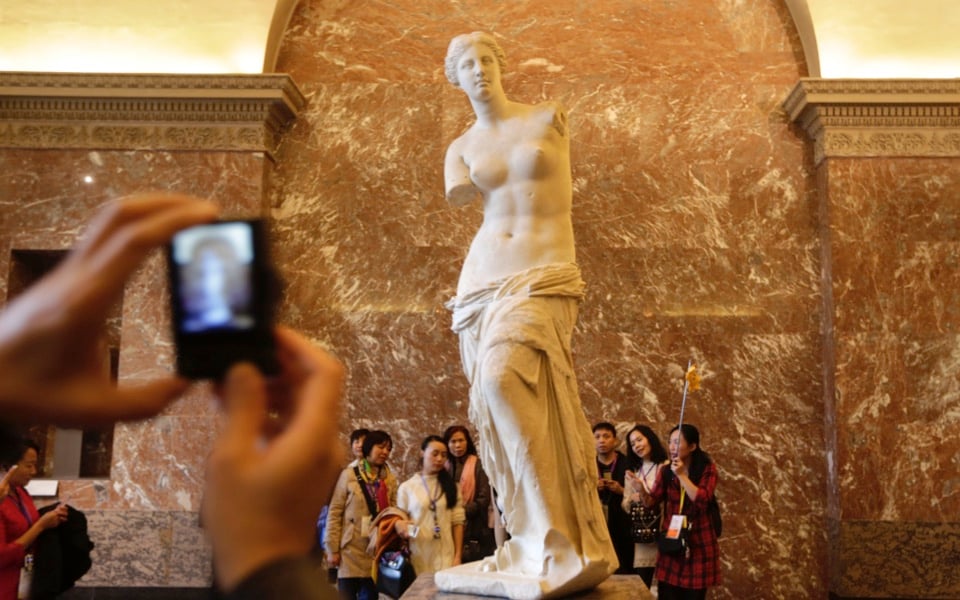
A significant collection of historical documents related to the discovery of the Venus de Milo has been donated to Athens’ Gennadius Library after being found in a Long Island basement. Susan Vera, a New York psychology teacher, uncovered the archival chest in 2023 among her ancestors’ belongings, leading to the repatriation of 550 documents spanning more than a century of Aegean history.
The archive centers on Louis Brest, a French vice-consul who was stationed on the Greek island of Milos during the famous statue’s discovery in 1820. According to reports, Brest played a crucial role in securing the ancient sculpture for the Louvre Museum in Paris, where it remains one of the world’s most celebrated artworks.
Historical Documents Illuminate Venus de Milo Discovery
The collection contains materials dating from the late 18th century through the early 20th century. These papers provide researchers with unprecedented insight into the circumstances surrounding the Venus de Milo discovery and the political landscape of the Aegean during a transformative period in Greek history.
Historian Mark Mazower, who facilitated the donation to the Athens library, emphasized the broader significance of the archive. The documents place the statue’s discovery within the context of the Greek War of Independence, offering valuable perspectives on island life during the 1820s.
Preserving Diplomatic and Social History
According to Mazower, the archive chronicles far more than the famous archaeological find. The papers document diplomatic duties, commercial trade networks, and social connections that defined life in the Aegean region during a period of significant political upheaval.
Additionally, the collection represents a remarkable story of preservation across generations. The documents were safeguarded by successive generations of women in the Brest family, traveling across continents before their recent discovery in New York.
From Basement Discovery to Academic Resource
Vera’s 2023 discovery in her family’s Long Island basement has been described as a “treasure” by cultural historians. The psychology teacher recognized the potential historical value of the materials and initiated contact with academic institutions to ensure their preservation.
The Gennadius Library, part of the American School of Classical Studies at Athens, specializes in materials related to Greek history and culture. The institution now provides researchers access to these primary source documents that illuminate a pivotal moment in both archaeological and political history.
Context for Greek Independence Era
The archive’s timeframe encompasses the critical years of the Greek War of Independence, which began in 1821. Meanwhile, the Venus de Milo discovery occurred just one year earlier, making these documents particularly valuable for understanding the intersection of cultural heritage and political transformation.
In contrast to many historical archives that focus solely on major political events, this collection offers insight into daily diplomatic operations and social networks. The papers reveal how French consular officials navigated their roles during a period when Greek sovereignty was contested.
However, the full contents of the 550 documents have not been completely catalogued. Researchers at the Gennadius Library will now undertake detailed analysis to extract additional historical insights from the materials.
The donation represents a significant addition to scholarly resources available for studying 19th-century Mediterranean history. Furthermore, it demonstrates how important historical materials can remain hidden in private collections for generations before being made accessible to researchers.
The Gennadius Library has not announced a specific timeline for digitizing or publishing findings from the archive. Scholars anticipate that detailed study of the documents will yield new perspectives on both the Venus de Milo acquisition and the broader historical context of Greek independence.

Follow Live Media News on Google News
Get Live Media News headlines in your feed — and add Live Media News as a preferred source in Google Search.
Stay updated
Follow Live Media News in Google News for faster access to breaking coverage, reporting, and analysis.
- Search any trending topic on Google (for example: Greece news).
- On the results page, find the Top stories section.
- Tap Preferred sources and select Live Media News.