


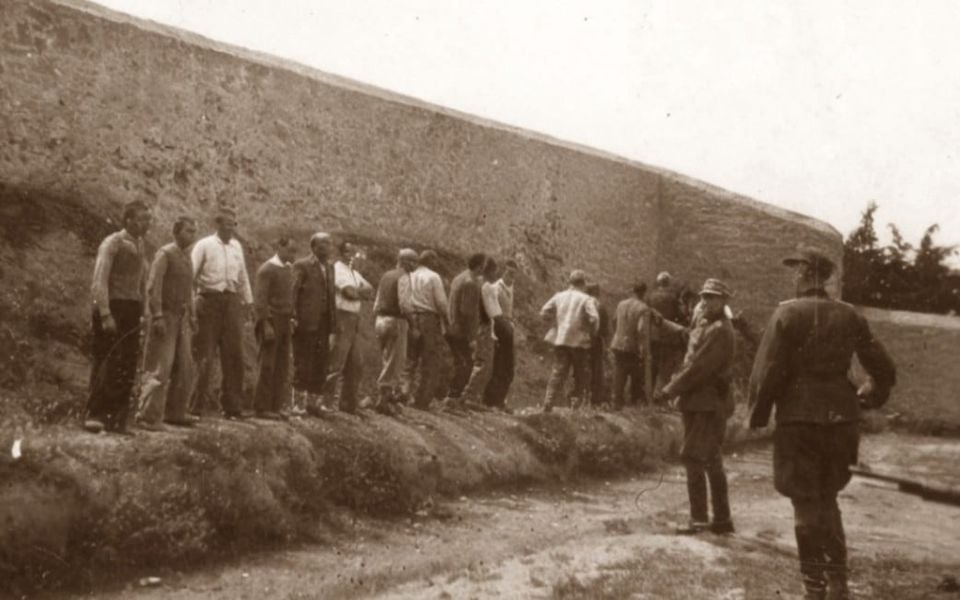
Photographs believed to document the execution of 200 Greek resistance fighters by Nazi forces in 1944 have appeared for sale on eBay, marking their first public emergence 82 years after the mass shooting at Kaisariani. The images surfaced through a Belgian seller before being removed from the online auction platform on Monday morning, according to reports.
The photographs allegedly show scenes from the May 1, 1944 execution at the Kaisariani Shooting Range in Athens, one of the most notorious Nazi atrocities during the German occupation of Greece. According to the auction listing, the material was discovered in an album attributed to German army sergeant Hermann Hoyer, who was stationed in Malakasa during the occupation.
Historical Significance of Kaisariani Execution Photos
The existence of these Kaisariani execution images became widely known after the historical research page Greece at WWII Archives shared them on Facebook. The post immediately sparked debate regarding both their authenticity and the ethics of commercially trading material connected to war crimes.
However, no official institution or archive has yet verified the photographs. Historians indicate that if authenticated, the images could provide crucial documentation of the execution and potentially assist in identifying victims whose names have been lost to history.
The mass shooting occurred on Labor Day as retaliation for the ambush and killing of German Major General Franz Krech by ELAS partisans near Molaoi in the Peloponnese on April 27, 1944. Most of those executed were political prisoners transferred from the Haidari concentration camp, making it one of the largest Nazi crimes committed during the occupation of Greece.
Political Leaders Demand State Acquisition
Greek political parties responded swiftly to news of the photographs, with leaders across the spectrum calling for the state to secure them as part of national historical heritage. The Communist Party of Greece described the images as “historical evidence and documents of invaluable worth” in an official statement.
Additionally, the KKE raised ethical concerns about commercial circulation of such materials, emphasizing that their value “cannot be measured in money.” The party announced plans to submit a formal proposal regarding preservation and use of the World War II photographs in public institutions.
Meanwhile, SYRIZA leader Sokratis Famellos declared through social media that the photographs represent “historical heritage of the entire Greek people.” He urged the government to obtain and showcase them as part of national education and collective memory, stating emphatically that “these documents are not merchandise.”
Calls for Cultural Ministry Action
In contrast to commercial sale, New Left leader Alexis Charitsis described the discovery as “shocking” and called on the Culture Ministry to make every effort to bring the resistance fighter photos to Greece. Political consensus has formed around treating the images as historical artifacts rather than private collectibles.
The photographs were offered without confirmed photographer identification or accompanying documentation that would allow immediate authentication, according to the original listing. This lack of provenance has complicated efforts to verify their historical accuracy, though their purported connection to Hermann Hoyer provides a potential investigative lead.
The KKE specifically recommended housing the images in the resistance museum in Kaisariani and making them available to local authorities connected to the victims’ history. This would ensure public access while preserving their educational and commemorative value for future generations.
Greek authorities have not confirmed whether they will pursue acquisition of the photographs or what legal mechanisms might be available to secure materials currently held by a Belgian seller. The Culture Ministry is expected to issue a statement regarding potential state intervention in the coming days, though no timeline has been officially announced.

Follow Live Media News on Google News
Get Live Media News headlines in your feed — and add Live Media News as a preferred source in Google Search.
Stay updated
Follow Live Media News in Google News for faster access to breaking coverage, reporting, and analysis.
- Search any trending topic on Google (for example: Greece news).
- On the results page, find the Top stories section.
- Tap Preferred sources and select Live Media News.