


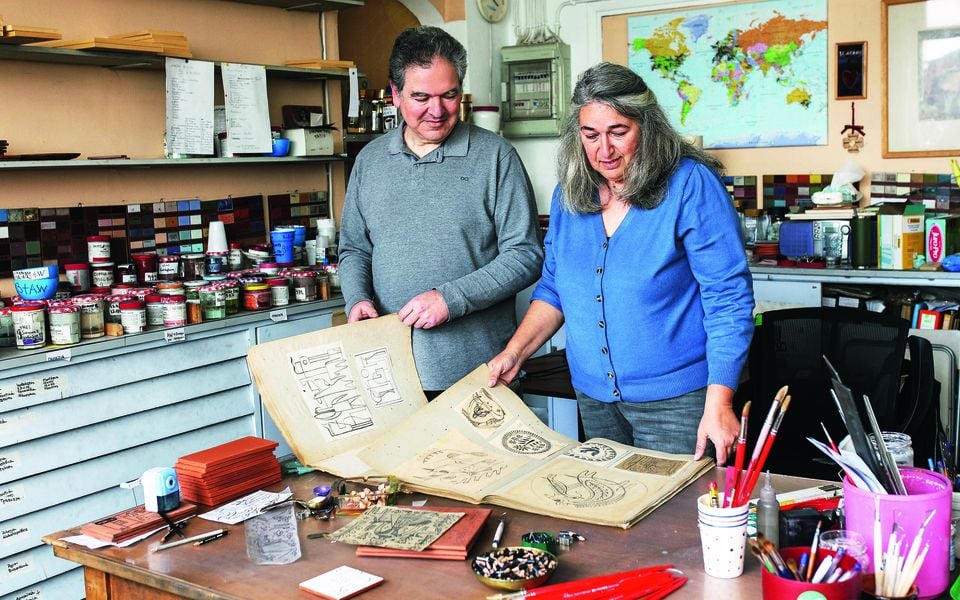
The family of renowned Greek ceramist Panos Valsamakis is preparing for a major retrospective exhibition at the National Museum of Contemporary Art (EMST), marking 40 years since the artist’s death in 1986. His descendants, Panos and Sofia Valsamakis, have been cataloging hundreds of works, drawings and photographs from the artist’s studio as they prepare for the comprehensive showcase of modern Greek ceramics scheduled to open in June 2026.
The exhibition, titled “Remaking Tradition: Panos Valsamakis and the Birth of Modern Greek Ceramics,” will run from June 4, 2026, to January 31, 2027, according to EMST. Sofia Valsamaki, the artist’s granddaughter, told Kathimerini that she began the extensive cataloging process during the Covid-19 pandemic when her work as a tour guide was suspended, giving her time to search and gather materials related to her grandfather’s artistic legacy.
Challenges in Documenting Panos Valsamakis Works
The absence of a complete and documented catalog of Valsamakis’ works has created significant challenges for the retrospective. Many of the ceramist’s pieces, particularly larger works installed in public spaces, have been lost over the decades. According to the family, some works located in public areas were removed and destroyed, while others were covered up or simply disappeared without documentation.
This gap in historical records reflects a broader issue in preserving Greece’s modern artistic heritage. The lack of systematic documentation has made it difficult to track the full scope of Valsamakis’ contributions to Greek ceramics and contemporary art during his lifetime.
Public Appeal for Missing Artworks
In response to these challenges, EMST has launched a public appeal seeking information from collectors, institutions and individuals who may possess knowledge of Valsamakis’ larger ceramic works. The museum is particularly interested in locating pieces that were incorporated into buildings throughout Athens, many of which may have been overlooked or forgotten as architectural features rather than recognized as significant artworks.
Additionally, the appeal aims to identify works held in private collections that could contribute to a more complete understanding of the artist’s oeuvre. The museum’s outreach represents an effort to create the first comprehensive catalog of Panos Valsamakis ceramics, a resource that has been notably absent from Greek art history documentation.
Legacy of Greek Ceramics and Modern Art
Panos Valsamakis played a pivotal role in the development of modern Greek ceramics, bridging traditional techniques with contemporary artistic expression. His work emerged during a period when Greek artists were redefining their relationship with classical and folk traditions while engaging with international modernist movements.
However, the preservation challenges facing his legacy highlight ongoing concerns about cultural heritage management in Greece. The retrospective exhibition represents not only a tribute to Valsamakis’ artistic achievements but also an opportunity to assess and document mid-20th century Greek contemporary art more thoroughly.
Preparing the Retrospective
Meanwhile, the Valsamakis family continues working through the artist’s studio materials, organizing works that have remained largely inaccessible to the public since his death. The cataloging process involves documenting ceramics, drawings and archival photographs that provide insight into the artist’s creative process and evolution over several decades.
In contrast to earlier exhibitions that may have featured selected works, this retrospective aims to present the most comprehensive view of Valsamakis’ career to date. The extended exhibition period, running for eight months, will allow scholars and the public ample time to engage with this important chapter in Greek modern art history.
The success of the retrospective may depend partly on responses to EMST’s public appeal, as additional works could emerge before the June opening. Museum officials have not confirmed a deadline for submitting information about previously undocumented pieces, though preparations continue as the exhibition date approaches.

Follow Live Media News on Google News
Get Live Media News headlines in your feed — and add Live Media News as a preferred source in Google Search.
Stay updated
Follow Live Media News in Google News for faster access to breaking coverage, reporting, and analysis.
- Search any trending topic on Google (for example: Greece news).
- On the results page, find the Top stories section.
- Tap Preferred sources and select Live Media News.