


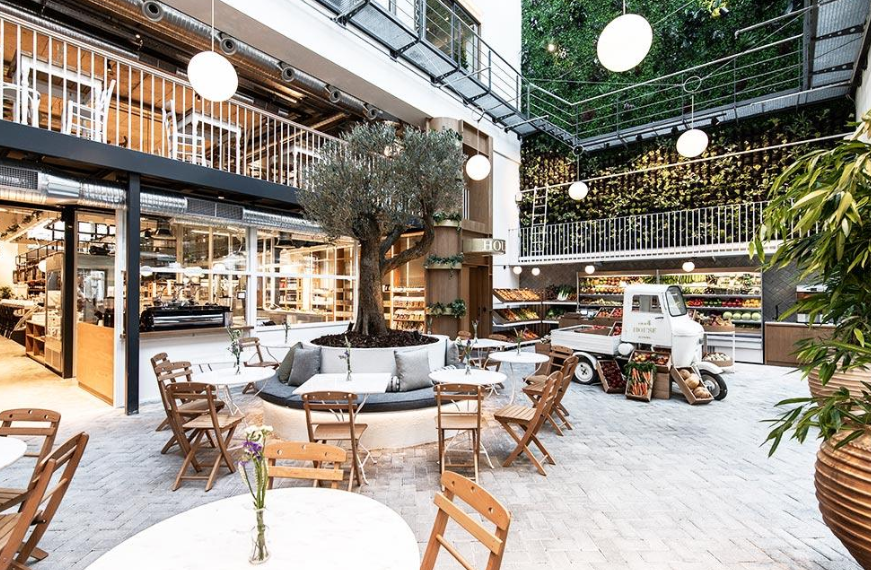
Ergon Foods, a Greek food and hospitality company recognized for championing local producers and Mediterranean cuisine, is preparing for a major international expansion focused on Europe, Asia, and the United States. The company plans to introduce new retail, food and beverage concepts in strategic global markets while simultaneously reinforcing its operations in Greece. This ambitious expansion reflects Ergon Foods’ commitment to promoting Greek gastronomy and lifestyle on the world stage.
According to the company’s roadmap, Ergon Foods is preparing to open its first Ergon House location in London, representing a significant entry into one of Europe’s most demanding hospitality markets. The company is also evaluating opportunities in East Asia, with Singapore being considered as a potential regional hub for operations across that continent.
Greek Food Company Sets Sights on U.S. Market
Looking ahead to 2027, Ergon Foods has established plans to enter the U.S. market with both retail locations and hotel properties. This transatlantic expansion represents a natural progression for the company as it seeks to bring Greek culinary traditions and lifestyle concepts to American consumers. The timeline indicates a measured approach to international growth, allowing for careful market analysis and strategic positioning.
Meanwhile, domestic expansion remains a priority for the Greek hospitality company. In Athens, Ergon Foods is focusing on strengthening its existing presence through additional locations. Additionally, the company is working to establish a presence in Thessaloniki’s historic Modiano Market, though this project faces a complex licensing process expected to extend over the next two years.
Building a Mediterranean Lifestyle Brand
Today, Ergon Foods operates across seven countries with an extensive portfolio that includes six hotels, 20 restaurants, and five food markets, according to company information. The network extends beyond hospitality venues, supporting Greek producers by exporting their products to more than 20 countries worldwide. This integrated approach connects small-scale producers directly with international markets.
Founded in 2008, the company initially focused on creating connections between small Greek producers and global consumers. However, over the past decade and a half, Ergon Foods has evolved into a comprehensive ecosystem centered on Greek gastronomy and lifestyle experiences. This transformation has positioned the company as an ambassador for contemporary Greek culture.
Founder and CEO Thomas Douzis has emphasized that Ergon Foods represents more than traditional food and hospitality operations. According to Douzis, the company aims to present a modern, holistic image of Greek culture internationally by combining cuisine, tourism, and lifestyle elements into a cohesive brand experience.
In statements, Douzis has described the company’s mission as creating a lifestyle brand around the Greek way of life internationally, rather than simply building individual restaurants, markets, or hotels. He noted that projects designed today may be implemented in other countries several years later, reflecting the long-term nature of international expansion planning.
Strong Financial Foundation Supports Growth
The international expansion strategy is supported by robust financial performance. In 2024, Ergon Foods reported revenue of €20.09 million, representing a 45.6% increase compared to the previous year, according to company figures. This substantial growth demonstrates strong market demand for the company’s concepts.
Additionally, earnings before interest, taxes, depreciation and amortization reached €3.29 million, up 35.5%, while pre-tax profits rose 43.2% to €2.7 million. In the same year, Ergon House Athens received a Michelin Key distinction, further enhancing the company’s reputation in the tourism and hospitality sector.
The London location is expected to launch in the near term, while the U.S. entry remains scheduled for 2027. The exact timing for Asian market entry and the Thessaloniki project will depend on regulatory approvals and market conditions in the respective regions.

Follow Live Media News on Google News
Get Live Media News headlines in your feed — and add Live Media News as a preferred source in Google Search.
Stay updated
Follow Live Media News in Google News for faster access to breaking coverage, reporting, and analysis.
- Search any trending topic on Google (for example: Greece news).
- On the results page, find the Top stories section.
- Tap Preferred sources and select Live Media News.