


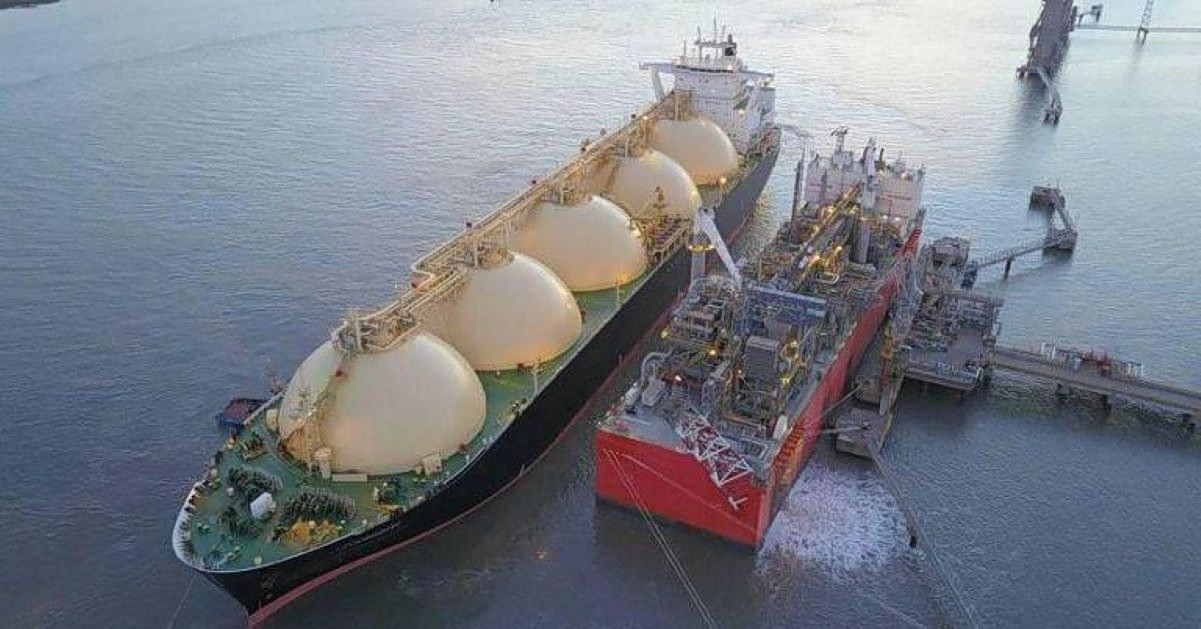
Greece is positioning its liquefied natural gas infrastructure as a critical component of Europe’s energy security strategy as the European Union moves toward a complete ban on Russian natural gas imports by the end of 2027. The European Commission is expected to announce within the next six months how it will finance essential energy infrastructure and gas transport projects designed to replace Russian supplies, according to Konstantinos Sifnaios, managing director of Gastrade, who spoke during a press tour of the Alexandroupolis floating storage and regasification unit in northern Greece.
The push to develop alternative LNG infrastructure comes as landlocked European countries heavily dependent on Russian gas pressure Brussels to accelerate funding decisions. Meanwhile, the United States is actively seeking to replace Russian volumes with American LNG cargoes, expanding its presence in Europe’s future energy landscape.
Selective Funding for LNG Infrastructure Projects
However, EU financial support is not expected to cover all gas projects uniformly. According to industry sources, funding will likely be targeted selectively toward floating storage and regasification units and critical pipeline networks capable of increasing import capacity and addressing bottlenecks in Eastern Europe. Romania, for instance, is advancing pipeline upgrades valued at approximately €700 million to strengthen its role in the regional supply network.
The strategic focus on LNG import terminals reflects the urgency of replacing Russian gas flows while maintaining supply stability across the continent. Additionally, these infrastructure investments are seen as essential for integrating diverse supply sources into the European gas market.
Greece Plans Second FSRU to Boost LNG Capacity
A second floating storage and regasification unit planned by Gastrade in the Thracian Sea near Alexandroupolis represents a key project under consideration. The investment is estimated between €550 million and €600 million and has already received environmental approval from Greece’s Environment and Energy Ministry. The facility would add capacity similar to the existing Alexandroupolis FSRU, which handles an average of 5.5 billion cubic meters per year.
Progressing with the project depends on securing financing comparable to the existing unit and signing long-term regasification contracts to ensure revenue stability. Sifnaios noted that such infrastructure projects typically offer limited returns of around 10 percent, making their viability dependent on long-term capacity bookings and stable cash flows. If a final investment decision is reached by early 2027, the new FSRU could become operational by 2028, according to Sifnaios.
Washington Meeting to Shape Vertical Corridor Strategy
A crucial meeting scheduled for February 24 in Washington will bring together energy ministers from countries participating in the Vertical Corridor, a north-south gas transmission route connecting Greece with Central and Eastern Europe. The meeting will also include U.S. LNG exporters and European Commission representatives, with expected participants including Ditte Juul Jørgensen, director-general for energy at the European Commission, and Greece’s energy minister, Stavros Papastavrou.
Particular attention is being paid to the anticipated participation of the U.S. International Development Finance Corporation and the Export-Import Bank of the United States. Both government-backed institutions are viewed as essential to financing the projects under discussion, and their presence signals that Washington considers the Vertical Corridor critical to European energy security. The institutions could potentially take equity stakes in select projects aimed at reducing Europe’s reliance on Russian gas, thereby helping mitigate financial risk.
Filling a 25 Billion Cubic Meter Supply Gap
Once Russian gas flows cease completely after 2027, Europe could face an annual supply deficit of approximately 35 billion cubic meters, according to Sifnaios. About 10 billion cubic meters is expected to be covered by increased Romanian production, leaving a gap of roughly 25 billion cubic meters per year that LNG infrastructure could fill.
In contrast to focusing solely on northward flows through the Vertical Corridor, Sifnaios emphasized that Greece should also target Central and Western European markets. The planned Thrace FSRU would primarily serve countries including Hungary, Slovakia, Moldova and Ukraine, and is designed to be located approximately 9 kilometers offshore, northeast of the existing Alexandroupolis facility.
The final investment decision timeline and clarity on EU funding mechanisms are expected to emerge following the Washington meeting and subsequent European Commission announcements in the coming months. Uncertainty remains regarding the precise allocation of financial support and the timeline for completing critical infrastructure projects.

Follow Live Media News on Google News
Get Live Media News headlines in your feed — and add Live Media News as a preferred source in Google Search.
Stay updated
Follow Live Media News in Google News for faster access to breaking coverage, reporting, and analysis.
- Search any trending topic on Google (for example: Greece news).
- On the results page, find the Top stories section.
- Tap Preferred sources and select Live Media News.